other

Blogs

  • Why Artificial Trees Are a Smarter Investment for Cost-Conscious Businesses
    Jun 01, 2026
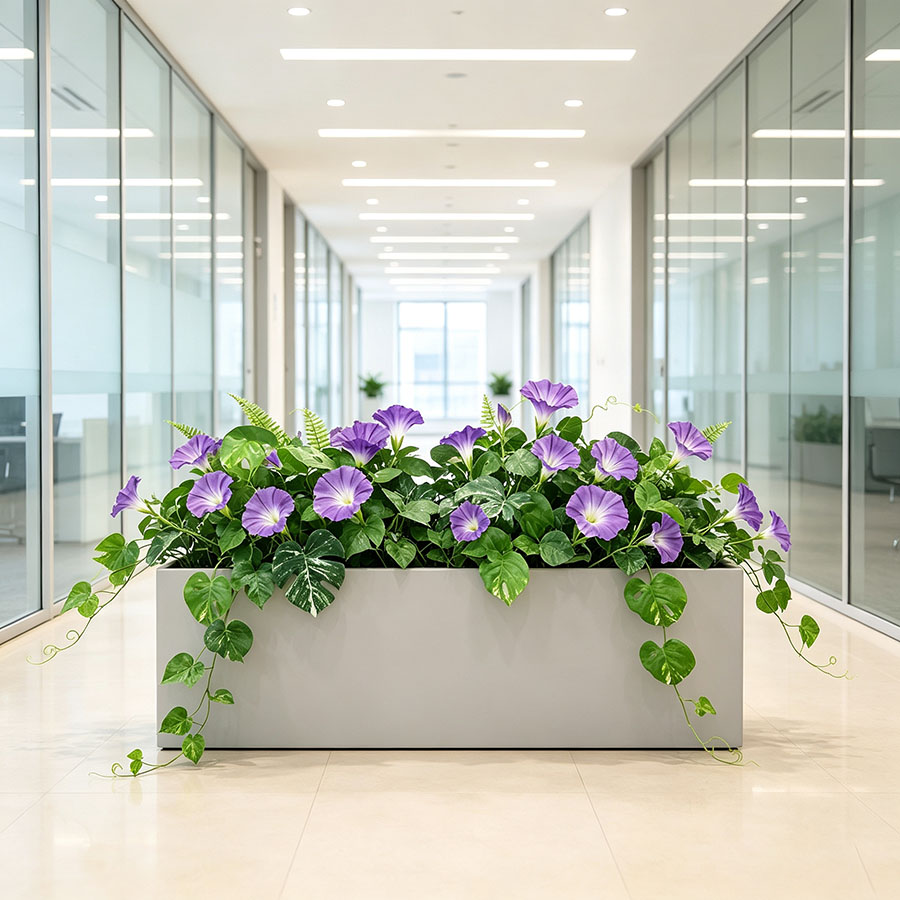
    In today's competitive business environment, every operational expense matters. From office buildings and hotels to retail stores and restaurants, maintaining an attractive interior often comes with ongoing costs. While live plants can enhance a space, they also require regular care, replacement, and maintenance.   This is why many businesses are turning to artificial trees for businesses as a practical and cost-effective alternative. Modern artificial trees offer the same visual impact as natural greenery while significantly reducing long-term maintenance costs.     Eliminating Routine Plant Care Costs   One of the biggest advantages of artificial trees is that they require virtually no daily maintenance.   Live plants need consistent watering, pruning, fertilizing, repotting, and health monitoring. Businesses often hire professional plant maintenance services or dedicate staff time to these tasks, creating recurring expenses throughout the year.   Low maintenance artificial trees eliminate these requirements entirely. Once installed, they maintain their appearance without the need for ongoing plant care, helping businesses save both time and money.   Reducing Labor Expenses   Labor costs can quickly add up when maintaining commercial interior landscaping.   Facility managers, cleaning staff, or external contractors may spend hours caring for live plants, especially in large commercial spaces. Commercial artificial trees require only occasional dusting or surface cleaning, dramatically reducing labor requirements.   As a result, businesses can allocate staff resources to more valuable operational activities rather than routine plant maintenance.   Lowering Water and Utility Costs   Water conservation has become increasingly important for businesses seeking to reduce operating expenses and support sustainability goals.   Unlike live plants, artificial trees require no irrigation systems, watering schedules, or moisture monitoring. Businesses can eliminate water consumption associated with indoor landscaping while avoiding the maintenance costs of irrigation equipment.   For large facilities such as hotels, shopping centers, and office complexes, these savings can be substantial over time.   Avoiding Plant Replacement Expenses   Natural plants are vulnerable to environmental conditions, pests, diseases, and human error. Poor lighting, inconsistent watering, or changing temperatures can cause plants to deteriorate or die, leading to frequent replacement costs.   High-quality commercial-grade artificial trees maintain their appearance year after year. Designed for long-term use, they provide businesses with a predictable investment and significantly reduce replacement expenses.   Eliminating Pest and Soil Management   Live plants can introduce unwanted challenges, including insects, mold, soil spills, and plant diseases.   Managing these issues often requires additional treatments, cleaning efforts, and maintenance procedures. Artificial greenery solutions eliminate these concerns because they contain no soil or organic material that attracts pests.   This makes them particularly suitable for hospitality venues, healthcare facilities, corporate offices, and retail environments where cleanliness is a priority.   Consistent Appearance All Year Round   Businesses invest in greenery because it creates a welcoming and professional atmosphere. However, live plants can lose leaves, change appearance seasonally, or suffer from neglect.   Indoor artificial trees maintain a lush, vibrant appearance regardless of weather conditions, indoor lighting, or seasonal changes. This consistency helps businesses preserve their brand image without incurring ongoing maintenance costs.   Ideal for Difficult Locations   Many commercial spaces feature high ceilings, elevated display areas, or locations with limited natural light.   Maintaining live plants in these environments can be challenging and expensive. Additional lighting systems, specialized equipment, and regular access for maintenance may be required.   Artificial trees for hotels, shopping malls, airports, conference centers, and office buildings provide a practical solution because they thrive in any location without sunlight, watering, or special care.   Improving Budget Predictability   One of the less obvious benefits of artificial trees for businesses is financial predictability.   With live plants, businesses often face unexpected expenses related to replacements, pest treatments, irrigation repairs, or emergency maintenance. Commercial artificial trees convert these variable costs into a single upfront investment with minimal ongoing expenses.   This allows facility managers and business owners to plan budgets more accurately while reducing operational uncertainty.   Long-Term Value for Commercial Spaces   Although artificial trees may require a higher initial investment than live plants, their long lifespan and low maintenance requirements often result in a lower artificial trees maintenance cost over time.   For businesses that prioritize professional aesthetics, operational efficiency, and cost control, artificial greenery solutions provide an attractive long-term investment.   Artificial trees help businesses reduce maintenance costs by eliminating watering, pruning, fertilizing, pest control, and frequent plant replacement. They also lower labor expenses, reduce water consumption, and provide a consistently attractive appearance throughout the year.   Whether used as artificial plants for offices, artificial plants for commercial spaces, or large-scale decorative features in hospitality venues, commercial artificial trees offer a smart investment that combines visual appeal with long-term financial savings.   As more businesses seek efficient and sustainable interior design solutions, artificial trees for businesses continue to become a preferred choice for modern commercial environments.
  • Why Hotels Are Increasingly Using Artificial Plants in Interior Design
    May 29, 2026
    In modern hospitality design, visual atmosphere has become just as important as service quality and room comfort. Greenery is no longer just decoration—it plays a key role in shaping guest emotion, brand identity, and overall spatial experience.   However, in recent years, more and more hotels have been shifting from real plants to high-quality artificial plants. This is not simply a cost-cutting decision, but a long-term operational and design strategy driven by efficiency, consistency, and flexibility.     1. Cost Comparison: Real Plants vs Artificial Plants   One of the most important factors influencing hotel decisions is long-term cost efficiency.   Below is a typical industry-based comparison for commercial indoor landscaping (hotel lobby / public area scale):   Cost Factor Natural Plants Artificial Plants Initial Purchase Cost Low–Medium Medium–High Monthly Maintenance $50–$500 per area (gardening, watering, fertilizing) $0–$20 (basic cleaning) Replacement Cycle 3–12 months (depending on conditions) 3–8 years Pest Control Cost Required regularly None Water Consumption Continuous None   👉 In most hotel environments, artificial plants become more cost-effective after approximately 12–24 months of operation, especially in large-scale installations.   2. Maintenance Workload Comparison   Hotels operate 24/7, and reducing maintenance workload is a major operational goal.     Maintenance Task Natural Plants Artificial Plants Watering 2–5 times per week Not required Pruning Monthly Not required Fertilization 1–2 times per month Not required Pest control Regular treatment Not required Staff labor hours (monthly estimate per lobby area) 10–25 hours 1–3 hours   👉 Artificial plants can reduce maintenance labor by up to 80–90%, freeing staff for guest service instead of plant care.   3. Environmental Suitability in Hotel Spaces   Hotels contain many areas where natural plants struggle to survive:     Hotel Area Type Natural Plants Performance Artificial Plants Suitability Sunlit lobby Good Excellent Indoor corridors Poor Excellent Windowless bathrooms Not viable Excellent Underground restaurants Poor Excellent Conference halls Moderate Excellent   👉 Artificial plants allow hotels to design greenery in 100% of interior spaces, regardless of lighting or humidity conditions.   4. Lifespan and Durability   Durability is a key advantage in commercial environments with high guest traffic.     Factor Natural Plants High-Quality Artificial Plants Average lifespan 3–12 months (indoor commercial use) 3–5+ years Damage resistance Low High Appearance stability Declines over time Consistent Climate sensitivity High None   👉 In hospitality environments, artificial plants offer 5–10x longer usable lifespan compared to natural indoor plants.   5. Guest Experience and Visual Consistency   Hotels rely heavily on visual branding consistency across marketing platforms such as booking websites and social media.     Experience Factor Natural Plants Artificial Plants Visual consistency Variable Stable year-round Photo appearance Seasonal changes Always optimal Branding control Limited Fully controllable Design predictability Low High   👉 This is especially important for hotels that depend on platforms like Booking.com, Airbnb, and Instagram marketing.   6. Hygiene and Safety Considerations   Modern hospitality standards prioritize cleanliness and guest health.     Hygiene Factor Natural Plants Artificial Plants Soil presence Yes No Mold risk Moderate None Insect attraction Possible None Allergy risk Possible (pollen) Minimal   👉 Artificial plants provide a more controlled and hygienic indoor environment, especially in high-end hotels and healthcare-related hospitality spaces.   7. Why This Trend Is Growing in Hotels Globally   Based on hospitality design reports and procurement trends, hotels are increasingly adopting artificial greenery due to:   Rising labor costs in facility maintenance Expansion of multi-property hotel chains requiring standardization Demand for Instagram-friendly interiors Increased focus on hygiene and guest safety Advancements in realistic artificial plant manufacturing   Modern artificial plants now use:   UV-resistant materials Natural color gradient painting techniques Real-touch leaf technology Reinforced internal structures for large trees   These improvements make them visually indistinguishable from real plants in most indoor environments.   The shift toward artificial plants in hotel interior design is not simply a cost-cutting decision—it is a comprehensive strategy combining aesthetics, operational efficiency, and long-term stability.   From luxury hotels to business chains, artificial greenery offers a scalable and reliable solution that supports modern hospitality demands.   As design expectations continue to rise, artificial plants are becoming an essential element in creating consistent, beautiful, and maintenance-free hotel environments.  
  • Using Faux Flowers for Seasonal Styling
    May 26, 2026
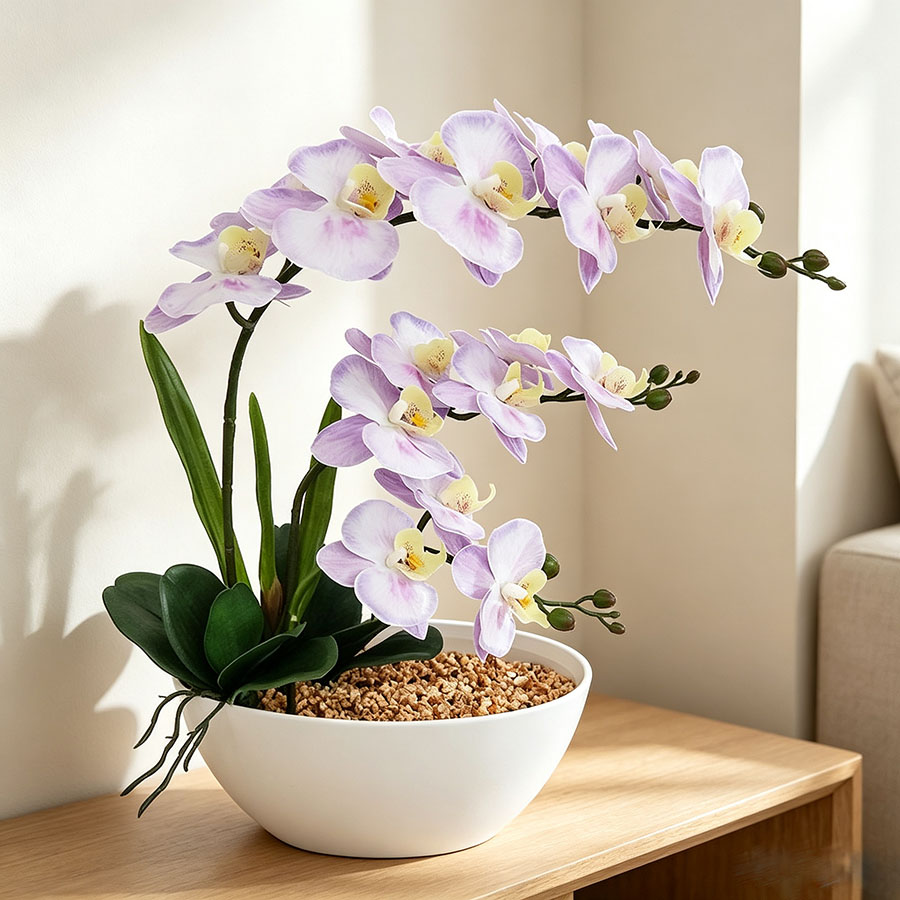
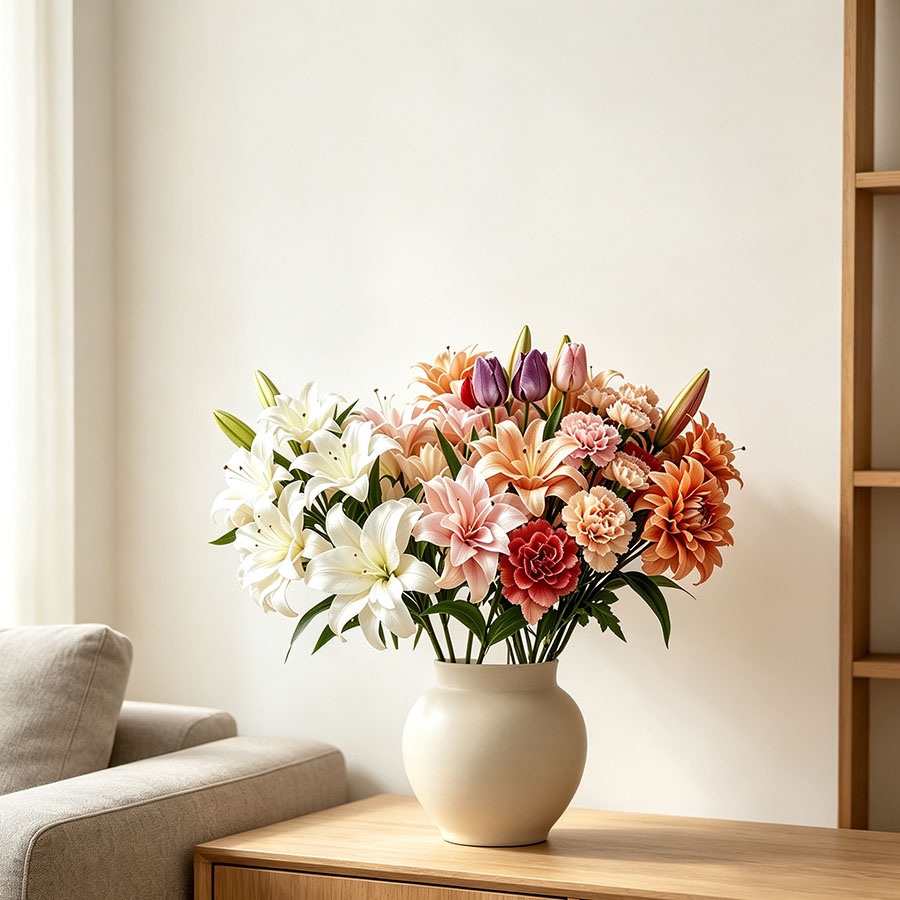
    If you love switching up your home decor with the seasons, but don’t want to keep buying new arrangements every few months, faux flowers might just be your perfect match. With a few clever styling tips, you can make your existing collection of realistic artificial flowers and foliage work hard for you — all year round.   Why Faux Flowers Are Perfect for Year-Round Decor Faux flowers have come a long way from the plasticky blooms of years gone by. Today’s luxury faux flowers are beautifully realistic, with soft-touch petals, wired stems for shaping, and nuanced colouring that mirrors nature. The real beauty of faux flowers? They don’t wilt. That means you can keep a base arrangement in your home all year, simply switching out a few stems or changing your vase to reflect the time of year. They also don’t trigger allergies, don’t need watering, and can be stored easily between uses. Perfect for anyone looking to keep things stylish with minimal effort.   How to Style Faux Flowers Seasonally 1. Start with a Year-Round Foundation Choose a few neutral stems that work in any setting, like: Faux Eucalyptus: Soft green with movement and texture. Faux Olive Branches: Understated and earthy. Faux Hydrangea: Classic white flowers that suit every season. These pieces form the backbone of your arrangement. Keep them in a tall ceramic vase or low stoneware bowl, depending on your space.     2. Switch Your Accents With the Seasons Rather than buying a whole new bouquet every season, swap in a few themed stems or accessories. Here’s how to update your look with minimal changes: Spring Fresh, light and full of promise. Think budding blooms, soft colours and delicate foliage. Styling Tip: Use a glass or pastel-coloured vase and place your arrangement where it catches natural light. Add a rattan tray or ceramic bunny for subtle Easter vibes. Summer Go bolder with brighter blooms and lush greenery to reflect the vibrancy of summer. Styling Tip: Pair with striped linens, citrus-scented candles, and bowls of fruit. A jug-style vase in white or mustard ceramic works beautifully in the kitchen or conservatory. Autumn Warm tones, textural stems, and harvest-inspired colours take centre stage. Styling Tip: Swap your vase for an amber or ceramic jug, and layer in brass or wood-toned accessories. Scatter pinecones or mini pumpkins around your display for extra charm. Winter Rich, cosy textures (without saying ‘cosy’) and festive foliage make faux flowers feel magical at Christmas and beyond. Styling Tip: Add fairy lights to the arrangement and place it near a mirror or fireplace. Pop your flowers into a textured ceramic vase in charcoal or deep green, and add brass candle holders for festive glow.   Seasonal Styling Ideas for Every Room Let’s go room-by-room and see how you can tweak your faux flower arrangements to keep things seasonal throughout your home. Hallway This is the first space your guests see, so make it count. A tall vase on a console table with eucalyptus and seasonal stems makes an instant statement. Living Room A low bowl on your coffee table or faux bouquet on a sideboard sets the tone. Don’t be afraid to mix in real accessories around your faux flowers — think seasonal books, candles, or ornaments. Kitchen Pop a few stems in bud vases on open shelving or use a mini jug on the windowsill. Olive or rosemary sprigs work all year and look great alongside faux lemons or figs for a Mediterranean touch. Bedroom Keep it soft and romantic. Think whites, blush tones, and gentle trailing greens. Change pillow covers and throws seasonally to complement your floral accents.   How to Make Faux Flowers Look Fresh Each Season Even the most beautiful faux flowers need a little TLC to look their best all year round. Here are our top tips: Dust regularly with a clean, dry cloth . Gently reshape stems with wired bases to add movement. Mix in dried accessories like branches or pinecones to add realism.   Pick your favorite faux flowers to spruce up your space. Savor everlasting floral beauty without daily maintenance. Which style will you bring home?    
  • Custom Large Artificial Landscape Tree Service: A Smarter Way to Bring Nature Into Commercial Spaces
    May 25, 2026
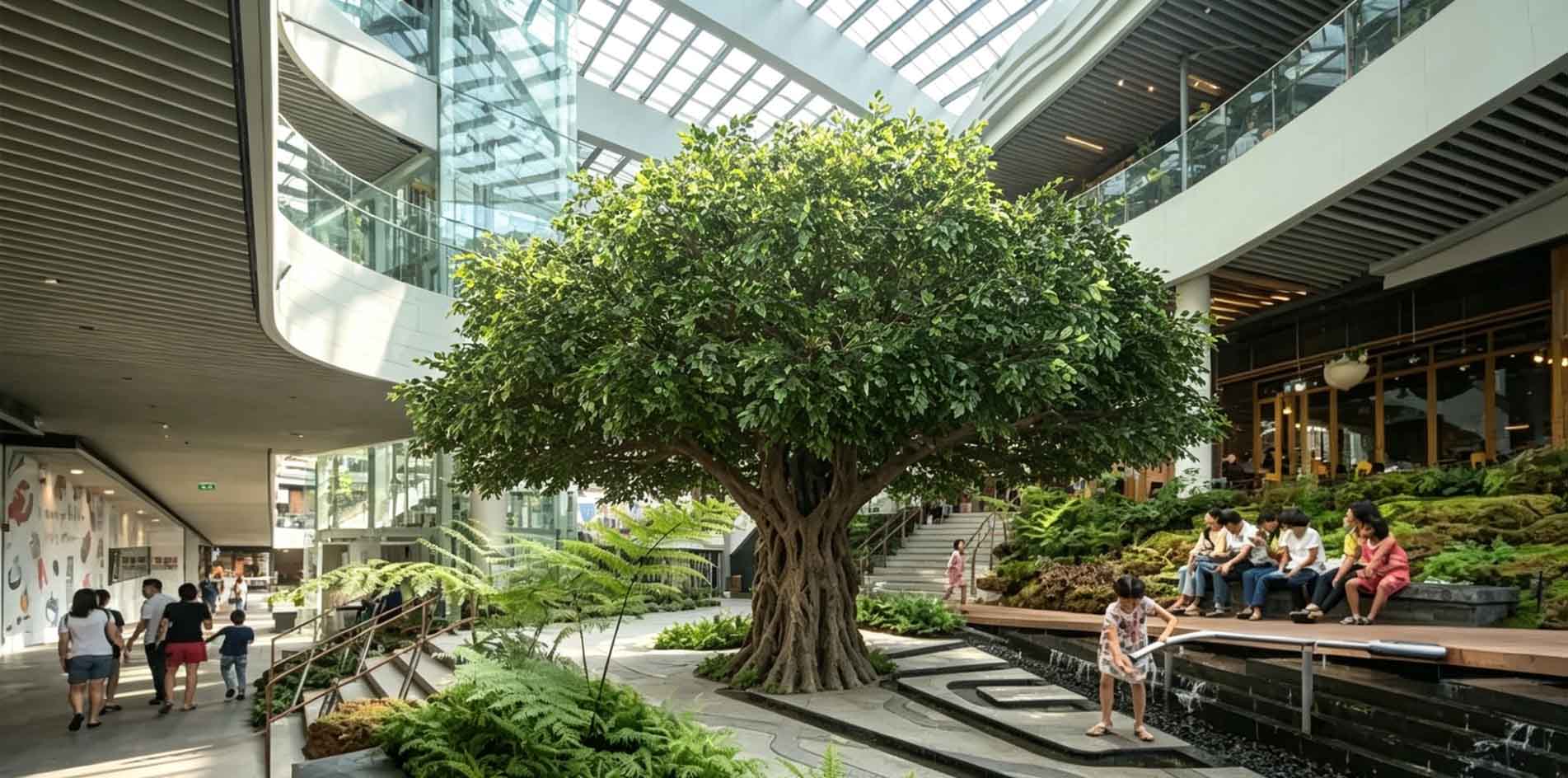
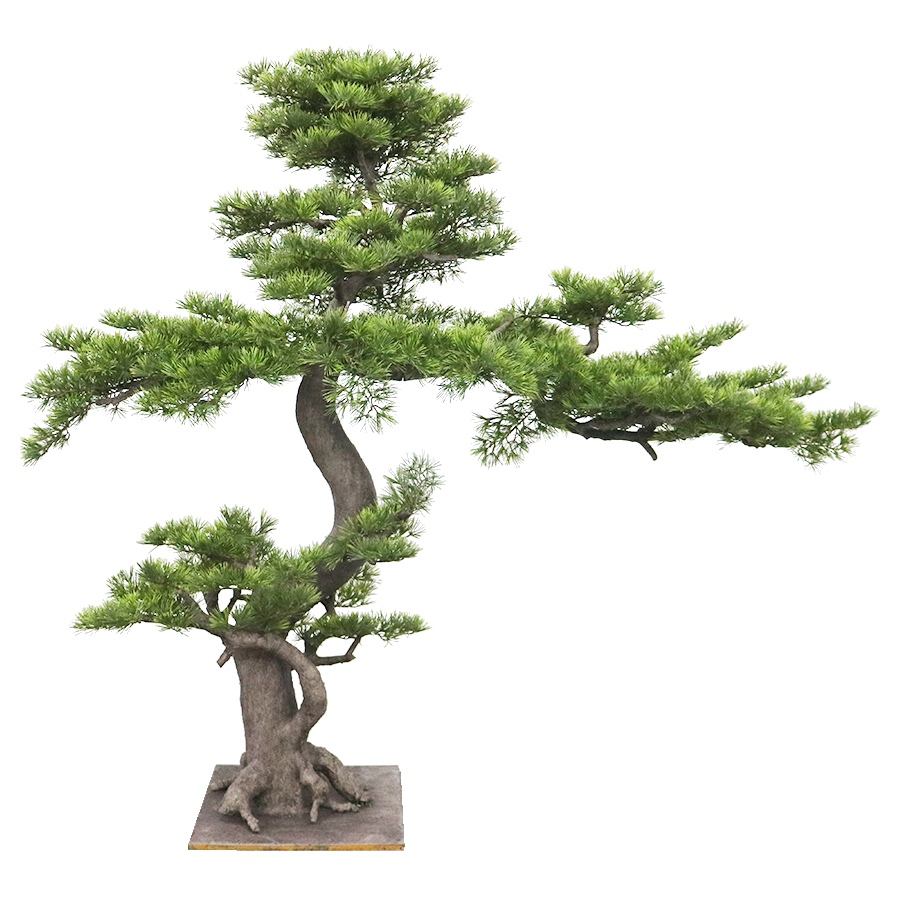
    In today’s interior and architectural design world, greenery has become much more than simple decoration. Large trees and natural elements help make spaces feel warmer, more welcoming, and more memorable. But for many commercial projects, maintaining real trees indoors can be difficult, expensive, and sometimes simply unrealistic.   That’s why more hotels, shopping malls, restaurants, offices, and luxury venues are turning to custom large artificial landscape trees as a practical and visually impressive solution.   From oversized artificial olive trees to dramatic banyan trees and tropical installations, custom artificial trees allow designers to create stunning natural environments without worrying about maintenance or climate limitations.     Why Custom Artificial Trees Are Becoming More Popular   Every commercial space is different.   Some venues have extra-high ceilings. Others need large greenery to fill empty corners or soften modern architecture. In many cases, standard artificial plants simply don’t fit the scale or style of the project.   That’s where custom artificial landscape tree services become valuable.   Instead of choosing ready-made products, businesses can customize almost every detail to match their space perfectly — including size, shape, foliage density, trunk style, color tones, and installation requirements.   The result feels far more natural and visually connected to the environment.   Designed Around Your Project   One of the biggest advantages of custom artificial trees is flexibility.   Whether you want a 3-meter artificial olive tree for a restaurant entrance or a massive artificial banyan tree for a hotel lobby, customization allows the greenery to work seamlessly with the surrounding architecture and interior design.   Custom options often include:   Tree height and canopy width Leaf style and foliage density Natural trunk textures Custom branch structures Indoor or outdoor materials UV-resistant and fire-retardant finishes   This level of detail helps create a much more premium and realistic final result.     Perfect for Hotels, Malls, Restaurants & Offices   Large artificial landscape trees are now widely used in commercial spaces because they instantly improve atmosphere and visual impact. They are especially popular in:   Hotel lobbies Shopping centers Luxury restaurants Corporate offices Resorts and spas Event venues Commercial reception areas   Large greenery helps soften empty spaces, reduce the cold feeling of modern architecture, and create a more relaxing customer experience. For many businesses, artificial landscape trees also become an important visual centerpiece that people naturally notice when entering the space.   Beautiful Greenery Without the Maintenance   One of the main reasons businesses choose artificial landscape trees is convenience.   Real trees require constant care:   Watering Trimming Pest control Lighting management Professional maintenance   In busy commercial environments, this can become expensive and difficult to manage long term. High-quality artificial trees solve this problem completely. They stay green, full, and visually consistent throughout the year without daily upkeep. For businesses, this means lower maintenance costs and a cleaner, more reliable decorative solution.   Modern Artificial Trees Look Surprisingly Real   Artificial tree manufacturing has improved dramatically in recent years.   Today’s premium custom artificial trees feature:   Realistic bark textures Natural leaf color variations Layered foliage structures Organic branch movement Highly detailed craftsmanship   In many large commercial interiors, modern realistic artificial trees are nearly impossible to distinguish from real ones at first glance. This realistic appearance is one reason artificial greenery has become increasingly common in luxury interior design projects.   Indoor & Outdoor Custom Solutions   Custom artificial landscape trees are no longer limited to indoor decoration.   Many projects now use outdoor artificial trees for:   Hotel entrances Open-air shopping centers Rooftop spaces Outdoor dining areas Resort landscapes   Outdoor-ready artificial trees are typically made with UV-resistant artificial plant materials to help maintain color and durability over time.   This makes them suitable for long-term use in demanding commercial environments.   Supporting Modern Design Trends   Modern interior design trends increasingly focus on creating spaces that feel connected to nature.   Large artificial trees help designers achieve this natural atmosphere while avoiding the challenges of maintaining live plants indoors.   Popular commercial design styles include:   Mediterranean interiors with artificial olive trees Tropical resort spaces with faux tropical plants Luxury event decoration with artificial cherry blossom trees Minimalist interiors softened by large greenery   These elements help spaces feel more relaxing, premium, and visually engaging.     Custom large artificial landscape trees offer much more than decorative greenery. They help transform commercial spaces into environments that feel more natural, luxurious, and memorable.   With realistic designs, flexible customization, and almost zero maintenance, artificial landscape trees have become a smart long-term solution for modern commercial projects.   Whether you’re designing a hotel, restaurant, office, shopping mall, or large residential space, custom artificial tree services make it easier to create impressive greenery without the limitations of real plants.
  • Best Artificial Indoor Trees and Tips to Make Them Look Real
    May 19, 2026
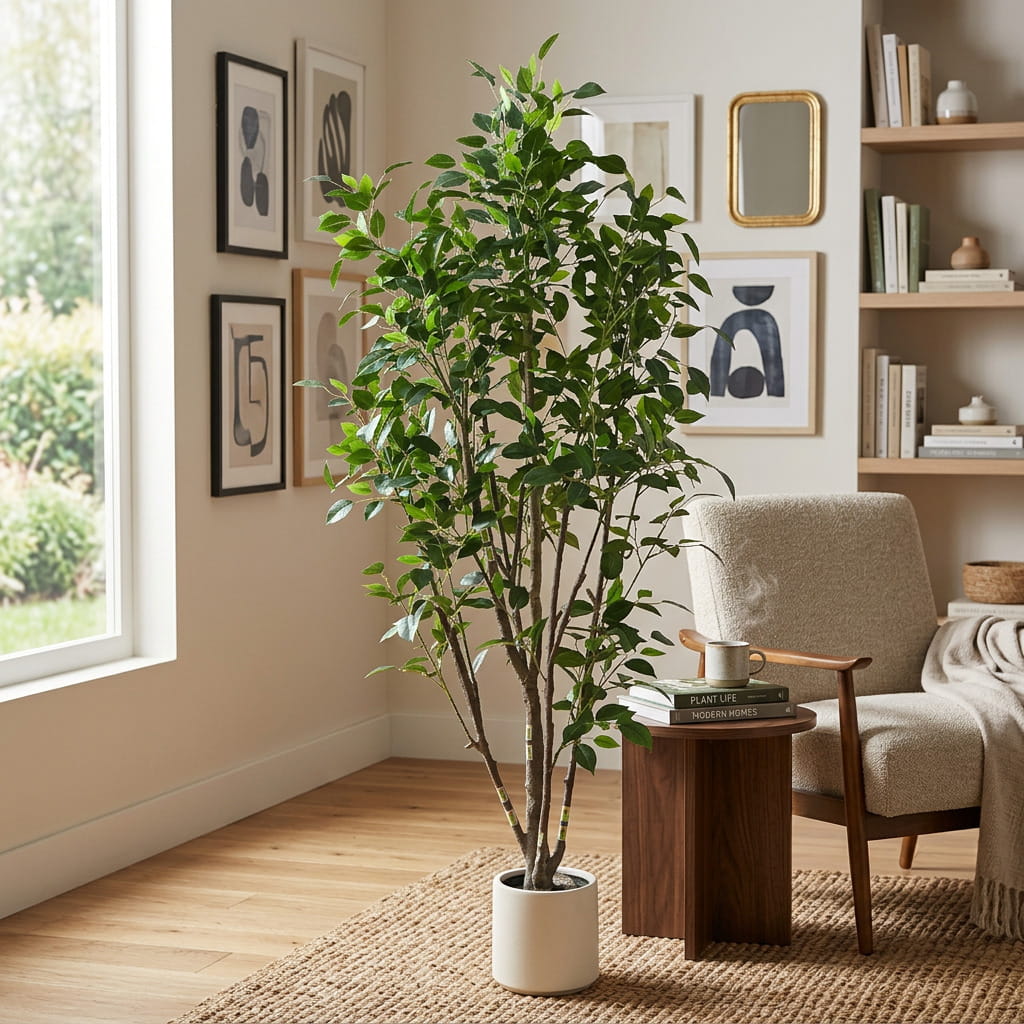
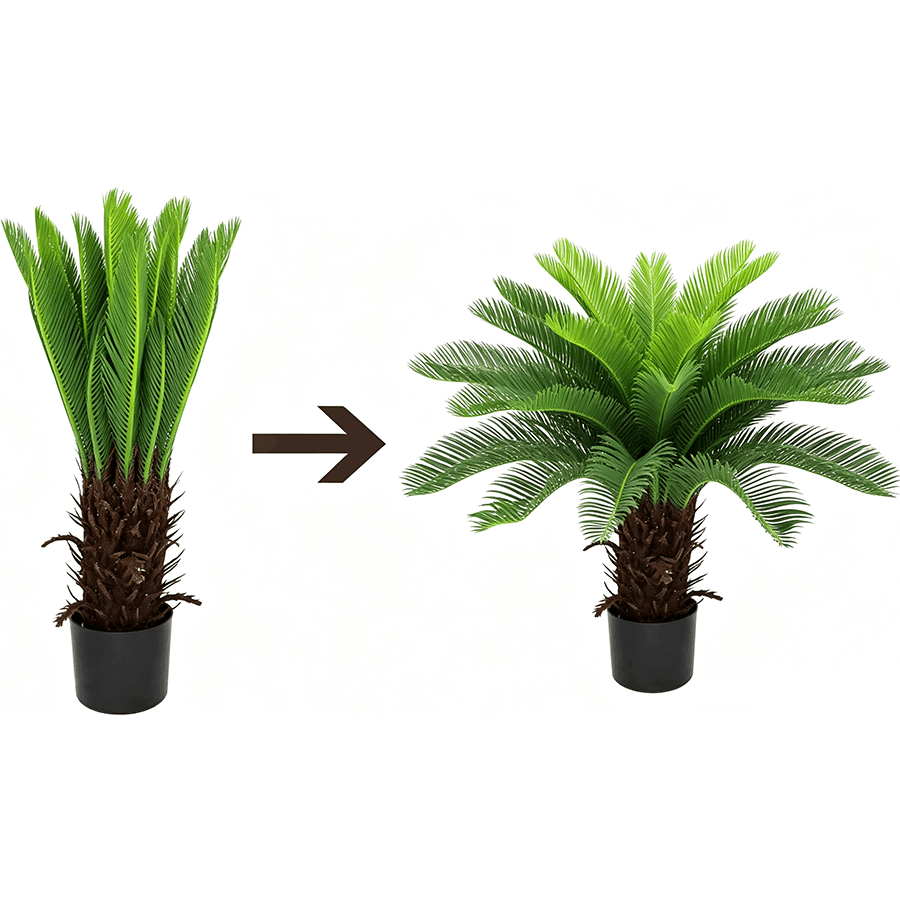
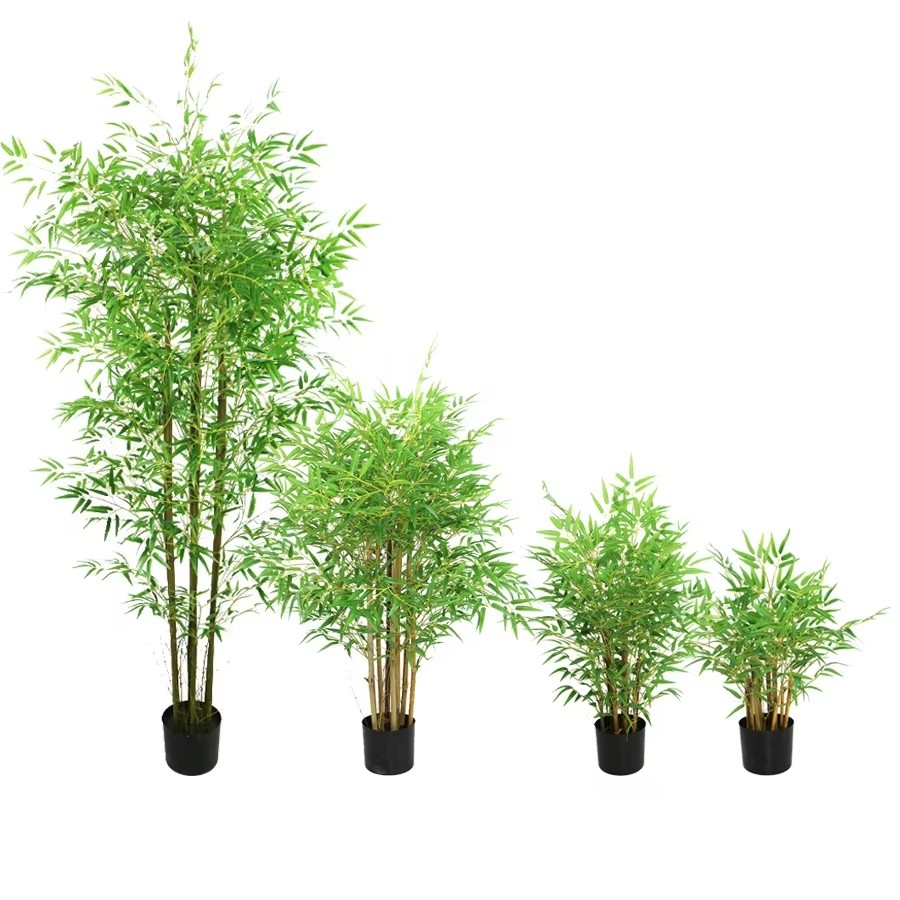
    Every corner is happier with a tree! That’s my philosophy anyway because I use indoor trees all over our house and in room makeovers we do for friends. As much as I would love to grow real indoor trees, I haven’t quite gotten the knack of it (maybe one day when I don’t have to also focus on feeding and watering these kids running around here). So I’ve searched around over the years to find the best artificial indoor trees and discovered some tricks to make them look real. Health Benefits of Having Indoor Plants If you ever find yourself staring at a room feeling like “something is missing”. I can almost bet it’s because it’s missing a planter of leafy green branches . But if you really want to add some drama and life, an indoor tree can wake up a room in seconds. Studies have been linked to plants for: · Improving our cognition · Making us more productive · Improving our well-being But if you struggle with keeping real ones alive and prefer to go the artificial indoor tree route instead, our brains can still perceive them the same as real trees to receive similar mental health benefits. (Real trees are better for benefits like purifying the air, but artificial trees can still boost your mood.) How to Make a Fake Indoor Tree Look Real I’ve learned a few tricks over the years while styling our room makeovers to make a fake indoor tree look as realistic as possible. 1. Place Plastic Bases in Larger Planters A lot of faux indoor trees are set in concrete in a small, plastic planter at the base, but a real tree of substantial height would need a large planter with room for roots and growth. So place your fake tree’s small base inside of a large planter to make it look realistic and add some extra drama. If you tree is a little too short, you can even add old books or boxes underneath to act as a riser and give it height. Place craft moss on top to conceal the plastic planter so that it looks like the real thing. 2. Separate Branches When you buy fake trees, the leaves are usually squashed and the branches are usually pressed together in shipping. So take a few minutes to pull apart each stem for some separation to create a full, natural look. Try to smooth out any leaves that have been crushed so they look realistic.   Do you have any indoor trees in your home? Are you a "real tree" person or a "fake tree" person? Perhaps one day you'll muster the courage to give growing a real tree another try.  
  • Why Artificial Plants Are Perfect for Lazy & Busy People
    May 19, 2026
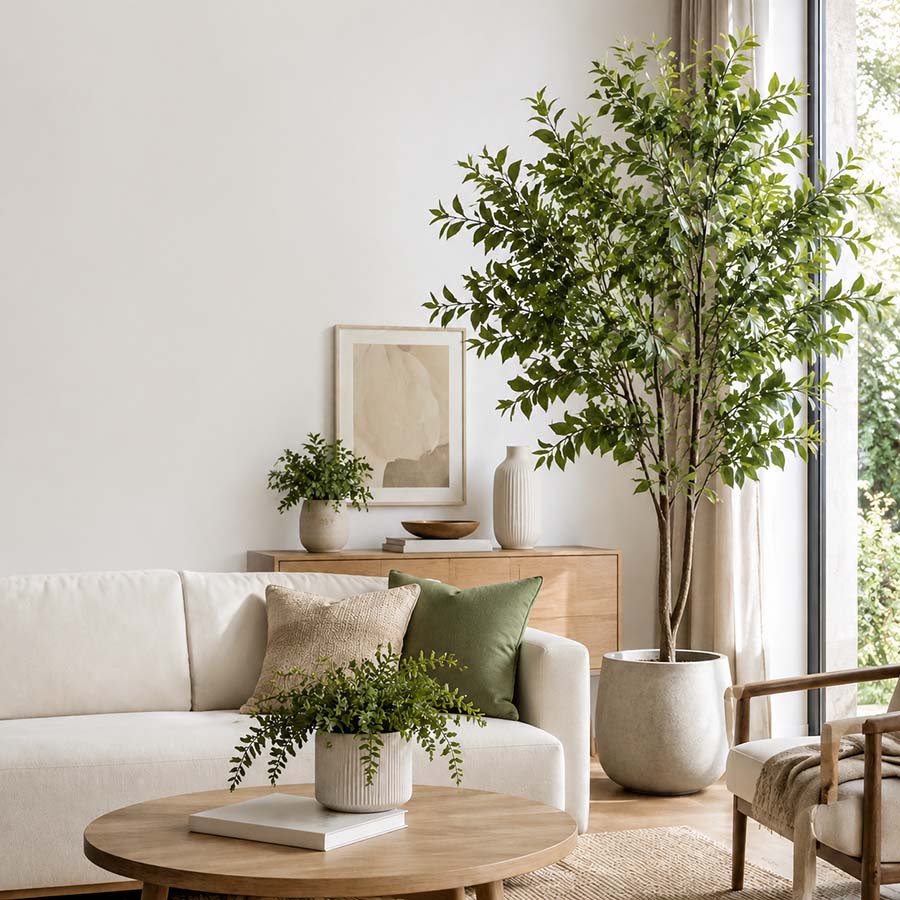
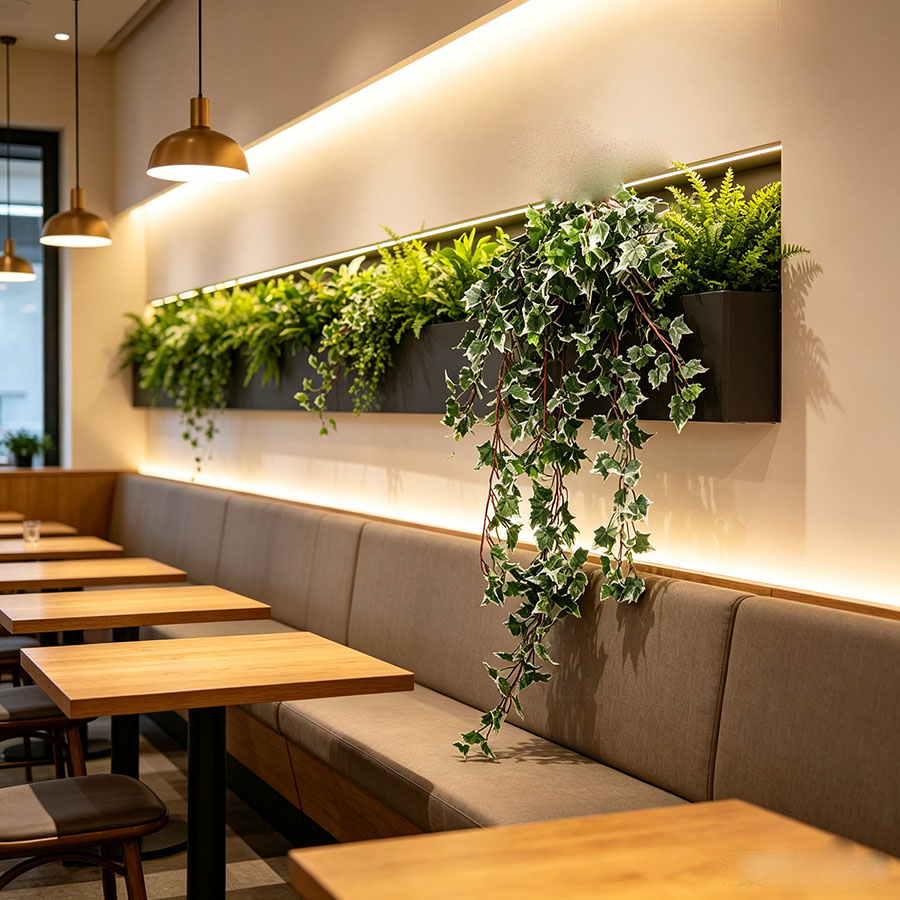
    Let’s be honest — not everyone has the time, energy, or patience to take care of real plants.   You buy a beautiful plant with good intentions, water it for a week, forget about it for a few days, and suddenly the leaves start turning yellow. Sound familiar? For busy professionals, frequent travelers, parents, or people who simply don’t have a “green thumb,” keeping real plants alive can feel like a full-time job.     That’s why artificial plants have become one of the fastest-growing trends in modern interior design. They give you the fresh, calming look of greenery without the stress of maintenance. Whether it’s a cozy apartment, office space, café, hotel lobby, or modern living room, faux plants make decorating easier, cleaner, and more practical.   Zero Maintenance, Maximum Beauty   The biggest reason people love artificial indoor plants is simple: they require almost no effort.   No watering.No sunlight.No pruning.No dead leaves all over the floor.   Unlike real plants, artificial greenery always looks fresh and vibrant every day of the year. Even if your schedule is packed or you travel often, your space can still feel warm, natural, and inviting. For people with busy lifestyles, this convenience is a game changer.   Perfect for Low-Light Homes & Offices   Not every room gets enough natural sunlight for real plants to survive. Apartments, offices, bathrooms, hallways, and commercial interiors often struggle to support live greenery.   That’s where realistic artificial plants become the perfect solution.   You can place them anywhere without worrying about lighting conditions, temperature, or humidity. A large artificial olive tree in a dark corner or a faux monstera plant beside your desk can instantly brighten the space without any special care.   Always Green, All Year Round   Real plants change with the seasons. Leaves fall, colors fade, and some plants become unhealthy during winter or dry weather.   Artificial plants stay consistently beautiful all year long.   Modern high-quality faux plants are designed with highly realistic textures, natural color variations, and detailed trunks that closely imitate real greenery. Many premium artificial trees look so realistic that guests often can’t tell the difference at first glance.   For homeowners and designers who want a polished interior all year round, artificial greenery offers reliable visual appeal.   Ideal for Busy Professionals & Frequent Travelers   If you spend long hours at work or travel frequently, plant care can quickly become inconvenient.   Real plants need regular attention, and leaving them unattended for even a short time can damage their health. Artificial plants completely eliminate that problem.   Whether you’re away for business trips, vacations, or simply managing a hectic schedule, your plants will always look perfect when you come home.   This is one reason why artificial plants for home décor have become increasingly popular among modern urban lifestyles.   A Cleaner & Allergy-Friendly Choice   For some people, real plants can trigger pollen allergies, attract insects, or create unwanted moisture indoors.   Artificial plants provide the relaxing visual effect of greenery without soil, bugs, or pollen. They’re also easier to clean and maintain, making them a practical choice for homes with pets, children, or allergy-sensitive family members.   Artificial Plants Fit Every Interior Style   One of the best things about faux greenery is its versatility.   Artificial plants work beautifully with almost every interior style, including:   Modern minimalist Scandinavian interiors Japandi design Luxury commercial spaces Tropical-inspired décor Contemporary apartments   From small tabletop plants to large artificial landscape trees, they help soften interiors and create a more welcoming atmosphere.   A Smart Long-Term Décor Investment   High-quality artificial plants are designed to last for years.   Unlike real plants that may need replacing, premium faux greenery maintains its shape, color, and fullness over time. Many modern artificial trees are also made with durable, UV-resistant, and fade-resistant materials, making them suitable for both indoor and outdoor decoration.   For homeowners and businesses, this makes artificial plants a cost-effective long-term investment with lasting visual impact.   Artificial plants are no longer just an alternative for people who can’t keep real plants alive. Today, they’ve become a stylish, practical, and modern décor solution for busy lifestyles.   If you want the beauty of greenery without the maintenance, artificial plants offer the perfect balance of convenience, realism, and timeless style.   From cozy homes to commercial interiors, faux greenery makes it easy to create beautiful spaces — no watering required.
  • Artificial Plants vs Live Plants: Which Is Better for Low Maintenance?
    Mar 27, 2026
    Indoor greenery has become a key element in modern interior design. From luxury hotels and stylish office spaces to cozy homes and cafés, plants instantly make a space feel fresher, warmer, and more inviting. But when it comes to choosing between artificial plants and live plants, maintenance is often the deciding factor.   While real plants bring natural beauty into a space, they also require ongoing care and attention. Artificial plants, on the other hand, offer a hassle-free way to enjoy greenery without the daily upkeep.   So which option is better for modern homes and commercial spaces? Let’s take a closer look at the maintenance differences between artificial plants and live plants.     1. Watering and Routine Care   One of the biggest challenges of keeping live plants is maintaining the right watering schedule. Different plants require different levels of care, and overwatering or underwatering can quickly lead to yellow leaves, root rot, or unhealthy growth.   Live plants also need regular pruning, fertilizing, and seasonal maintenance to stay healthy and visually appealing.   Artificial plants completely eliminate these concerns. They never need watering, trimming, or fertilizer, making them a practical solution for busy households, offices, hotels, restaurants, and retail spaces.   For commercial projects especially, low-maintenance greenery helps reduce both labor and long-term operating costs.   Better for Easy Maintenance:   Artificial Plants   2. Sunlight and Environmental Conditions   Live plants rely heavily on proper sunlight, temperature, and humidity levels. Some thrive in direct sunlight, while others prefer shaded areas or indirect light. Without the right conditions, natural plants can quickly lose their freshness and vitality.   Artificial plants are far more flexible. They maintain their appearance in almost any environment, including: Windowless offices Shopping malls Hotel lobbies Restaurants and cafés Hallways and dark corners   Many premium artificial plants are also UV-resistant, making them suitable for outdoor use without fading easily over time.   Better for Flexible Placement:   Artificial Plants   3. Cleaning and Ongoing Maintenance   Real plants naturally shed leaves and may attract insects or pests, especially in indoor commercial environments. Large-scale interior landscaping often requires professional plant maintenance services to keep everything looking clean and healthy. Artificial plants require very little upkeep. Occasional dusting with a soft cloth or air blower is usually enough to keep them looking fresh.   There’s no need for pest control, soil replacement, or complicated maintenance routines, which is why faux plants have become increasingly popular in high-traffic commercial spaces.   Better for Low Upkeep:   Artificial Plants   4. Durability and Long-Term Performance   Even with proper care, live plants can still be affected by seasonal changes, disease, and environmental stress.   High-quality artificial plants are designed for long-term durability. They maintain their shape, color, and overall appearance for years with minimal maintenance.   Large artificial landscape trees are especially popular in hotels, office buildings, and retail spaces because they provide a consistent, polished look all year round.   Better Long-Term Durability:   Artificial Plants   5. Appearance and Realism   Many people love live plants because they bring authentic natural beauty into a space. Their organic growth and natural fragrance create a calming connection to nature. However, modern artificial plants have become remarkably realistic. Premium faux trees now feature: Natural-looking trunks Layered foliage Realistic textures Detailed leaf variations Lifelike colors and shapes In many commercial interiors, today’s high-end artificial plants can achieve the same luxurious visual impact as live plants — without the maintenance challenges. Best Visual Choice: Depends on Personal Preference   6. Long-Term Cost Comparison   Although live plants may seem more affordable initially, long-term maintenance costs can add up quickly. Expenses often include: Irrigation systems Fertilizers Pest treatments Plant replacements Professional maintenance services Artificial plants usually require a higher upfront investment, but ongoing maintenance costs are extremely low. Over time, they are often the more cost-effective solution for both residential and commercial spaces.   More Cost-Effective Over Time:   Artificial Plants   Which Option Is Right for You?   If you enjoy gardening and don’t mind regular plant care, live plants can bring a beautiful and natural atmosphere into your space.   But if you’re looking for long-lasting greenery with minimal maintenance, artificial plants are often the smarter and more practical choice — especially for: Commercial interiors Luxury hotels Office spaces Retail environments Large decorative projects Busy households   Today’s realistic artificial plants combine style, durability, and convenience, making them one of the fastest-growing trends in modern interior landscaping and commercial décor.   Both artificial plants and live plants have their own unique advantages. However, when it comes to convenience and maintenance, artificial plants clearly offer a simpler and more efficient solution. From large artificial landscape trees to realistic indoor faux plants, modern artificial greenery allows you to enjoy the beauty of nature without worrying about watering, sunlight, or ongoing care. Whether you’re decorating a home, office, hotel, or commercial space, artificial plants provide a stylish, low-maintenance way to create a fresh and welcoming environment all year round.
1 2

leave a message

leave a message
If you are interested in our products and want to know more details,please leave a message here,we will reply you as soon as we can.

Home

Products

WhatsApp

contact