Where to Install Artificial Plant Walls in High-Rise Buildings
Jun 05, 2026
High-rise buildings—whether they host luxury residential apartments, premium corporate offices, or boutique hotels—often face a common architectural challenge: a lack of natural connection to the outdoors. As urban spaces reach higher into the skyline, bringing the calming, restorative elements of nature indoors becomes a necessity rather than a luxury.
While living vertical gardens are beautiful, the complex irrigation systems, risk of water damage, weight restrictions, and lack of consistent sunlight in high-rises make them highly impractical.
Enter premium artificial plant walls. They offer the exact same biophilic design benefits—boosting mood, productivity, and aesthetic value—with zero maintenance, zero water, and zero weight-bearing concerns.
If you are looking to elevate your high-rise property, here are the absolute best strategic locations to install artificial greenery walls.
1. Grand Lobbies and Reception Areas
The Ultimate First Impression
The lobby is the handshake of your building. It sets the tone for the entire experience, whether someone is arriving for a high-stakes business meeting or returning home to their penthouse.
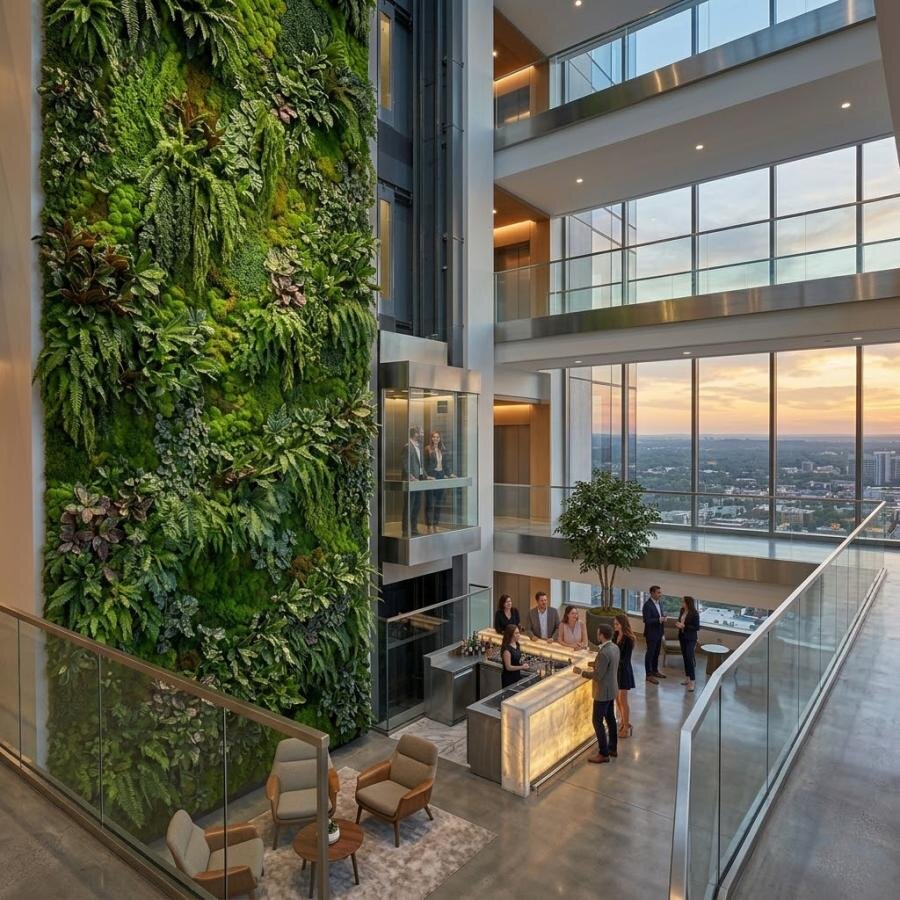
High-rise lobbies often feature soaring ceilings and minimalist concrete, glass, or marble surfaces. While stunning, these materials can sometimes feel sterile or imposing. A double-height artificial plant wall introduces an instant "wow factor." It softens the hard architectural lines, injects vibrant color, and creates a welcoming, premium atmosphere the moment the elevator doors open.
Design Tip: Use a mix of dense foliage like faux ferns, eucalyptus, and subtle ivy to create a rich, layered texture that looks completely organic even under bright architectural spotlights.
2. Elevator Banks and Lift Lobbies
Transforming Transitional Dead Space
Waiting for an elevator is one of the few moments in a high-rise where occupants are completely idle. These transitional zones are notorious for being narrow, windowless, and utilitarian.
Installing a striking vertical green wall in the lift lobby transforms a mundane waiting area into an engaging visual experience. Because these spaces completely lack natural sunlight, living plants would perish within weeks. High-quality faux foliage thrives here permanently, requiring nothing more than an occasional dusting to look pristine.
3. Sky Logistics: Atriums and Amenity Floors
Creating an Urban Oasis in the Clouds
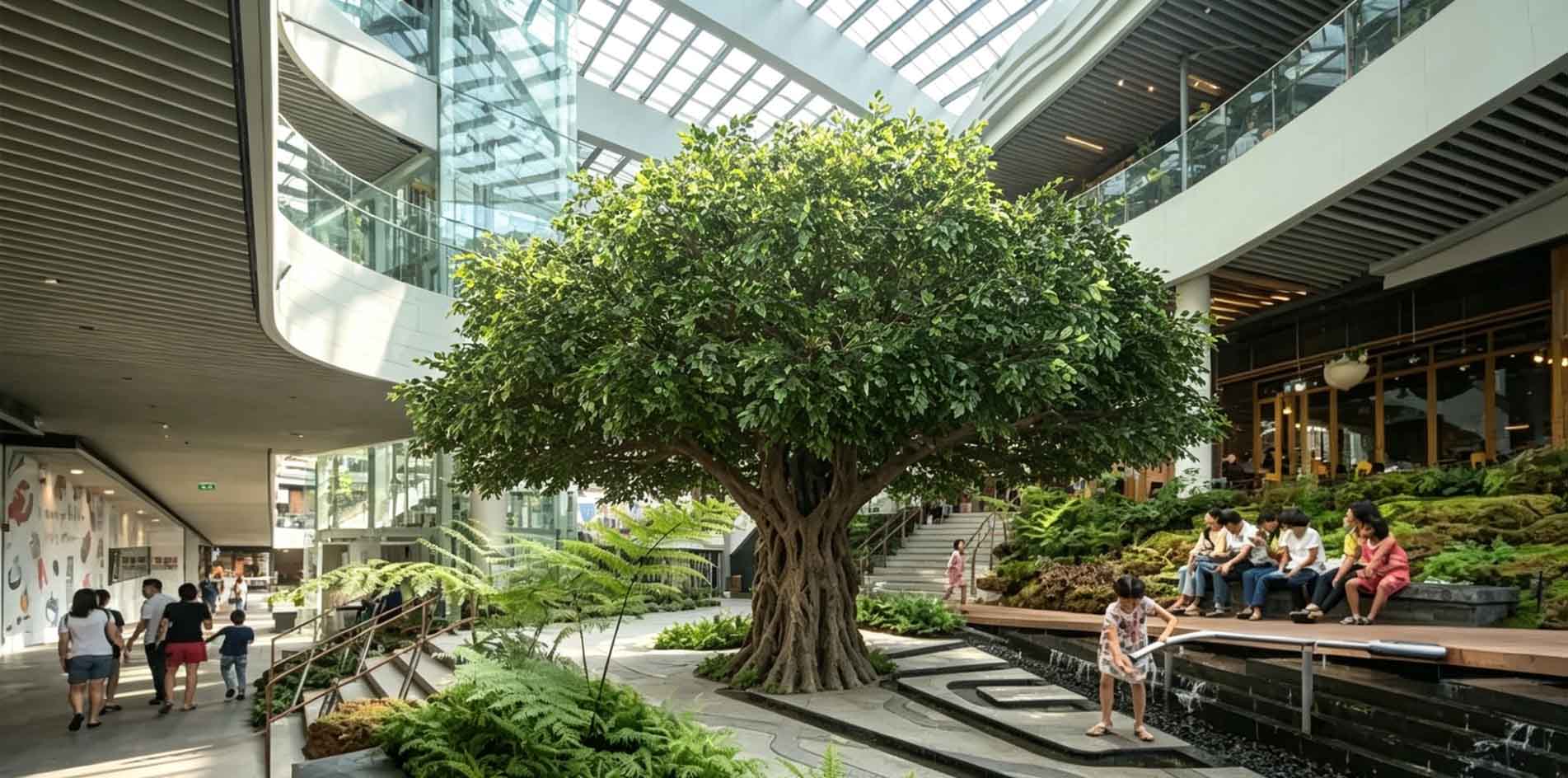
Modern high-rises frequently dedicate mid-level or top-tier floors to community amenities—think sky lounges, co-working spaces, fitness centers, and indoor pool decks.
Integrating artificial plant walls into these wellness-focused spaces reinforces the feeling of an "urban oasis."
In Co-working Lounges: Greenery acts as a visual anchor that reduces cognitive fatigue and sparks creativity.
In Sky Lounges: A faux green wall provides a stunning, photo-worthy backdrop for evening cocktails, contrasting beautifully with the glittering city grid visible through the floor-to-ceiling windows.
4. Executive Boardrooms and Zoom Backdrops
The New Standard for Corporate Branding
In corporate high-rises, the boardroom needs to project innovation, sustainability, and forward-thinking design. Furthermore, in the era of hybrid work, having a professional, visually clean background for video conferences is crucial.
An artificial plant wall installed behind the main seating area or as a feature wall in a conference room does double duty:
1. Acoustic Benefits: While they don’t replace dedicated acoustic panels, the dense, varied leaves of a high-quality faux wall help diffuse sound waves, subtly reducing echo in glass-heavy boardrooms.
2. Branding: It offers a pristine, vibrant backdrop for video calls that looks sharp, professional, and sophisticated.
5. Covered Balconies and Rooftop Terraces
Seamless Indoor-Outdoor Flow
High-rise balconies and rooftops are subject to extreme environmental elements: scorching afternoon sun, intense wind gusts, and rapid temperature fluctuations. Maintaining real plants in these microclimates is a never-ending, expensive battle.
UV-engineered artificial plant walls are the perfect solution for covered terraces and rooftop bars. They create a lush, private garden feel without the risk of wind-damaged leaves or sun-bleached brown spots.
Important Note: When installing outdoors or near high-altitude windows, ensure your artificial green walls are explicitly rated for UV stability (3–5 year lifespan) to prevent fading, and use commercial-grade fasteners to secure them against high wind loads.
Summary Matrix: High-Rise Placement at a Glance
Location
Core Benefit
Light Requirement
Recommended Style
Grand Lobby
High visual impact & premium branding
None
Dramatic, multi-textured tropical foliage
Elevator Banks
Brightens dark, windowless transit zones
None
Uniform, clean boxwood or elegant ivy matrix
Sky Lounges
Enhances wellness & photo-worthy aesthetics
None
Lush, wild forest styles with integrated neon signage
Boardrooms
Sound diffusion & premium video backdrops
None
Sleek, low-profile moss or delicate fern blend
Rooftop Terraces
Weather-resistant privacy & wind-blocking
Requires UV-Protection
Dense, heavy-duty UV-rated outdoor foliage
Elevate Your Skyline Views with Biophilic Design
The future of high-rise architecture belongs to spaces that prioritize human well-being. By strategically placing artificial plant walls in high-traffic, low-light, or weather-challenged areas of your building, you effortlessly bridge the gap between concrete and nature.
Ready to transform your vertical space? Opt for premium, fire-retardant, and UV-stable foliage solutions to ensure your urban oasis remains breathtaking for years to come.