Artificial Plants: A Simple Way to Enhance Your Interior Design
Nov 17, 2026
Artificial plants have become a common element in modern interior design. From residential living rooms and bedrooms to hotels, offices, restaurants, and retail stores, artificial greenery offers a practical way to introduce natural-looking elements into different environments. With improvements in materials, leaf structures, colors, and overall craftsmanship, today's artificial plants can provide a realistic decorative appearance while fitting a wide range of interior styles.
Whether used as a small tabletop accent, a tall artificial tree, or a large green wall installation, artificial plants can help create visual balance, add texture, and make interior spaces feel more complete. Understanding how to choose, arrange, and combine artificial plants with existing furniture and decorative elements is important for achieving a coordinated result.
This guide explores practical ways to incorporate artificial plants into interior design, including suitable plant types, placement ideas, material considerations, and applications in both residential and commercial spaces.
1. Why Artificial Plants Are Used in Modern Interior Design
Interior design is not only about selecting furniture, lighting, and colors. Decorative elements also play an important role in creating a comfortable and visually balanced environment. Artificial plants offer another design option for introducing greenery into indoor spaces.
1.1 Consistent Appearance Throughout the Year
One of the main characteristics of artificial plants is their ability to maintain a consistent appearance without depending on seasonal changes. Unlike natural plants, artificial greenery does not require sunlight, watering, or regular pruning to maintain its decorative shape.
This makes artificial plants suitable for areas where natural plants may struggle, such as windowless offices, hotel corridors, shopping centers, and interior spaces with limited daylight.
1.2 Flexible Placement Options
Artificial plants can be placed in different areas without considering the light and watering conditions required by living plants. They can be used in corners, near reception desks, beside sofas, along hallways, or in commercial display areas.
Their flexibility also allows designers to create decorative arrangements in locations that may not be suitable for natural greenery.
1.3 Different Styles for Different Interiors
Artificial plants are available in many varieties, including tropical plants, flowering plants, artificial trees, hanging greenery, and decorative branches.
Different shapes and foliage styles can complement different interior design concepts:
Minimalist interiors: Simple artificial plants with clean silhouettes and green foliage.
Modern interiors: Large artificial trees with structured branches and decorative planters.
Tropical interiors: Artificial palms, monstera plants, and banana trees.
Scandinavian interiors: Small artificial plants with subtle colors and natural-looking shapes.
Classic interiors: Artificial olive trees, ficus trees, and flowering arrangements.
Choosing the right plant style helps connect greenery with the overall interior design.
2. How to Choose the Right Artificial Plants for Your Space
Selecting artificial plants involves more than choosing a species that looks attractive. Size, shape, color, material, and placement should all be considered before making a decision.
2.1 Consider the Size and Proportion of the Room
The size of an artificial plant should match the available space and surrounding furniture.
For example, a small artificial plant may look appropriate on a coffee table, bookshelf, or office desk, while a tall artificial tree can create a stronger visual feature in a spacious living room or hotel lobby.
Consider the following general guidelines:
Small plants (30–80 cm): Suitable for desks, shelves, countertops, and small decorative arrangements.
Medium plants (80–150 cm): Suitable for bedrooms, living rooms, office corners, and reception areas.
Large plants (150–250 cm): Suitable for spacious living rooms, restaurants, hotels, and commercial interiors.
Extra-large artificial trees (250 cm and above): Suitable for shopping malls, hotel lobbies, showrooms, and large interior projects.
These are general reference ranges rather than fixed design rules. Ceiling height, furniture dimensions, and available floor space should also influence the final selection.
2.2 Choose Plants That Match Your Interior Style
Different artificial plants create different visual effects.
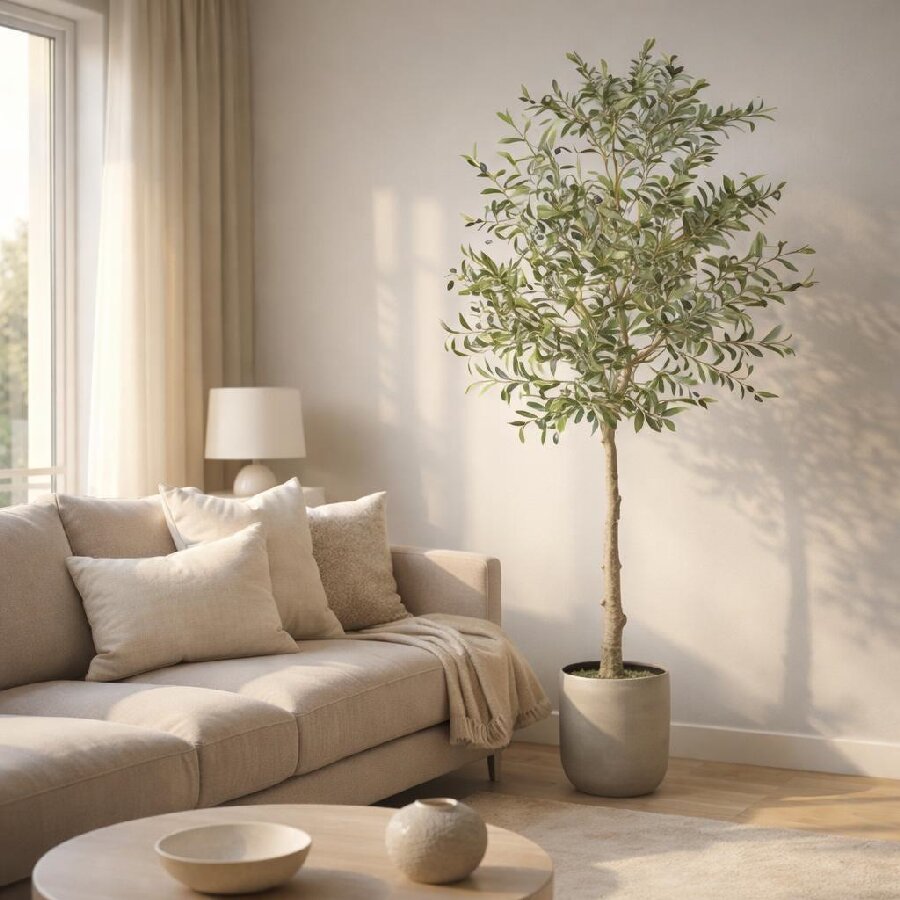
For example, an artificial monstera tree with large split leaves can introduce a tropical appearance, while an artificial olive tree with slender branches and narrow leaves may suit contemporary, Mediterranean, or minimalist interiors.
Ficus trees are another versatile option. Their fuller foliage and natural branching structures can work well in residential and commercial environments.
When selecting artificial plants, consider the existing furniture, wall colors, flooring, and decorative accessories. A coordinated combination of these elements usually creates a more balanced result than choosing plants individually.
2.3 Pay Attention to Foliage, Trunks, and Materials
The appearance of artificial plants depends heavily on their construction and materials.
Common materials include:
PE (Polyethylene): Often used for realistic foliage with molded leaf shapes and detailed textures.
PVC (Polyvinyl Chloride): Commonly used in artificial leaves and decorative plant components.
Silk or fabric: Used for flowers and certain types of decorative foliage.
Natural wood: Used in selected artificial trees to provide authentic trunk textures and natural branching characteristics.
Plastic and metal: Commonly used for internal structures, stems, supports, and pots.
The choice of material affects the leaf texture, flexibility, color, durability, and overall appearance.
For larger artificial trees, trunk structure and branch arrangement are particularly important. Natural wood trunks can provide a different visual character compared with manufactured artificial trunks, making them suitable for projects that require a more natural-looking tree structure.
3. Decorating Different Rooms with Artificial Plants
One advantage of artificial plants is that they can be incorporated into many types of interior spaces. The key is to select plant varieties and arrangements that match the function and proportions of each room.
3.1 Living Room: Create a Natural Focal Point
The living room is one of the most common places to use artificial plants.
A tall artificial tree placed beside a sofa, near a window, or in an empty corner can help fill unused vertical space. Popular choices include artificial olive trees, ficus trees, monstera trees, and artificial palms.
For smaller living rooms, tabletop artificial plants or compact potted greenery can add decorative detail without taking up too much floor space.
Design suggestion: Combine one medium or large artificial tree with smaller decorative plants on shelves or side tables. This creates different levels of greenery without overcrowding the room.
3.2 Bedroom: Add Subtle Greenery
Bedrooms generally benefit from simple and uncluttered decorative arrangements.
Small artificial plants can be placed on bedside tables, dressers, or open shelves. Medium-sized artificial plants can also be positioned in an empty corner to complement bedroom furniture.
Plants with softer foliage and balanced shapes are often suitable for bedrooms. Artificial eucalyptus, small ficus plants, and compact artificial palms are examples of decorative options.
The overall arrangement should remain consistent with the room's color palette and furniture style.
3.3 Office: Introduce Greenery into Workspaces
Office environments often include large desks, meeting rooms, reception areas, and shared working spaces. Artificial plants can be used to add decorative greenery without requiring regular maintenance.
Small artificial plants work well on office desks and shelves, while medium-sized plants can be placed near meeting tables or in office corners.
For reception areas, a taller artificial tree can create a more defined decorative feature. Larger offices may also use several coordinated artificial plants to maintain a consistent interior style.
3.4 Hotel and Restaurant: Enhance the Guest Environment
Hotels and restaurants often use decorative plants to create a recognizable interior atmosphere.
Artificial plants can be placed near entrances, reception counters, dining areas, lounge spaces, and corridors.
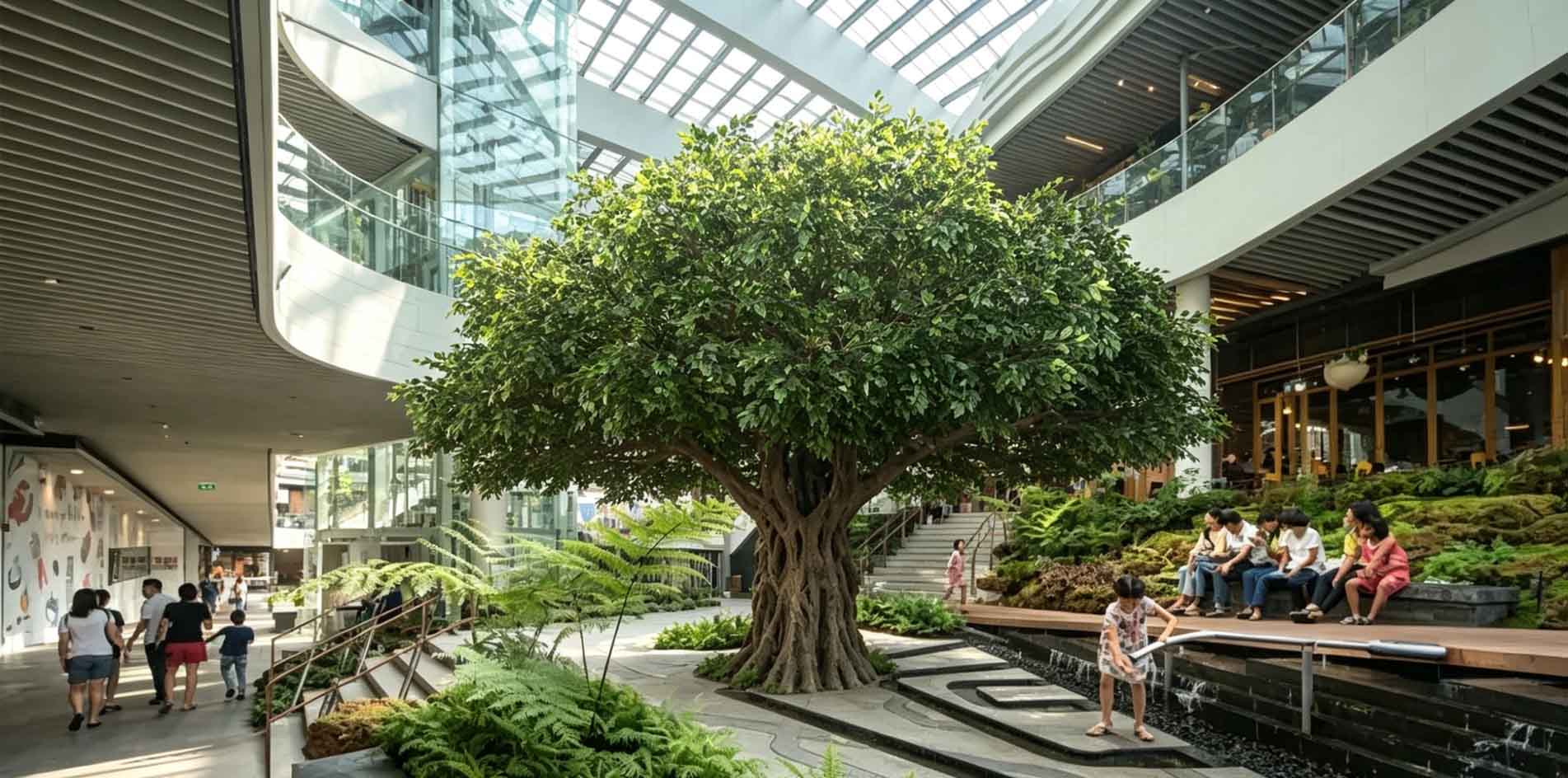
For hotel lobbies, large artificial trees such as banyan trees, olive trees, and palm trees can serve as prominent decorative features.
Restaurants may use artificial hanging plants, small potted greenery, or artificial flowering branches to complement their interior themes.
For commercial projects, designers should also consider practical requirements such as installation methods, available floor space, cleaning access, and applicable fire-safety standards.
4. How to Arrange Artificial Plants for a Balanced Interior
Choosing suitable artificial plants is only one part of interior decoration. Their placement and arrangement also influence the overall appearance of a space.
4.1 Use Different Heights to Create Visual Interest
Arranging plants at different heights can create a more natural and layered appearance.
For example, a room may include:
A tall artificial tree placed on the floor.
A medium-sized artificial plant beside a cabinet.
A small decorative plant placed on a shelf or table.
This arrangement introduces variation while maintaining a coordinated decorative theme.
4.2 Avoid Overcrowding
Using too many artificial plants in one area may make the interior feel crowded.
Instead of filling every available corner, identify a few areas where greenery can contribute to the overall design.
For example, one large artificial tree may be sufficient for a small living room, while a larger commercial interior may benefit from several plants distributed across different functional areas.
The objective is to maintain a balance between decorative greenery and usable space.
4.3 Select Suitable Decorative Planters
The planter is an important part of an artificial plant arrangement.
A simple black or white planter may suit modern interiors, while ceramic, stone-look, woven, or textured planters can complement other decorative styles.
Many artificial plants are supplied with basic plastic pots or internal planting bases. These can be placed inside larger decorative planters to match the surrounding furniture and interior colors.
4.4 Consider Lighting and Surrounding Colors
Although artificial plants do not depend on light for growth, lighting still affects how they look within an interior.
Natural daylight, ceiling lights, and decorative spotlights can highlight leaf textures and branching structures.
Green foliage often works well with neutral colors such as white, beige, gray, and natural wood tones. Flowering artificial plants can also introduce additional colors when used with suitable furniture and decorative elements.