other

artificial tree

  • Artificial Plants for Fall: How to Create a Natural Autumn Look
    Aug 19, 2026
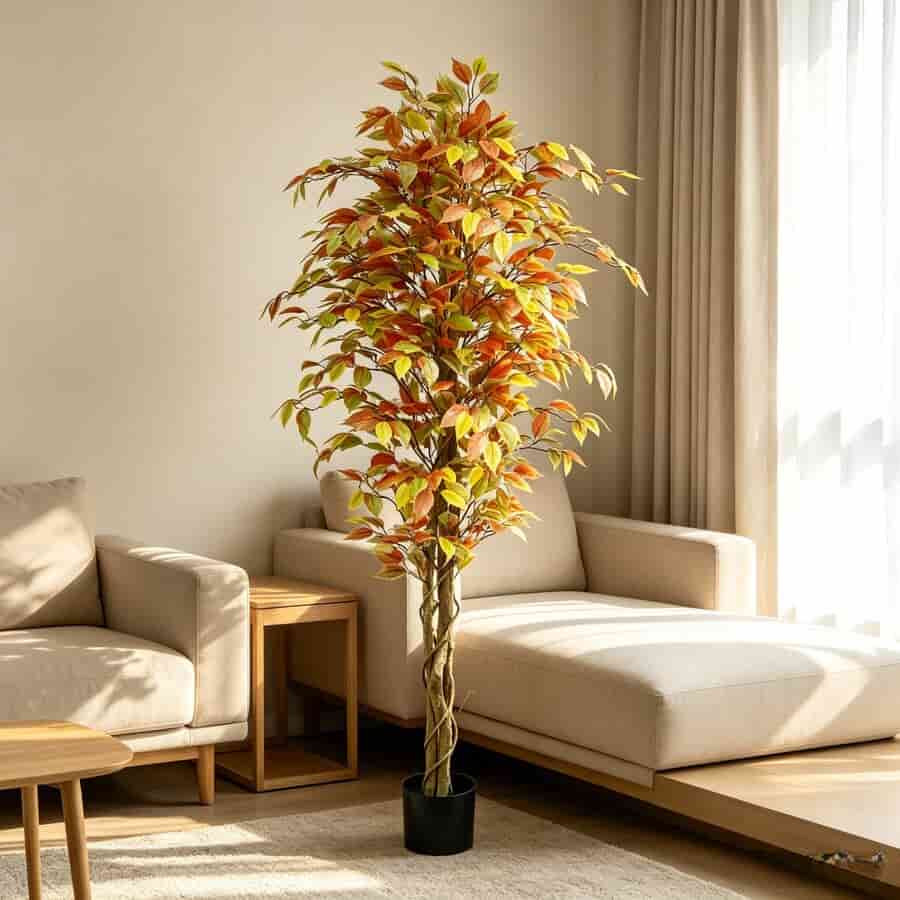
    Simple Ways to Refresh Your Space with Fall Artificial Plants As summer comes to an end, many interiors begin to shift from bright, fresh colors to warmer and more layered seasonal styles. You do not need to completely redecorate a room to create this change. A few carefully selected artificial plants for fall can introduce autumn colors, textures, and natural elements while keeping the existing greenery in place. Unlike seasonal fresh flowers or live plants, artificial plants can be rearranged, stored, and reused from year to year. This makes seasonal decorating more flexible, especially for homes, hotels, restaurants, retail stores, and other spaces that need regular visual updates.     Why Change Artificial Plants for Fall? Some common fall-inspired colors include: Warm green Golden yellow Burnt orange Rust Burgundy Brown Deep red The goal does not have to be a dramatic transformation. In many spaces, keeping some summer greenery while introducing a few autumn elements creates a more natural transition.   Start with Your Existing Artificial Plants Before adding new fall artificial plants, look at the plants you already have. Large artificial trees such as fiddle leaf figs, ficus trees, olive trees, and eucalyptus can often remain in place throughout the year. Their green foliage provides a neutral foundation that works with different seasonal decorations. Instead of replacing a large tree, consider changing the smaller elements around it.   Keep the Greenery Green artificial plants can continue to work well in fall. Plants with realistic leaves provide a natural background for seasonal colors. For example, an artificial olive tree can remain in a living room or hotel lobby while smaller fall branches, dried grasses, or warm-colored flowers are added nearby.   Add Seasonal Accents Small changes can make a larger visual difference than expected. Consider adding: Artificial maple leaves Faux autumn branches Artificial berries Dried-grass-style stems Warm-colored artificial flowers Seasonal wreaths Decorative planters This approach allows the same artificial plants to work across several seasons.     Choose Artificial Plants with Autumn Colors Color is one of the easiest ways to create a fall atmosphere. When selecting artificial plants for fall, look for foliage or flowers with natural variations rather than using one strong color throughout the room.   Artificial Maple and Autumn Trees Maple-inspired foliage is closely associated with autumn. Artificial maple trees and branches can become a visual focal point in an entryway, living room, reception area, or commercial display. For larger spaces, a tall artificial fall tree can add height and create a seasonal statement without requiring extensive decoration.   Artificial Branches and Stems Branches and stems are useful when a full artificial tree would be too large. They can be placed in: Glass vases Ceramic containers Decorative baskets Reception desks Dining tables Shelving units A combination of green foliage with orange, red, or golden stems can create a gradual transition from summer to fall.       Artificial Flowers Artificial chrysanthemums, dahlias, hydrangeas, and other warm-toned flowers can add seasonal color to smaller areas. A compact arrangement can work on a coffee table, countertop, reception desk, or dining table without changing the rest of the room.   How to Transition Room by Room Different spaces require different approaches. The best artificial plants for fall should match both the size of the room and the way the space is used.   Living Room The living room usually benefits from a combination of large greenery and smaller seasonal accents. Keep an existing artificial tree in the corner and add a warm-colored arrangement to a coffee table or sideboard. A textured basket or neutral ceramic planter can also help create a warmer autumn appearance.   Entryway The entryway is one of the easiest places to introduce seasonal décor. A tall artificial tree can provide height, while a small arrangement or autumn wreath can add color around the entrance. For larger entryways, two matching artificial trees can create a balanced appearance on either side of a doorway or console table.   Dining Room The dining table provides an opportunity to use smaller fall artificial plants. Instead of using a large centerpiece, consider a low arrangement of artificial foliage, autumn branches, or warm-colored flowers. This keeps the table practical while still introducing seasonal details.   Bedroom Fall decorating in a bedroom usually works best when the colors remain subtle. A small artificial eucalyptus plant, olive branch, or muted autumn arrangement can add seasonal texture without making the room feel overly decorated.   Commercial Spaces Hotels, restaurants, retail stores, offices, and event venues can also use artificial plants for fall to create seasonal displays. For commercial spaces, larger artificial trees can define an area, while smaller arrangements can be used on reception counters, dining tables, shelves, or display areas. Because artificial greenery does not require watering or regular pruning, it can also be easier to maintain during a seasonal display period.   Mix Summer Greenery with Fall Artificial Plants A common mistake when decorating for fall is removing all green plants at once. In many cases, a more balanced approach is to combine summer greenery with autumn elements. For example: Green artificial tree + warm autumn branches + neutral planter or Artificial eucalyptus + dried-grass-style stems + burgundy flowers This combination creates a gradual seasonal transition rather than making the room look completely different overnight. It also allows the same artificial plants to remain useful throughout the year.   Choose the Right Planter The planter can influence the appearance of an artificial plant almost as much as the foliage itself. For a summer look, lighter baskets and bright ceramic containers may work well. For fall, consider materials and colors such as: Terracotta Natural wood Woven baskets Matte ceramic Beige Brown Charcoal Warm white Neutral planters are particularly useful because they can be reused with different fall artificial plants and seasonal arrangements.   How to Make Artificial Plants Look More Natural Realistic appearance is important when using artificial plants as seasonal décor. A few simple adjustments can improve the overall presentation.   Adjust the Branches Artificial branches are often designed to be flexible. Spread individual stems and leaves slightly instead of leaving them in their original packed position.   Combine Different Textures Mixing broad leaves, narrow grasses, branches, and flowers creates more visual depth.   Avoid Perfect Symmetry Natural plants rarely grow in perfectly even patterns. Slightly different heights and directions can make an artificial arrangement appear more organic.   Keep the Base Simple A clean planter or basket can help the foliage remain the main visual element.   How to Store Seasonal Artificial Plants One advantage of fall artificial plants is that they can be reused. When the season ends, clean the foliage gently and remove dust before storage. Store smaller stems and arrangements in a dry container where they will not be crushed. Larger artificial trees may not need to be completely disassembled. If possible, keep them in a dry indoor storage area and protect delicate leaves and branches from pressure. Good storage can help seasonal artificial plants remain useful for many years.       The transition from summer to fall does not require a complete change of décor. By keeping versatile green artificial plants and adding a few seasonal colors, textures, and accessories, a space can gradually take on a warmer autumn character. From artificial maple trees and autumn branches to small floral arrangements and neutral planters, there are many ways to use artificial plants for fall in different settings. The most practical approach is to build around existing greenery, introduce seasonal accents gradually, and choose pieces that can be rearranged or reused in future seasons. This creates a flexible decorating system that works for both residential and commercial spaces.  
  • How to Shape Artificial Plants After Unpacking: Easy Steps to Make Fake Plants Look Real
    Aug 03, 2026
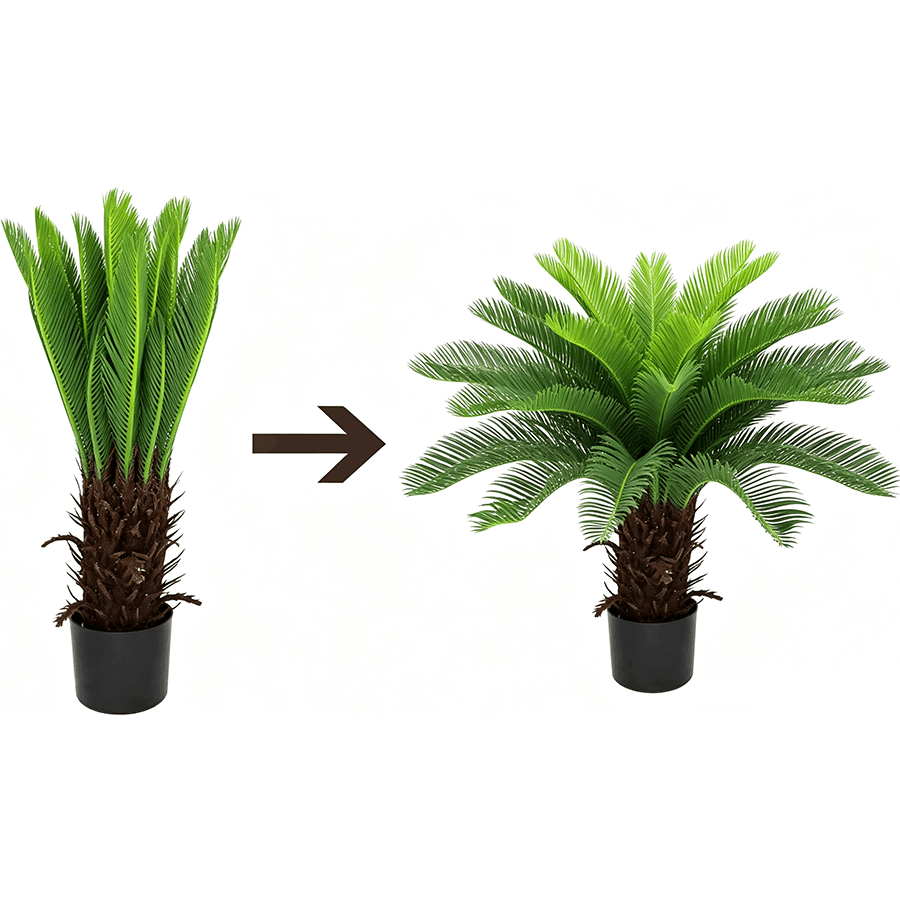
    When you receive a new artificial plant, it may not look exactly like the display photos immediately after opening the package. Leaves may be folded, branches may be pressed together, and the overall shape may appear smaller or less natural. This happens because artificial plants are usually packed carefully to protect the structure and reduce transportation space. During shipping, branches and leaves can become compressed, especially for larger artificial trees and plants. The good news is that most artificial plants are designed to be reshaped. With a few simple adjustments, you can restore the original appearance and create a fuller, more realistic look. Knowing how to shape artificial plants after unpacking is useful for homeowners, interior designers, retailers, hotels, restaurants, and commercial spaces that want their artificial greenery to look natural and attractive. This guide explains how to reshape fake plants, how to fluff artificial plants, how to arrange artificial plant leaves, and how to style artificial trees step by step.   Before shaping the leaves:     Why Do Artificial Plants Need Shaping After Unpacking? Artificial plants are made with flexible materials such as plastic, fabric, silk, PE, PVC, and metal-supported stems. These materials allow plants to maintain their structure while also making it possible to adjust their shape after installation.   During transportation, artificial plants are commonly packed in compact forms. This may cause: Leaves to overlap each other Branches to move closer together Stems to bend slightly Flowers or foliage to lose their original arrangement   Unlike live plants, artificial plants will not naturally spread their leaves or adjust their branches over time. The final appearance depends on proper manual styling. A few minutes of shaping can make a significant difference. By separating branches, adjusting leaf angles, and creating natural layers, an artificial plant can look much closer to a real plant.   Prepare Before Shaping Your Artificial Plant Before you start adjusting your artificial plant, prepare a suitable workspace and a few basic tools.   Choose a Spacious Area Large artificial trees need enough space to be fully opened. A small area may limit your ability to see the overall shape. A good location should allow you to: Walk around the plant View it from different angles Adjust branches freely   Useful Tools Most plants can be shaped by hand, but some tools can help. Gloves Gloves are useful when working with large artificial trees or plants with many branches. They also help prevent dust from transferring to the leaves. Spray Bottle A light mist of water may help relax certain fabric leaves or flower petals. Hair Dryer A hair dryer on low heat can help soften some materials. Keep it at a safe distance and avoid applying high heat directly. Small Scissors Scissors can be used to remove packaging ties or make minor adjustments if necessary.   Step-by-Step: How to Shape Artificial Plants After Unpacking Step 1: Remove All Packaging Carefully Start by removing protective materials slowly. Do not immediately pull branches outward with force. First, check the plant structure and identify: Main stem position Branch connection points Leaf arrangement Overall plant direction For larger artificial trees, remove packaging from top to bottom and gently release each section.   Shape the Main Structure First One of the most important tips for how to reshape fake plants is to adjust the branches before the leaves. The main structure determines the final appearance. Start with:   Opening Large Branches Move larger branches away from the center to create volume.   Creating Different Heights Avoid keeping all branches at the same level. Natural plants usually have uneven growth patterns.   Checking Balance Look at the plant from different directions and adjust areas that appear too empty or too crowded.   For artificial trees such as olive trees, ficus trees, and palm trees, branch positioning creates the foundation of a realistic appearance.   After shaping the leaves:                   How to Fluff Artificial Plants for a Fuller Look   Many customers ask how to fluff artificial plants after receiving them. Fluffing means separating and arranging leaves to increase fullness and improve the overall shape.   Separate Leaves Individually During transportation, leaves may stick together. Gently separate them one by one instead of opening several leaves at the same time. This helps prevent damage and creates a more natural arrangement.   Change Leaf Directions In nature, leaves do not grow in identical directions. Adjust leaves in different ways: Some facing upward Some extending sideways Some slightly downward Some closer to the center This variation creates depth.   Build Layers A realistic plant usually has multiple layers: Outer leaves create width Middle leaves create volume Inner leaves add depth   Avoid placing every leaf on the same surface.   How to Arrange Artificial Plant Leaves Like a Real Plant Correct leaf arrangement is one of the most important factors in making artificial plants look realistic. Many artificial plants appear unnatural because every leaf is positioned too evenly. Here are some practical methods.   Follow Natural Growth Patterns Observe real plants and copy their growth direction. For example:   Palm Trees Palm leaves usually spread outward in a fan shape. Adjust each leaf at slightly different angles.   Monstera Plants Large leaves often face different directions rather than all pointing forward.   Olive Trees Olive branches usually have a soft, flowing shape with small leaves distributed along the stems.   Ficus Trees Ficus trees often have a fuller canopy with overlapping layers.   Proper shaping is an important step after receiving an artificial plant. Although transportation may temporarily change the appearance, careful adjustment can restore the natural structure and improve the overall decorative effect. By learning how to shape artificial plants after unpacking, how to make artificial plants look real, and how to arrange artificial plant leaves, anyone can create realistic greenery that works well for homes, offices, hotels, restaurants, and commercial spaces. With the right styling techniques, artificial plants can provide long-lasting beauty while keeping maintenance simple.  
  • Optimizing Freight Costs: The Business Value of Knock-Down (K/D) Artificial Trees
    Jul 27, 2026
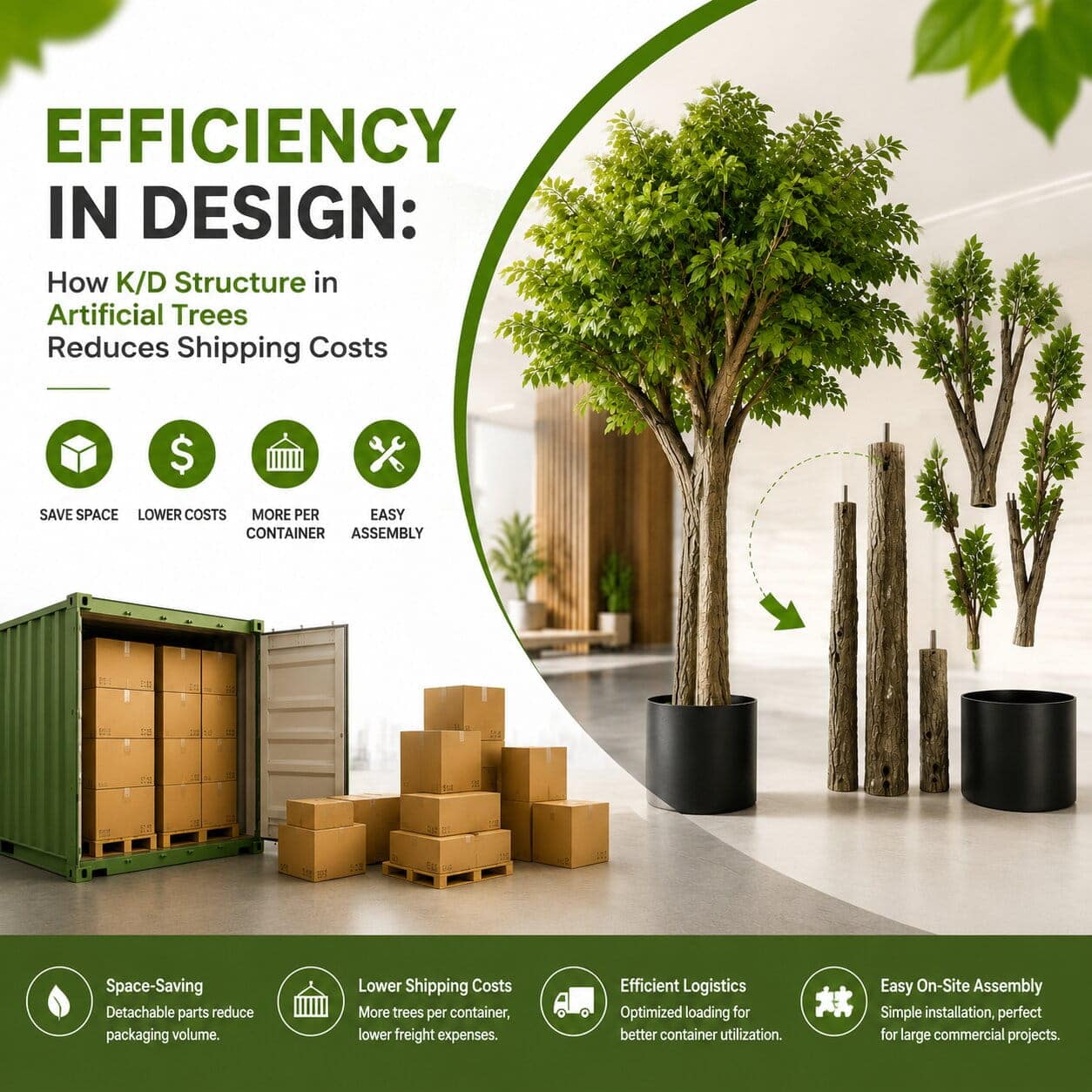
    Smarter Design for Global Artificial Tree Supply With the growing demand for artificial trees in hotels, restaurants, retail spaces, offices, and commercial landscaping projects, transportation efficiency has become an increasingly important consideration for buyers. For large artificial trees, shipping costs can represent a significant part of the total project budget. Traditional one-piece designs often require large packaging spaces, higher freight costs, and more complicated transportation arrangements. To solve these challenges, many manufacturers have developed K/D (Knock Down) structure designs for artificial trees. This structure allows large trees to be separated into multiple components, making storage, packaging, and transportation more efficient while maintaining the realistic appearance and stability required for commercial applications. The K/D structure has become an important design approach for improving the efficiency of artificial tree projects, especially in international B2B sourcing.   What Is K/D Structure in Artificial Trees? K/D, short for Knock Down, refers to a design method where an artificial tree is manufactured with detachable components instead of being shipped as a complete assembled product. A typical K/D artificial tree may include separate parts such as: Tree trunk sections Branch groups Leaf clusters Artificial foliage modules Decorative planters or bases During installation, these components can be quickly assembled on-site according to the product instructions. Unlike traditional fixed structures, K/D artificial trees provide more flexibility during transportation and installation.                 Reducing Shipping Volume and Transportation Costs One of the biggest advantages of K/D artificial trees is the reduction of shipping volume. Large artificial trees, such as 3-meter, 4-meter, or even taller landscape trees, can occupy significant container space when shipped as fully assembled units. With K/D design: Tree sections can be packed separately Branches can be arranged more efficiently Packaging space can be reduced More products can fit into the same shipping container For international buyers, especially those importing from overseas suppliers, reduced packaging volume can directly influence freight expenses. For example, a large artificial tree that requires oversized packaging when fully assembled may fit into standard cartons after being divided into multiple components. This helps avoid unnecessary transportation costs and improves container utilization.   Improving Container Loading Efficiency Container space is a major factor in international artificial tree sourcing. Shipping costs are usually calculated based on container usage, volume, or transportation dimensions. Therefore, optimizing loading efficiency can create significant cost advantages. K/D artificial trees allow manufacturers and buyers to: Increase the number of units loaded per container Reduce unused space Optimize carton arrangements Improve shipping planning For distributors, wholesalers, and project contractors, better container efficiency can help manage inventory costs and improve overall project profitability.         Easier Installation for Large Commercial Projects Transportation efficiency is only one advantage of K/D structure. Installation flexibility is another important benefit. Large artificial trees are often used in: Hotel lobbies Shopping malls Restaurants Exhibition halls Office buildings Resort landscapes Moving a fully assembled large artificial tree into these spaces can be difficult due to: Narrow entrances Elevator limitations Building access restrictions Installation space constraints K/D artificial trees solve these problems by allowing installers to assemble the product inside the project location. This approach provides greater flexibility for complex architectural environments.   Maintaining Realistic Appearance While Improving Efficiency Some buyers may worry that detachable structures affect the realism or stability of artificial trees. However, modern manufacturing techniques allow K/D artificial trees to maintain a natural appearance through: Strong connection systems Realistic branch positioning High-quality materials Carefully designed structures The final assembled tree can achieve a similar visual effect to a traditional fixed structure while providing better transportation advantages. The key is balancing: Realistic design Structural stability Easy installation Shipping efficiency A well-designed K/D artificial tree should not only save transportation space but also meet the visual expectations of commercial projects.   Supporting International Artificial Tree Projects For global buyers, logistics efficiency plays an important role in supplier selection. Importers often consider: Product packaging design Shipping cost control Delivery reliability Installation requirements After-sales support K/D structure provides a practical solution for international artificial tree projects by reducing transportation challenges and improving project flexibility. For suppliers exporting large artificial trees, efficient packaging design also helps improve production planning and reduce logistics pressure.   Sustainability Benefits of Optimized Packaging Besides reducing costs, efficient packaging can also support more sustainable transportation practices. When artificial trees require less shipping space: Fewer containers may be needed Transportation efficiency improves Packaging materials can be optimized Storage requirements may decrease Although transportation is only one part of a product’s environmental impact, smarter packaging design can contribute to more efficient supply chains.   How Buyers Can Evaluate K/D Artificial Tree Suppliers When selecting a supplier for K/D artificial trees, buyers should consider more than just the ability to separate components. Important evaluation factors include: 1. Structural Design A reliable K/D system should provide: Secure connections Easy assembly Long-term stability 2. Packaging Capability Suppliers should have experience with: International transportation requirements Protective packaging methods Container loading optimization 3. Installation Guidance Clear instructions, assembly drawings, or installation support can reduce project difficulties. 4. Quality Control Each component should be checked to ensure: Accurate fitting Consistent appearance Stable structure   The Future of Artificial Tree Design: Combining Beauty and Efficiency As commercial spaces continue to demand larger and more customized greenery solutions, artificial tree design is moving toward greater flexibility and efficiency. K/D structure represents an important development direction because it combines: Realistic appearance Easier transportation Lower logistics costs Flexible installation Better project adaptability For businesses purchasing artificial trees internationally, design efficiency is becoming just as important as visual quality. A well-designed K/D artificial tree solution allows companies to create impressive green spaces while improving transportation and installation efficiency.
  • Why Artificial Pine Trees Are Becoming an Important Choice for Commercial Design
    Jul 15, 2026
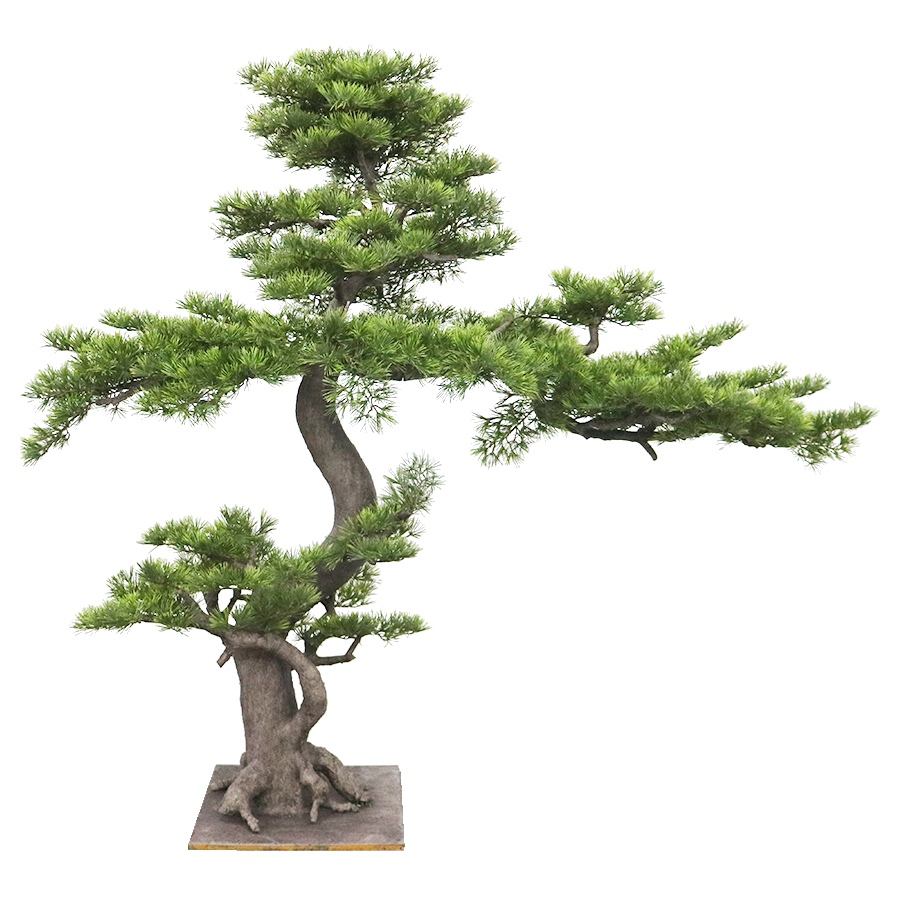
    Green elements have become an important part of modern commercial space design. Hotels, offices, restaurants, shopping centers, resorts, and entertainment venues increasingly use plants to create comfortable environments, improve visual experiences, and connect indoor spaces with natural elements. However, using real pine trees in commercial environments is not always practical. Natural trees require suitable sunlight, temperature conditions, soil space, irrigation systems, and regular maintenance. In many indoor locations, such as hotel lobbies, office buildings, and shopping malls, these conditions are difficult to provide. An artificial pine tree offers a flexible alternative by creating a realistic evergreen appearance without the limitations of natural growth. Designed with detailed needles, natural branch structures, and customizable forms, modern artificial pine trees can bring the atmosphere of a forest environment into spaces where live plants may not be suitable. Commercial projects often select faux pine trees, fake pine trees, and artificial conifer trees because they provide consistent appearance throughout the year, support different design concepts, and reduce long-term maintenance requirements.   From a large hotel lobby centerpiece to outdoor commercial landscaping, artificial pine trees have become more than decorative objects. They are increasingly used as design elements that help shape space, guide movement, and create memorable environments.         The Role of Artificial Pine Trees in Modern Commercial Spaces Creating a Consistent Evergreen Atmosphere Throughout the Year One of the most important advantages of an artificial pine tree is its ability to maintain a stable evergreen appearance regardless of climate or season. Pine trees naturally represent durability, longevity, and year-round greenery. These characteristics make them popular choices for commercial spaces that want to create a feeling of stability and connection with nature. Unlike live plants, artificial pine trees do not experience seasonal changes such as: Needle loss Growth cycles Weather-related appearance changes Seasonal replacement requirements This allows hotels, retail stores, and office buildings to maintain a consistent visual environment throughout the year. For businesses operating multiple locations, this consistency can also support a unified design language. Chain retailers, hotel groups, and franchise businesses often use standardized faux evergreen trees to maintain the same atmosphere across different locations. A carefully designed artificial pine installation can help create a recognizable brand environment while adapting to different architectural styles.   Bringing Biophilic Design Into Challenging Indoor Environments Biophilic design focuses on introducing natural elements into built environments to create more comfortable and engaging spaces. However, many commercial interiors have conditions where real plants may struggle, including: Limited natural light Air-conditioned environments Irregular temperature changes Restricted planting areas High-traffic locations In these situations, biophilic design office artificial pine trees provide a practical solution. Artificial pine trees allow designers to introduce natural forms into: Office reception areas Conference spaces Corporate lounges Indoor public areas Because they do not depend on sunlight or irrigation, they can be installed in areas where living trees cannot survive. The layered structure of pine branches also creates natural depth and visual rhythm, helping offices and commercial interiors feel more connected to outdoor environments.          Benefits of Commercial Grade Artificial Pine Trees Lower Maintenance Requirements and Long-Term Value For commercial projects, maintenance efficiency is often an important consideration. A live tree installation may require: Regular watering Professional pruning Pest management Soil care Replacement of unhealthy plants A commercial grade artificial pine tree eliminates many of these ongoing requirements. Once installed correctly, artificial pine trees typically require only occasional cleaning to maintain their appearance. This makes them suitable for spaces where regular plant care is difficult or costly. For large projects, commercial grade artificial pine trees wholesale solutions allow businesses to purchase consistent products in larger quantities while maintaining the same design style across multiple areas. Applications include: Hotel groups Shopping malls Office campuses Theme parks Commercial plazas The long service life of durable artificial trees can also reduce the need for frequent plant replacement, helping businesses manage operational costs more effectively.   Stable Appearance for Hotels, Offices, and Retail Spaces Commercial environments often require reliable visual presentation. A hotel lobby, restaurant entrance, or retail showroom may need to look attractive every day, regardless of weather conditions or seasonal changes. Artificial pine trees provide: Stable color appearance Predictable shape Flexible placement Easy relocation when layouts change For hospitality projects, a large fake pine tree for hotel lobby applications can become a central visual feature that welcomes visitors and creates a natural first impression. Designers can customize: Tree height Canopy width Branch density Trunk appearance Overall silhouette This flexibility allows artificial pine trees to fit different design concepts, from luxury hotels to rustic restaurants.   Artificial Pine Trees as a Spatial Design Element Creating Focal Points and Defining Space Large commercial interiors often require visual elements that help organize open areas. An artificial pine tree can function as a spatial design tool rather than only a decoration. Designers use large artificial trees to: Create focal points Define circulation routes Separate functional zones Guide visitor movement Enhance architectural views For example, a tall artificial pine tree placed near a hotel entrance can naturally draw attention toward reception areas. In shopping centers, groups of artificial trees can help create comfortable pathways between different sections. Because artificial trees can be customized in size and shape, they can be designed specifically for the proportions of a space.   Adding Texture and Depth Through Pine Needle Structure Pine trees have a unique visual character because of their layered branches and fine needle textures. Compared with many broadleaf artificial plants, pine designs create a different sense of depth through: Dense branch arrangements Layered canopy structures Natural shadow effects Vertical growth patterns A well-designed artificial conifer tree can add atmosphere even in compact areas. This makes pine trees suitable for: Small restaurant corners Office waiting areas Retail displays Exhibition spaces The texture of pine branches helps create visual interest without requiring large floor space.   Applications of Artificial Pine Trees in Commercial Projects Large Fake Pine Tree for Hotel Lobby Design Hotel lobbies often combine architecture, lighting, furniture, and greenery to create a memorable guest experience. A large fake pine tree for hotel lobby projects can provide a strong natural focal point while maintaining a clean and organized appearance. Common installation locations include: Main entrances Reception areas Lounge zones Resort-style spaces Some premium projects choose a real wood trunk artificial pine tree for restaurant decor or hotel applications because natural wood textures create a closer connection to real landscapes. Combining artificial foliage with natural trunk materials can produce a more organic appearance.   Real Wood Trunk Artificial Pine Tree for Restaurant Decor Restaurants often use greenery to influence atmosphere and customer experience. A real wood trunk artificial pine tree for restaurant decor can introduce natural elements while matching different interior styles. Examples include: Forest-inspired restaurants Mountain-style cafes Luxury dining spaces Outdoor-themed restaurants Compared with smaller decorative plants, larger artificial pine trees can create stronger visual impact and become part of the overall restaurant identity.         Biophilic Design Office Artificial Pine Trees Office environments increasingly focus on employee comfort and workplace experience. Biophilic design office artificial pine trees can help create more relaxing and natural-looking workspaces. They are commonly used in: Reception areas Break rooms Collaboration spaces Employee lounges Artificial greenery provides design flexibility while avoiding concerns about plant maintenance in busy workplaces.   Custom Scale Faux Conifer Trees for Theme Parks Large entertainment projects often require unique landscape features. Custom scale faux conifer trees for theme parks can be manufactured according to specific project requirements. Customization options may include: Oversized dimensions Special tree shapes Different conifer styles Custom trunk finishes Specific canopy density Theme parks, exhibitions, and entertainment venues often use large artificial trees to create immersive environments that cannot easily be achieved with natural trees.   Outdoor Commercial Landscaping With Artificial Pine Trees UV Resistant Faux Pine Trees for Outdoor Landscaping Outdoor projects require artificial trees that can withstand environmental exposure. UV resistant faux pine trees for outdoor landscaping are designed with materials that help reduce color fading caused by prolonged sunlight exposure. They are commonly used in: Outdoor shopping areas Resort landscapes Commercial entrances Public plazas When selecting outdoor artificial pine trees, project planners usually consider: UV protection Material durability Structural stability Installation method The correct product selection depends on climate conditions and project requirements.   Heavy Duty Structures for Public Areas Large outdoor installations need reliable structural support. A heavy duty steel base fake pine tree for commercial plazas is designed for locations where stability is an important factor. Typical structural features include: Reinforced internal frames Strong steel supports Stable bases Secure installation systems These designs help artificial pine trees remain stable in busy commercial environments.   Fire Retardant Artificial Pine Trees for Public Spaces Supporting Safety Requirements in Indoor Environments Public buildings often have strict requirements regarding decorative materials. A fire retardant artificial pine tree for indoor public spaces is manufactured with materials designed to provide additional fire safety performance. These products may be considered for: Hotels Airports Shopping centers Office buildings Exhibition halls When selecting fire-retardant artificial trees, project teams should review relevant testing documents and ensure the materials meet applicable building requirements. Safety considerations are especially important in high-traffic public areas where decorative elements become part of the overall building environment.   Customization Options for Commercial Artificial Pine Tree Projects Creating Unique Designs for Different Spaces Commercial projects often require more than standard-size products. Artificial pine trees can be customized according to: Height requirements Canopy spread Branch arrangement Color preferences Installation conditions This allows designers to create solutions that match specific architectural concepts. A luxury hotel may require a tall narrow tree for a lobby corner, while a theme park may need oversized trees for immersive scenery.          Easy On-Site Assembly Solutions for Wholesale Projects For large commercial orders, transportation and installation efficiency are important. An easy on-site assembly fake pine tree wholesale solution allows large artificial trees to be produced in sections for easier handling. Modular structures may include: Separate branches Adjustable components Simplified installation systems This approach helps reduce transportation challenges and makes installation more practical for large projects.   Artificial Pine Trees and Sustainable Commercial Design Long-Term Use and Resource Efficiency Sustainability in commercial design involves considering the entire lifecycle of materials and products. Artificial pine trees designed for long-term use can reduce resource consumption associated with: Frequent plant replacement Continuous watering Regular landscaping maintenance When produced with durable and recyclable materials, artificial greenery can support operational efficiency goals for commercial projects. Rather than replacing seasonal decorations repeatedly, businesses can use permanent artificial pine installations that maintain their appearance over many years.
  • Commercial Artificial Trees for Indoor Spaces: Everything You Need to Know About Realistic and Safe Indoor Greenery
    Jun 22, 2026
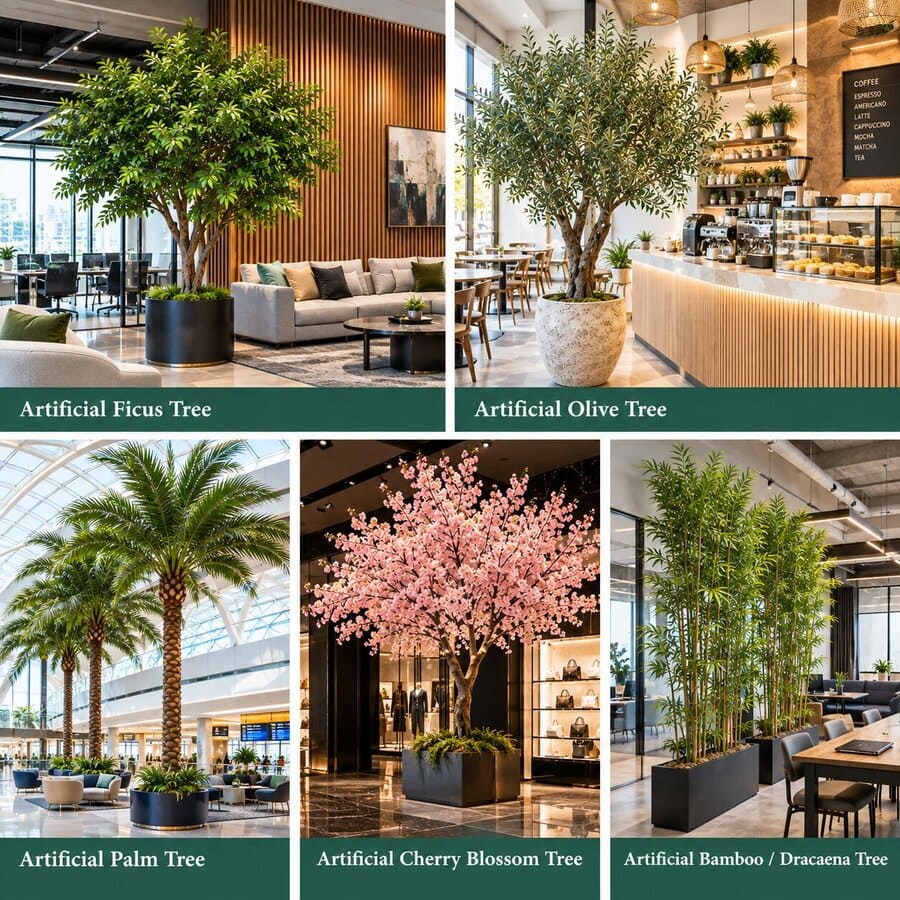
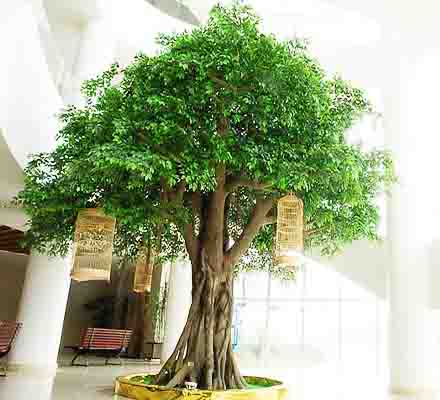
    Why Commercial Spaces Use Artificial Large Trees More Often In hotels, shopping malls, exhibition halls, office buildings, and dining spaces, greenery often plays an important visual role. Compared with real trees, artificial large trees are easier to maintain, faster to install for styling, and more likely to keep a consistent appearance over time.   For buyers who need bulk purchasing or custom projects, the key is not only whether the trees look realistic, but also whether they offer stable sizing, durable materials, fire-retardant performance, and overall harmony with the space.   Common Application Scenarios   Hotels and Reception Areas Hotel lobbies, corridor corners, banquet halls, and lounge areas often use large artificial trees to create a stronger sense of depth and atmosphere. Common choices include artificial palm tree, commercial artificial ficus tree, and faux olive tree, all of which work well for creating a calm and natural feel.   Retail and Commercial Displays Store windows, brand kiosks, and pop-up shops often need fast visual setup, so bulk purchasing is common. In these settings, fake large indoor trees need to do more than look attractive; they also need to be easy to install and flexible to move later.   Dining and Office Environments Restaurants, cafes, co-working spaces, and corporate reception areas often choose medium-height trees with natural-looking canopies, such as artificial banyan tree or ficus-style designs. These trees can help divide space while avoiding the maintenance costs of real plants.              How to Choose the Right Tree Type   Artificial Palm Tree An artificial palm tree is well suited for tropical styles, resort-like environments, and tall spaces. Its leaf shape is visually distinct, making it a strong focal point, and it is also commonly used in entrances and background decor.   Faux Olive Tree Faux olive tree wholesale has become a popular procurement choice in recent years. Olive trees have a light and elegant branch structure, making them suitable for modern, Mediterranean, or upscale styles. They are especially fitting for products such as a 6ft artificial olive tree with realistic trunk.   Artificial Ficus and Banyan Trees Commercial artificial ficus tree and artificial banyan tree bulk are commonly used in large indoor commercial projects. Their fuller canopy makes them ideal for creating a visually substantial centerpiece in a space.             What to Focus on When Buying   1. Whether the Trunk Looks Natural Many buyers first pay attention to the leaves, but the trunk often determines the overall quality. For products like a 6ft artificial olive tree with realistic trunk, good trunk texture, branch structure, and color layering can make the tree look much closer to a real plant.   2. Whether the Size Fits the Space A large space should not be judged by the appearance of a single tree alone. Ceiling height, walkway width, and lighting conditions all matter. A tree that is too small may look thin, while one that is too large may overwhelm the space, so it is best to confirm the installation area’s clear height and placement radius in advance.   3. Whether the Materials Suit Commercial Use Commercial projects usually care more about durability. For long-term display environments, flame-retardant and weather-resistant performance often matter more than short-term decorative use, especially in hotels, public areas, and high-traffic spaces.   4. Whether Bulk and Customization Are Available If the project requires a unified visual style, bulk purchasing is more efficient than buying individual items. Many manufacturers offer customization for height, leaf type, canopy density, planter style, and color, which is well suited for chain stores and construction projects.   Why Fire-Retardant Products Matter Fire retardant artificial trees for hotels are often listed separately because hotels and public spaces have higher safety requirements. Fire-retardant materials do not mean the product cannot burn at all, but they can help slow the spread of flames, which makes them worth careful consideration during selection.   If the project is located in a densely populated area or a place with stricter fire regulations, it is advisable to prioritize products that clearly state fire-retardant performance and to confirm the testing standards, material details, and applicable scope.   Practical Tips for Bulk Purchasing When buying in bulk, reviewing a sample before confirming the final order is usually the safer approach. During the sample stage, pay close attention to color, leaf density, trunk detail, stability, and odor to avoid major differences between the sample and the bulk order.   If the purchasing target is faux olive tree wholesale, artificial palm tree manufacturer, or artificial banyan tree bulk, it is best to describe the intended use, installation environment, expected height, budget range, and delivery timeline at once. This makes it easier to receive a solution that fits the project better.   If the goal is to choose the right artificial large trees for a commercial space, the focus should be not only on appearance, but also on size, trunk realism, material safety, and whether bulk customization is available. For hotels, retail spaces, and office environments, choosing products that match the interior style, have a natural structure, and are suitable for long-term use usually creates a more stable decorative result.   The value of these products is often reflected in three points: they look natural, they are easy to manage, and they create a consistent overall effect.
  • Pet-Safe and Allergy-Free: Scaling Sales with Premium Wholesale Artificial Potted Plants
    Jun 15, 2026
    Let’s be honest: creating a warm, vibrant home shouldn't come at the expense of your family’s health or your pets' safety. While the idea of filling your living room with live tropical plants sounds dreamy, the reality often involves hidden trips to the vet and seasonal sneezing fits.   For modern households, the trend is rapidly shifting. Families are skipping the high-maintenance nursery rows and opting for premium, lifelike artificial potted plants for home decor to achieve that lush, botanical aesthetic completely risk-free.   The most critical driving force behind this shift is safeguarding our furry companions. Many of the most popular houseplant trends—like lilies, monstera, and certain ivies—are highly toxic to cats and dogs. Curious pets love to chew on dangling leaves, which can lead to emergency veterinary situations.   Savvy retail brands and corporate buyers are capitalizing on this massive consumer pain point by partnering with a trusted fake desk plants manufacturer to offer zero-risk, pet-safe alternatives.            To better understand why global sourcing managers and e-commerce brands are aggressively replacing live stock with synthetic alternatives, let's look at the hard data comparing the two categories in real-world residential applications:   📊 Comprehensive Comparison: Real Foliage vs. Premium Synthetic Greenery   Comparison Metrics Live Foliage / Fresh Plants Premium Synthetic Greenery (Faux) Retail & Supply Chain Impact Pet Toxicity Risk High (Over 700+ common species contain toxic alkaloids/oxalates) Zero Risk (100% inert, non-toxic, pet-safe materials) Drives massive organic search traffic from pet owners. Allergen & Mold Factor High (Damp soil breeds mold spores, dust mites, and root rot) Hypoallergenic (Dust-resistant, pollen-free, mold-free) Drastically reduces product return rates due to health issues. Average Product Lifespan 3 - 12 Months (Highly dependent on lighting, watering, and climate) 3-5 Years (Indoors; zero degradation over time) Guarantees high consumer satisfaction and 5-star reviews. Maintenance Cost (Annual) $50 - $150 per plant (Fertilizers, pest control, soil replacement, repotting) $0 (Occasional light dusting only) Creates an unbeatable value proposition for cost-conscious families. Logistics & Inventory Risk Extremely High (Perishable, prone to transit death, strict phytosanitary checks) Zero (Long shelf-life, stackable packaging, crash-resistant) Lowers international overhead; compatible with standard warehouse storage. B2B Procurement Terms Variable (Prone to local broker markups and high domestic fees) Highly Competitive (Factory-direct custom wholesale pricing) Secure purchasing via flexible protocols like 100% TT against shipping documents. Beyond pet safety, chronic seasonal allergies ruin the appeal of live greenery for millions of households. As highlighted in the data above, live plants are notorious for harboring damp soil, which becomes a breeding ground for mold spores, dust mites, and airborne allergens.   Switching your inventory to premium wholesale faux potted plants solves this problem instantly. High-end synthetic botanicals are completely hypoallergenic, scent-free, and don't require organic fertilizers, making them a breath of fresh air for children and adults sensitive to respiratory triggers.   If your e-commerce store or interior staging business wants to capture the hearts of health-conscious families, variety is your secret weapon.   Stocking delicate, geometric bulk artificial succulents provides safe, compact accents for low-lying coffee tables where dogs wag their tails, while collaborating with an elite artificial orchid arrangements supplier allows you to offer grand, pollen-free dining room centerpieces that won't trigger a single sneeze during family gatherings.   However, modern parents are highly discerning; they refuse to decorate their homes with cheap, shiny plastic that looks fake from across the room. To meet this demand while maintaining an excellent retail margin, importing cheap bulk fake plants from China directly from an advanced manufacturing plant is the ultimate strategy.   Sourcing factory-direct ensures you get the latest eco-friendly, real-touch materials with a flawless matte finish. By aligning your brand with a high-fidelity production partner—and utilizing reliable financial standards such as 100% TT against shipping documents for streamlined international trade—you can provide families with the hyper-realistic, allergen-free green oasis they deserve, all while keeping your procurement costs low and your profit margins bulletproof.
  • B2B Guide to Assembling Large Artificial Trees on Site
    Jun 11, 2026
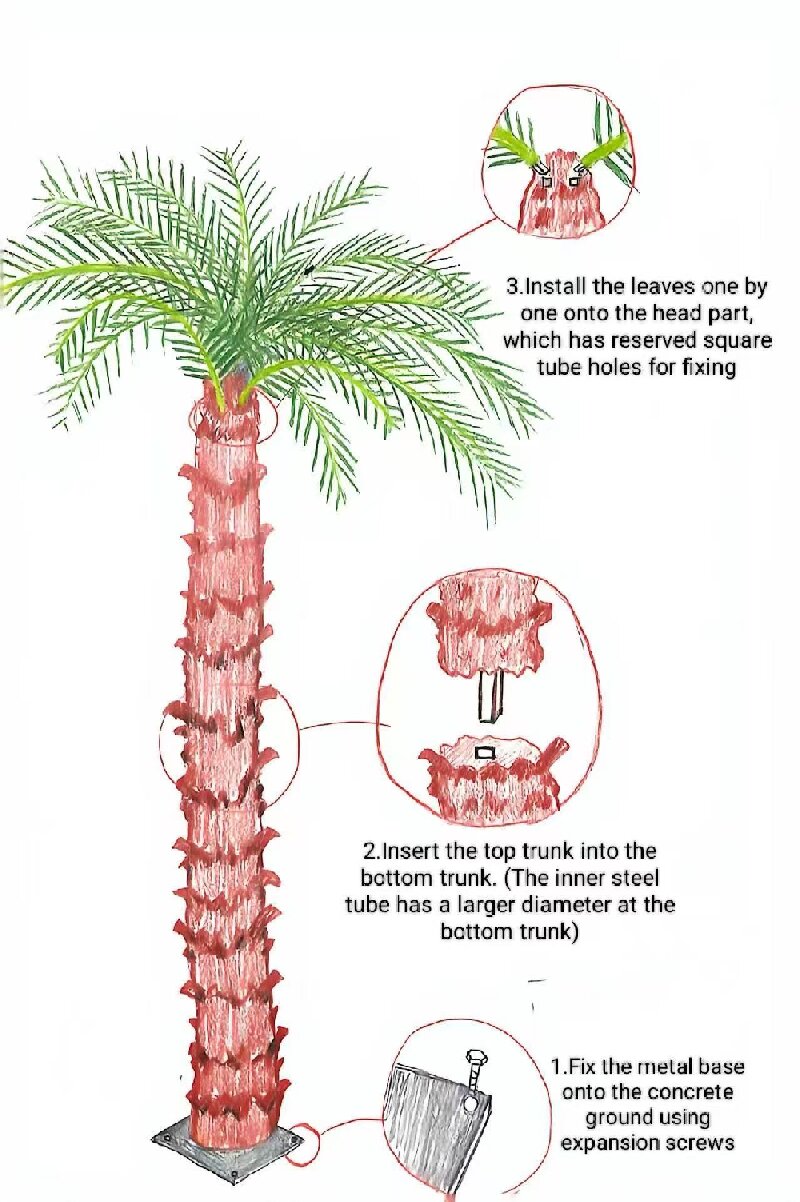
    For commercial landscape designers, event planners, and property managers, integrating large artificial trees (such as 5-meter statement pieces) into a space brings instant biophilic beauty. However, the biggest challenge often isn't the sourcing—it is the on-site installation.   Improper assembly can lead to safety hazards, visible joints, or drooping foliage that ruins the premium aesthetic.   As a leading manufacturer and exporter of high-grade artificial plants, we don’t just deliver products; we deliver solutions. Here is our professional engineering guide to flawlessly assembling and securing large-scale artificial trees on site.                 When installing on existing commercial flooring, a heavy-duty steel base plate is utilized Phase 1: Securing the Foundation (The 55×55cm Base Plate)   Stability is the single most critical factor for trees reaching heights of 5 meters. A weak foundation jeopardizes public safety in high-traffic commercial zones.   For Indoor Installations   The Process: Position the tree base in your chosen location. Drill down directly through the four pre-drilled holes of the base plate using a Dia. 18mm anchor bolt.   Depth Requirement: Ensure the anchor bolts penetrate 10–15cm deep into the sub-flooring before tightly securing the nuts.   For Outdoor or Deep Ground Grounding   If the tree is being integrated into a landscape plot or a massive planter box, structural engineering takes over. Each 5M tree requires a dedicated 1M wide × 25cm deep posthole to cast a concrete foundation, ensuring the base plate is permanently immobilized against wind loads and physical impact.   Phase 2: Trunk and Bough Connection (Eliminating Seams)   Large trees are shipped in modular sections to protect structural integrity during export. Seamlessly joining the massive trunk to the heavy boughs requires mechanical precision.   Thread Alignment: Fix the corresponding male/female screw mechanisms located at the top of the trunk and the bottom of the boughs.   The Tightening Technique: Do not rely solely on hand-turning. Rotate the bough into place, then use a heavy-duty pincer and hammer to securely tighten the bough and trunk together. A perfectly tightened joint ensures the tree looks like a singular, natural organism rather than a multi-piece assembly.   Phase 3: High-Density Foliage Plug-in (The "Canopy Map")   A premium artificial tree must look organic. Randomly plugging in leaves results in a messy, unnatural canopy.   To solve this, our manufacturing process includes an intelligent mapping system:   (1)The Letter Matching System: Every individual leaf stem and its corresponding leaf stalk hole are precisely laser-marked with matching letters ($A$, $B$, $C$, $D$, etc.).   (2)On-Site Execution: Simply insert each leaf into the stalk hole bearing the exact same mark. This guarantees the canopy shapes out exactly as intended by our botanical designers.   🛠️ Pro-Engineering Tip for Flawless Fit: > Due to temperature changes during shipping, some leaf stems may feel tight. Do not force them by hand, as this can snap the branch components. If a leaf cannot fully insert into the stalk, use large pincers to firmly clamp the lower part of the leaf stem, then gently tap and turn the pincers with a hammer until the leaf fully joins the leafstalk.   Partner With an Expert, Not Just a Vendor   At our core, we understand that a successful B2B project relies on efficiency and reliability. By providing pre-engineered matching systems ($A$/$B$/$C$ leaf coding), heavy-duty anchor-ready base plates, and clear mechanical tolerances, we slash on-site installation times by up to 40% for your crew.   Are you planning an upcoming commercial project that requires large-scale, fire-retardant, or UV-resistant artificial trees? Let us handle the engineering so you can focus on the design.  

leave a message

leave a message
If you are interested in our products and want to know more details,please leave a message here,we will reply you as soon as we can.

Home

Products

WhatsApp

contact