Why Artificial Green Walls Outperform Real Plants
Jun 08, 2026
Wondering whether to choose artificial or real green walls? This full cost guide breaks down upfront fees, ongoing maintenance, lifespan and hidden expenses to prove artificial green walls deliver better long-term value for commercial & residential spaces.
Green walls have become a staple decor choice for offices, retail stores, hotels, residential buildings and outdoor landscapes. They bring natural vitality to any space, boost visual appeal and create a relaxing atmosphere. When planning a vertical green wall, the biggest decision every property owner and designer faces is: real plant walls or artificial green walls?
Many people assume living plant walls are the better pick simply for their natural look. However, when you calculate the total expenditure from installation to long-term use, artificial green walls stand out with remarkable cost advantages. In this comprehensive cost guide, we compare every expense item between the two options, and explain why artificial green walls are a more economical, practical and high-return investment for most scenarios.
1. Upfront Installation Cost Comparison
The first expense you need to consider is the initial installation cost, which includes materials, structural setup and labor fees.
Real Living Green Walls
A living green wall is a complex horticultural system, not just plant decoration. To keep plants alive and healthy, you have to invest in a complete supporting system:
Professional modular planting frames, soil or hydroponic substrates
Automated irrigation, drainage and supplementary lighting systems
Structural reinforcement to bear the weight of soil, water and plants
Statistically, the upfront cost of real green walls ranges from $110 to $175 per square foot. For a 10 sq. ft. wall, the total initial investment can easily reach over $1,000. For large-scale commercial projects, the budget will rise sharply. Besides, installation requires professional landscape engineers and skilled gardeners, leading to higher labor costs and longer construction periods.
Artificial Green Walls
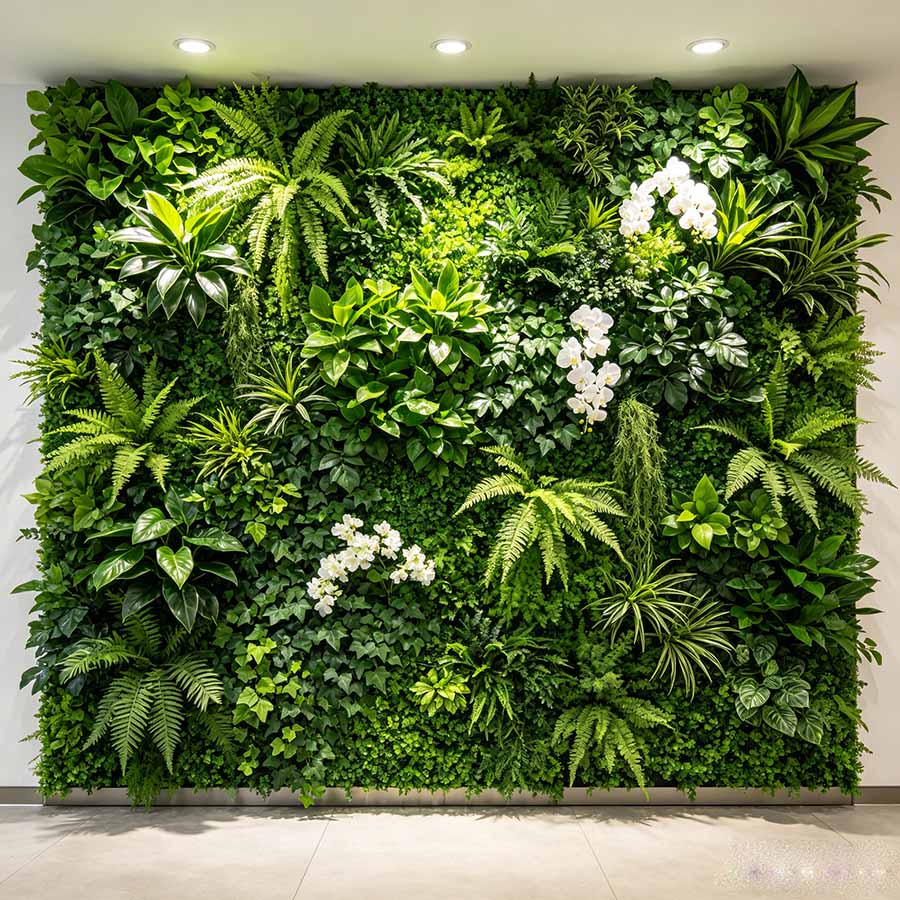
High-quality artificial green walls adopt lightweight modular panel design. They require no soil, water supply system or special light equipment. The installation process is simple and fast: just fix the panels on walls with standard brackets or adhesives.
The overall upfront cost of premium artificial green walls is $50 to $75 per square foot, nearly half of real plant walls. Even for customized styles with rich foliage combinations, the total installation budget is far lower. Thanks to the plug-and-play modular structure, installation can be finished within days, cutting extra labor and time costs greatly.
2. Ongoing Maintenance: The Biggest Hidden Expense
Upfront cost is only the start. Recurring maintenance fees are the largest long-term spending for green walls, and this is where artificial green walls create the most obvious cost gap.
High Recurring Costs of Real Plant Walls
Living plants need daily care to survive, which brings continuous monetary and labor costs all year round:
Water & electricity bills: The irrigation and lighting system runs 24/7, increasing monthly utility expenses.
Regular care labor: Workers need to water, trim dead leaves, remove weeds and check plant growth every week. Professional pest control and fertilization are also required monthly.
Plant replacement: Plants wither, get sick or die due to temperature changes, poor light or diseases. You have to buy new seedlings and replace dead parts frequently.
Over a 5-year period, the annual maintenance cost of real green walls averages $20 – $35 per square foot. For commercial spaces with large green walls, this adds up to a huge annual expenditure. If maintenance is neglected, the whole wall will turn yellow and wither in a short time, forcing you to pay for overall renovation.
Near-Zero Maintenance for Artificial Green Walls
Artificial green walls need no watering, no fertilizing, no pruning and no pest control. There is no risk of plant death or insect infestation at all.
The only routine work is simple cleaning: just wipe dust with a microfiber cloth every 3 to 6 months, or rinse outdoor walls with clean water occasionally. The annual maintenance cost is only $8 – $12 per square foot, mainly for basic cleaning supplies. No professional gardeners are needed, saving massive labor costs year after year.
3. Lifespan & Long-Term Total Cost
Service lifespan directly determines the total return on investment. A longer service life means lower average annual cost.
Lifespan of Real Green Walls
Even with careful daily maintenance, the average service life of a complete living green wall is only 2 to 4 years. Plants have natural growth cycles. After several years, the substrate ages, root systems decay, and the irrigation system ages and leaks. Eventually, you have to carry out overall overhaul and reconstruction, which equals a second large investment.
Durable Lifespan of Artificial Green Walls
Made with high-quality UV-resistant and anti-fade materials, premium artificial green walls have outstanding durability:
Indoor use: Can keep vivid color and complete shape for 10 to 15 years
Outdoor use: With anti-UV and weatherproof treatment, the lifespan reaches 6 to 10 years, resisting strong sunlight, rain and extreme temperatures.
Calculated over a 10-year cycle:
Real green walls need at least 2 full renovations, with accumulated total cost reaching 2 to 3 times the initial budget.
Artificial green walls require almost no replacement or overhaul. One-time installation can serve for over a decade, and the long-term total cost is reduced by 50% to 75% compared with real plant walls.
4. Additional Hidden Costs You May Ignore
Besides visible installation and maintenance fees, real green walls also bring many hidden expenses that are easy to overlook:
Structural repair cost: Living walls are heavy. Long-term water seepage may cause wall dampness, mildew and even structural damage. You need to spend money on waterproofing and wall repair regularly.
Risk loss: Dead plants, mold and pests will affect the environment of commercial spaces, damage brand image and cause potential customer loss.
Seasonal adjustment cost: In cold winter or dry summer, you need to add heating, humidifying and heat insulation equipment to protect plants, bringing extra equipment and electricity costs.
Artificial green walls avoid all these hidden troubles. They are lightweight, waterproof and mildew-proof, with no water seepage risk. They stay lush and vibrant in all seasons, no matter hot summer or cold winter, with no extra seasonal adjustment cost.
5. Suitable Scenarios: Who Should Choose Artificial Green Walls?
Based on cost and practicality, artificial green walls are the optimal choice for the following spaces:
Commercial spaces: Offices, shopping malls, restaurants, hotels, exhibition halls and retail stores that pursue low maintenance and stable decorative effects.
Outdoor landscapes: Building exteriors, courtyard walls, road fences and scenic areas exposed to strong sunlight, wind and rain.
Low-light & special environments: Basements, corridors and indoor areas with insufficient natural light where real plants cannot survive.
Short-term & temporary projects: Event venues, temporary booths and pop-up stores, thanks to easy installation and removal.
Residential users: Home owners who love green decoration but have no time for plant care.
Living green walls are only recommended for professional ecological parks, high-end botanical landscapes or spaces with dedicated full-time gardeners and sufficient long-term maintenance budget.
When evaluating green wall solutions, do not only focus on the one-time upfront cost. You need to calculate the total cost over the whole service cycle.
Real plant walls look natural, but they come with high installation fees, continuous maintenance costs, short lifespan and various hidden risks. In contrast, artificial green walls feature lower overall expenditure, near-zero daily care, long service life and strong environmental adaptability. They maintain a perfect lush look all year round and create stable value for your space.
If you are looking for a cost-effective, time-saving and worry-free vertical green decoration solution, artificial green walls are undoubtedly the smarter investment choice.