other

Artificial Plants

  • How to Choose Artificial Plants That Look Real
    Sep 09, 2026
    Artificial plants have come a long way from the shiny plastic leaves and overly bright colors of the past. Today, high-quality artificial plants can closely reproduce the texture, color variation, structure, and natural imperfections of real plants. However, not every artificial plant looks realistic. Two products may look similar in online photos but feel completely different when placed in a real interior. The key is knowing what to look for before making a purchase. From leaf materials and branch structures to UV protection and size selection, several details can determine .     1. Start With the Material: The Leaf Is Where Realism Begins The first thing to examine is the material of the leaves. Low-cost artificial plants often use ordinary plastic with a smooth, rigid surface. This can make the leaves look too shiny, flat, or uniform. Higher-quality materials can create a much more natural appearance. PE leaves can offer good flexibility and durability, while silk or premium fabric leaves can provide a softer visual effect. Silicone leaves are particularly useful when a realistic texture and detailed surface are important. Color also matters. Real leaves rarely have exactly the same shade from one leaf to another. Slight variations in green tones, veins, edges, and surface texture can make an artificial plant look much more natural.                 2. Look at the Branch Structure, Not Just the Leaves A realistic leaf cannot fully compensate for an unnatural branch structure. If all branches point in the same direction or appear perfectly symmetrical, the plant may look artificial even when the leaves are well made. A good artificial plant should have a convincing internal framework. Flexible branches allow users to adjust the shape after unpacking, while a stronger supporting structure helps taller plants maintain their overall form. For larger artificial trees, the trunk and branch connections deserve special attention. A well-designed structure creates natural spacing between branches and gives the plant a fuller, more three-dimensional appearance.                           3. Material Comparison: Which Artificial Plant Material Looks Best? Different materials create different visual effects. There is no single material that is perfect for every application, so the best choice depends on where the plant will be used, how realistic it needs to look, and your budget. Material Realism Suitable Scenes Expected Durability PE ★★★★☆ Homes, offices, hotels, retail spaces Good Silk / Premium Fabric ★★★★☆ Interiors, events, decorative displays Medium–Good Silicone ★★★★★ Premium interiors, showrooms, high-end decoration Good UV-Resistant Coating ★★★★☆ Outdoor areas, balconies, entrances High Ordinary Plastic ★★★☆☆ Budget decoration, temporary displays Medium   The table is only a general guide because the final appearance depends on the manufacturing process as well as the material itself. A carefully manufactured PE plant can look more convincing than a poorly made product using a more expensive material.     4. Indoor or Outdoor? Check UV Protection Carefully One of the most common mistakes is using an indoor artificial plant outdoors. Sunlight, temperature changes, humidity, and weather exposure can gradually affect artificial leaves. Without proper UV protection, colors may fade and materials may become less attractive over time. If the plant will be placed on a balcony, patio, entrance, garden area, or other exposed location, look specifically for UV-resistant materials or UV-protective coatings. For indoor applications, UV resistance is usually less important, allowing you to focus more on leaf texture, color, branch structure, and overall appearance.                     5. Choose the Right Size for Your Space Even a beautifully made artificial plant can look cheap if the size does not match the space. A small plant may disappear in a large living room, hotel lobby, or commercial area, while an oversized tree can make a small room feel crowded. Before purchasing, consider the height of the ceiling, the available floor area, furniture proportions, and the visual purpose of the plant. For example:     Small plants: Great for desks, shelves, countertops, and bedside tables.     Medium plants: Suitable for living rooms, offices, reception areas, and corners.     Tall trees: Ideal for hotel lobbies, commercial spaces, large living rooms, and entrance areas.         6. Don't Ignore Odor and Environmental Testing Appearance is important, but it should not be the only consideration. When buying artificial plants for homes, hotels, offices, or commercial projects, it is worth paying attention to the materials used and whether the supplier can provide relevant testing or compliance documentation. A strong chemical odor immediately after opening the package may indicate that the materials or printing processes need closer attention. Reliable suppliers should be able to provide information about material specifications and applicable safety or environmental standards when required.       7. A Quick Checklist Before Buying Before placing an order, ask yourself these questions: ① Does the leaf material look natural?Check the surface texture, flexibility, color variation, and visible leaf veins. ② Does the branch structure look realistic?Look for natural spacing, irregular angles, and a stable internal framework. ③ Is it designed for indoor or outdoor use?Outdoor products should have suitable UV-resistant treatment. ④ Is the size right for the space?Compare the plant height and width with the room, furniture, and available area. ⑤ Can the supplier provide material information?For commercial projects, ask about material specifications and relevant testing documents when necessary. ⑥ Does the price make sense for the quality?Extremely low prices can sometimes mean compromises in materials, construction, or finishing.     Conclusion Choosing a high-quality artificial plant is not simply about finding the most expensive option. The real difference is often hidden in the details: the feel of the leaves, the variation in color, the strength of the branch structure, the quality of the finishing process, and whether the product is designed for the environment where it will be used. For a better buying decision, prioritize material and craftsmanship, check the supporting structure, distinguish indoor from outdoor products, and choose the size according to your space. Most importantly, don't judge an artificial plant by price alone. A well-designed and well-made product can create a natural, sophisticated look without the maintenance required by real plants.
  • Artificial Plants vs. Real Plants: Which Is Better for Your Space?
    Sep 02, 2026
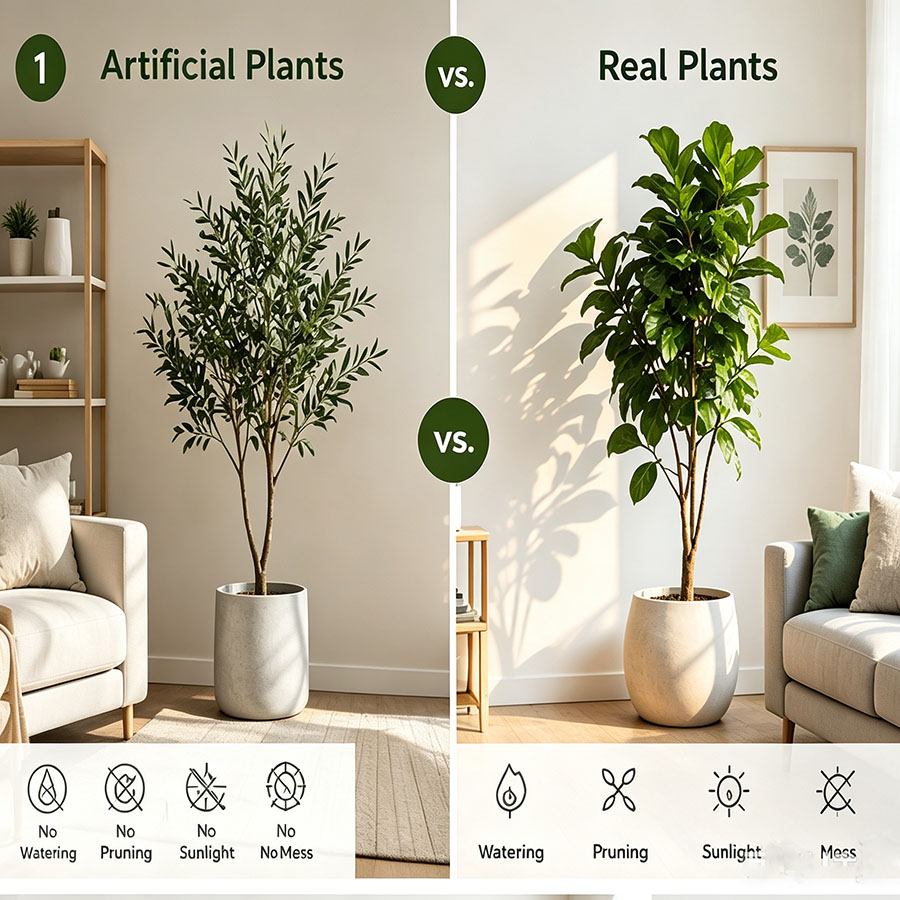
    When choosing greenery for a home, office, hotel, restaurant, or retail space, one question often comes up: Should you choose artificial plants or real plants? The answer depends on your lighting conditions, maintenance resources, budget, and the atmosphere you want to create.   For spaces with limited natural light, busy schedules, or frequent use—especially commercial environments—artificial plants can be a practical and cost-effective choice. For people who enjoy gardening and want the natural feeling of living greenery, real plants remain an attractive option. While artificial plants require an initial investment, their low maintenance requirements can make them more economical over the long term.   Real Plants: Natural Beauty Comes with Maintenance Real plants bring something unique to an interior. Their changing leaves, natural textures, and living growth can create a refreshing atmosphere and a stronger connection with nature. However, real plants also come with several challenges. They need suitable light, regular watering, pruning, fertilizing, and sometimes pest control. Poor lighting or inconsistent care can result in yellow leaves, fallen leaves, pests, or even plant death. For commercial spaces such as hotels, restaurants, offices, and shopping areas, these maintenance requirements can become a significant part of ongoing operating costs.             Artificial Plants: Beauty Without the Daily Maintenance Artificial plants offer a different approach. Modern artificial greenery can recreate the shapes, colors, and textures of many popular plant varieties while eliminating the need for watering, fertilizing, or sunlight. This makes them especially suitable for low-light interiors, high-traffic commercial spaces, and areas that are difficult to maintain regularly. They can also be used in locations where real plants may struggle to survive, such as windowless offices, corridors, bathrooms, reception areas, and indoor shopping spaces. Another advantage is consistency. Artificial plants maintain their appearance throughout the year without seasonal changes, fallen leaves, or unexpected growth.         What Are the Downsides? Artificial plants do not provide the biological benefits of living plants. They do not grow, photosynthesize, or contribute to the same natural biophilic experience as real greenery. Their quality can also vary, so choosing products with realistic leaves, natural colors, and detailed textures is important. Real plants, meanwhile, require more attention but offer genuine biological and sensory benefits. For those who enjoy caring for plants, the maintenance itself can also be part of the experience.   Artificial Plants vs. Real Plants: Quick Comparison   Feature Artificial Plants Real Plants Initial Cost Moderate one-time investment Varies by plant type Ongoing Maintenance Very low Regular watering, pruning and fertilizing Lifespan Several years with proper care Depends on species and growing conditions Lighting Requirements No natural light required Suitable light is essential Watering Not required Required regularly Pest Risk No biological pests Possible insects and plant diseases Fallen Leaves None Possible Appearance Consistent year-round Changes naturally with seasons Commercial Use Highly suitable Requires regular maintenance Best For Busy users and commercial spaces Plant lovers and naturally lit spaces   So, Which One Should You Choose?   There is no universal winner. Choose artificial plants when you need long-term visual consistency, minimal maintenance, and flexibility in lighting conditions. They are particularly practical for commercial environments and busy households. Choose real plants if you have suitable natural light, enjoy plant care, and value the living, changing character of greenery. The smartest approach is also to combine both. Real plants can provide natural vitality in key areas, while artificial plants can fill darker corners and high-maintenance locations. By considering the entire life cycle—not just the purchase price—you can find the solution that offers the best balance between beauty, maintenance, and long-term cost.
  • From Molded Leaves to Finished Trees: See How Artificial Plants Are Made
    Aug 24, 2026
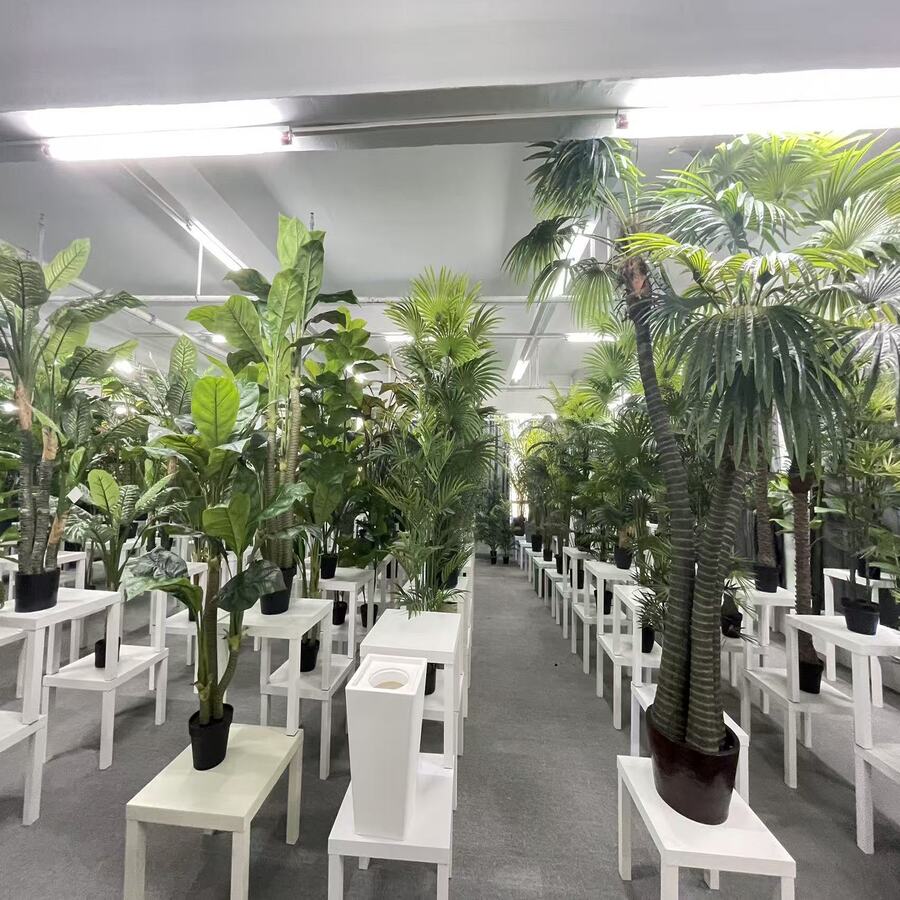
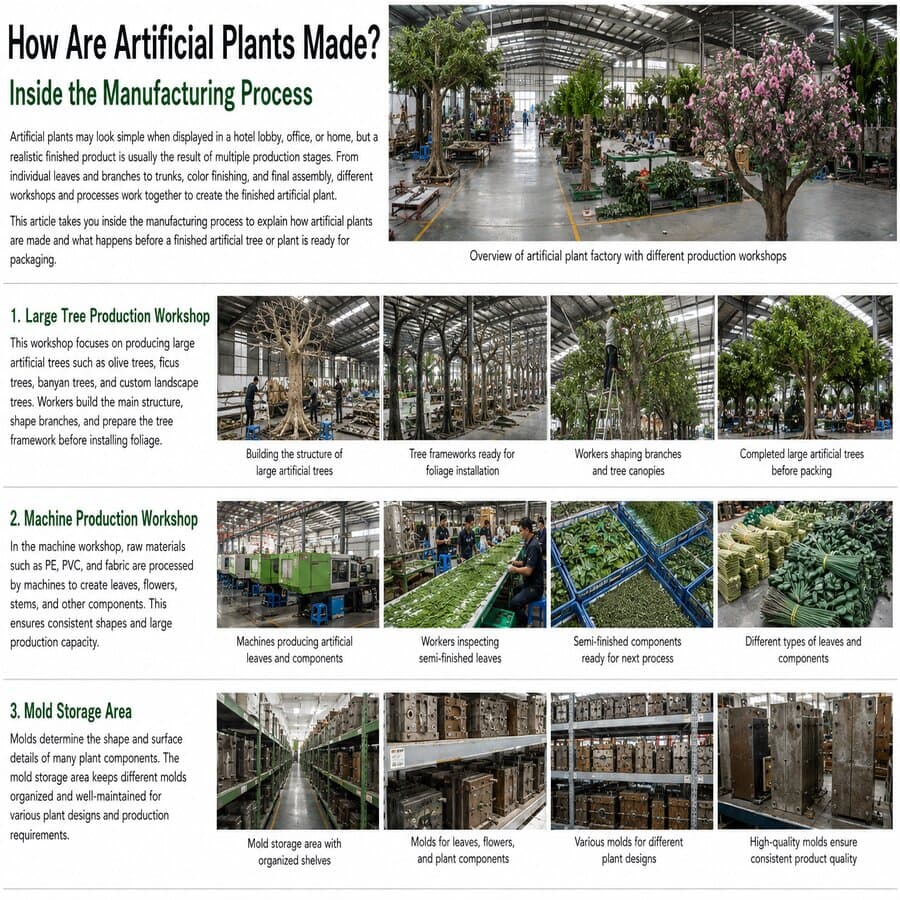
    Artificial plants may look simple when displayed in a hotel lobby, office, shopping mall, restaurant, or home, but a realistic finished product is usually the result of multiple production stages. From individual leaves and branches to trunks, color finishing, and final assembly, different workshops and processes work together to create the finished artificial plant. The manufacturing process can vary depending on the product type. Small potted plants, artificial flowers, artificial trees, and large landscape trees may use different materials and production methods. However, several key stages are commonly involved in professional artificial plant manufacturing, including component production, mold preparation, color finishing, and assembly. At Yum Plant, the production environment includes a large tree workshop, machine room, mold room, spray painting room, and assembly workshop. These different areas support the production of artificial plants and trees at different stages. This article takes you inside the manufacturing process to explain how artificial plants are made and what happens before a finished artificial tree or plant is ready for packaging.               Understanding the Artificial Plant Manufacturing Process Before looking at individual workshops, it is useful to understand the general production flow. A typical artificial plant manufacturing process may include: Product design and material preparation Mold development and storage Machine production of leaves and components Production of trunks and large tree structures Color spraying and surface finishing Manual assembly Quality inspection Packaging and shipment Not every artificial plant follows exactly the same process. For example, an artificial olive tree with a real wood trunk may require different production steps from a molded artificial palm tree. A large custom landscape tree may also require a stronger internal structure and more manual work than a small potted artificial plant. The goal of the manufacturing process is not simply to produce plant-shaped products. Manufacturers also need to consider details such as leaf texture, branch structure, color variation, product stability, transportation requirements, and final appearance. Modern artificial plant manufacturing often combines machine production with manual craftsmanship. Plastic components can be formed through molding processes, while workers may complete coloring, shaping, branch installation, and final assembly by hand.   1. Large Artificial Tree Production Workshop Where Large Artificial Trees Take Shape The large tree production workshop is one of the most important areas in the manufacturing process of oversized artificial trees. Large artificial trees require more production space because their trunks, branches, and canopies can be several meters high. Unlike small potted plants, large trees cannot always be produced efficiently on a standard workstation. In this workshop, workers may produce or prepare components for products such as: Large artificial olive trees Artificial ficus trees Artificial banyan trees Artificial landscape trees Artificial palm trees Custom decorative trees Large artificial trees for hotels and shopping malls The production process often begins with the main structure. Creating the Tree Structure The internal structure provides the basic shape and stability of a large artificial tree. Depending on the design, the structure may include metal frames, pipes, reinforced branches, artificial trunks, or other supporting materials. The structure must be designed according to the size and application of the finished tree. For example, a large artificial tree intended for a hotel lobby may need to consider: Overall height Canopy width Installation method Weight Structural stability Transportation requirements Large trees may also be designed in separate sections. A modular structure can make transportation and installation more practical, especially when the finished product is too large to ship as one complete unit. Developing a Natural Tree Shape One of the challenges in manufacturing large artificial trees is creating a structure that looks natural. Real trees do not usually grow in perfectly symmetrical patterns. Their branches vary in direction, angle, thickness, and length. During the production process, workers may adjust the main branches and secondary branches to create a more natural visual structure. The objective is to avoid making the artificial tree appear overly uniform. The trunk and branch system provides the foundation for later stages of the manufacturing process. Once the structure is ready, foliage, smaller branches, and decorative details can be added. Large Trees Require More Manual Work Large artificial tree production often involves a higher level of manual work compared with smaller machine-produced plants. Workers may need to: Position branches Adjust branch angles Install foliage Shape the canopy Check the balance of the tree Adjust the overall silhouette This is particularly important for custom artificial trees. Customers may have specific requirements for tree height, canopy width, trunk style, or installation location.           2. Machine Production Workshop Producing Leaves and Plant Components The machine production workshop is where many of the individual components used in artificial plants are produced or processed. Artificial leaves, flowers, stems, and other components can be made from materials such as PE, PVC, fabric, polyester, and other specialized materials depending on the product design. For molded plastic artificial plants, injection molding is commonly used to create detailed components. Heated plastic material is introduced into a mold, where it takes the shape of the desired leaf, flower, or plant part before cooling and removal. The machine workshop can therefore play an important role in creating consistent shapes and producing components in larger quantities. From Raw Materials to Plant Components The process begins with the selected material. Different artificial plants may require different properties. For example: Flexible leaves may require softer materials. Outdoor products may require materials suitable for additional weather-resistance treatments. Structural components may require stronger materials. Decorative flowers may require detailed shapes and textures. The material is processed through production equipment and molds to create the required components. Depending on the product, the output may include: Individual leaves Leaf clusters Flower petals Branch sections Stems Plastic connectors Decorative components These components may still require additional processing before becoming part of a finished artificial plant. Why Machine Production Is Important Machine production helps manufacturers produce components with consistent dimensions and repeated details. For artificial foliage, consistency is useful because a finished tree may contain hundreds or even thousands of individual leaves. However, consistency alone does not determine whether an artificial plant looks realistic. The final appearance also depends on color, texture, assembly, branch arrangement, and finishing. This is why machine production is often followed by manual processing. Semi-Finished Products Move to the Next Workshop After components are produced, they may be inspected, trimmed, grouped, or transferred to other production areas. Some components go directly to assembly. Others may first need color spraying or surface finishing. The movement of semi-finished products between workshops is an important part of the artificial plant manufacturing process.           3. Mold Storage Area The Importance of Molds in Artificial Plant Manufacturing The mold storage area may not be the most visually impressive part of an artificial plant factory, but it plays an important role in product development and production. A mold determines the basic shape and surface details of many molded artificial plant components. For example, a mold can be developed for: Olive leaves Ficus leaves Palm leaves Artificial flowers Plant stems Branch components Decorative plant details Different molds are required for different product designs and sizes. Creating Realistic Leaf Details The quality and design of a mold can influence the appearance of the finished component. A realistic artificial leaf may include details such as: Leaf veins Natural curves Surface texture Thickness variation Edge shape When molten material is processed through a mold, these details can become part of the finished component. Because artificial plants come in many species and styles, manufacturers may need a large collection of molds to support different product ranges. Yum Plant's factory information specifically includes a mold room as part of its production facilities. Mold Organization and Storage Proper mold storage helps protect production tools and makes it easier to manage different product designs. Molds may be organized according to: Product category Plant species Product size Production requirements Customer projects When a new artificial plant is developed, the production team may use an existing mold or create a new one depending on the product requirements. Supporting Product Customization Molds can also support product development and customization. For a manufacturer offering different artificial plant designs, the ability to manage and develop molds provides greater flexibility when expanding a product range. However, customization does not always require a completely new mold. Some projects may be customized through different combinations of existing components, colors, trunks, branches, or assembly methods.     4. Spray Painting Workshop Adding Natural Color and Visual Depth After leaves, branches, or other plant components are produced, some products move to the spray painting workshop. Color is one of the factors that can influence whether an artificial plant looks natural. Real plants rarely have a single, perfectly uniform color. A natural leaf may include: Darker edges Lighter centers Different shades of green Brown or yellow details Gradual color transitions The spray painting process can be used to add visual variation to artificial plant components. Creating Different Color Layers Depending on the product design, workers may apply one or more layers of color. For example, an artificial leaf may start with a base color and later receive additional color treatments to create greater visual depth. Different plant species require different color combinations. An artificial olive tree may use muted green and gray-green tones, while a tropical artificial plant may require deeper or brighter shades. The color process therefore needs to match the intended appearance of the finished plant. Manual Color Finishing n some cases, manual spraying allows workers to apply color selectively. This can be useful when creating: Color gradients Leaf edge details Natural-looking variation Trunk textures Branch details The purpose is not necessarily to make every component identical. Controlled variation can help create a more natural overall appearance. Artificial plant manufacturers may use spraying, painting, dyeing, or other finishing techniques depending on the materials and product requirements. Surface Finishing and Product Appearance The surface finish can also affect how artificial plants look under indoor lighting or natural light. A highly reflective plastic surface may appear different from a matte or textured surface. For this reason, the finishing process can contribute to the overall visual result of the product. After the color treatment is completed and the components are ready, they can be transferred to the assembly workshop.     5. Assembly Workshop Bringing All the Components Together The assembly workshop is where individual components are transformed into finished artificial plants. By this stage, the factory may already have produced: Leaves Branches Stems Trunks Flowers Structural components Decorative accessories The assembly process combines these components according to the product design. For many artificial plants, assembly requires careful manual work. Workers may attach leaves to branches, combine branches with trunks, secure components, adjust foliage, and shape the finished product. Building a Natural-Looking Canopy The arrangement of foliage can significantly influence the appearance of an artificial tree. Even when all leaves are identical, the finished tree may look different depending on: Leaf spacing Branch direction Branch length Foliage density Canopy shape During assembly, workers arrange the components to create the intended shape. The goal is usually to create a balanced and natural-looking appearance while maintaining the product specifications. Assembly of Small and Large Artificial Plants Small artificial plants may be assembled on worktables or production lines. Large artificial trees may require more space and additional workers. For large products, assembly can include: Installing the main trunk Connecting major branches Adding secondary branches Installing foliage Adjusting the overall shape Inspecting the finished product The final tree may then be partially disassembled or compressed for packaging depending on the product design and shipping requirements. Quality Inspection During Assembly Quality checks can take place throughout the production process, including during final assembly. Workers or inspectors may check: Leaf attachment Branch stability Product dimensions Color consistency Overall appearance Missing components Packaging readiness The final inspection helps identify visible issues before products move to the packaging stage.           From Separate Components to a Finished Artificial Plant The manufacturing process of an artificial plant is a combination of production technology and manual work. A single artificial tree may begin as a collection of separate components: Raw materials Molds Molded leaves Branch sections Trunk structures Color-finished components These parts are gradually transformed into a finished product through different workshops. The large tree production workshop focuses on structure and oversized products. The machine production workshop creates and processes individual components. The mold storage area supports product shapes and production requirements. The spray painting workshop adds color and visual details. Finally, the assembly workshop brings all components together. Each stage has a different function, but the final appearance depends on how these stages work together.   Frequently Asked Questions About Artificial Plant Manufacturing How are artificial plants made? Artificial plants are generally made through several stages, including component production, molding, color finishing, branch preparation, and manual assembly. The exact process depends on the type of artificial plant and the materials used. Are artificial leaves made by machines? Many artificial leaves and plastic plant components can be produced using machines and molds. After machine production, the components may require additional coloring, processing, or assembly. Why are molds important for artificial plants? Molds help create the shapes and surface details of artificial leaves, flowers, and other components. Different plant designs often require different molds. Are artificial plants assembled by hand? Many artificial plants require manual assembly, especially when workers need to attach leaves, arrange branches, shape foliage, or complete large artificial trees. How are large artificial trees made? Large artificial trees typically require a structural framework, trunk and branch preparation, foliage installation, manual shaping, and final inspection. Large products may also use modular designs to make transportation and installation easier. Why is spray painting used in artificial plant manufacturing? Spray painting can add color variation, depth, and surface details to artificial leaves, branches, and trunks. This helps create a more detailed visual appearance. What happens after an artificial plant is assembled? After assembly, the finished artificial plant can be inspected for appearance, structure, and product completeness before moving to packaging and shipment preparation.  
  • How Artificial Plants Transform Modern Interior Spaces
    Aug 20, 2026
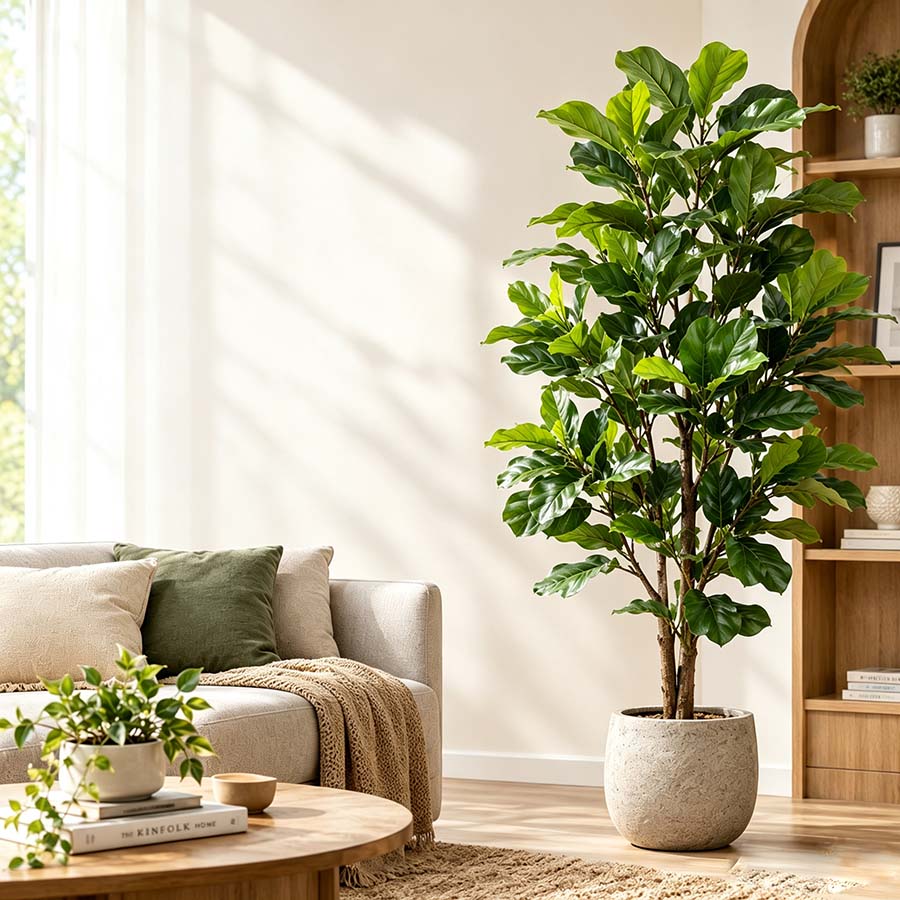
    Interior design is no longer only about choosing beautiful furniture and colors. Greenery has become an important element in creating comfortable, welcoming, and visually balanced spaces. However, real plants are not always easy to maintain, especially in areas with limited natural light, busy commercial environments, or spaces where regular watering and pruning are inconvenient. Artificial plants offer a practical alternative. With realistic leaves, natural-looking colors, and a variety of shapes and sizes, modern artificial plants can bring the visual appeal of greenery indoors without the daily maintenance required by living plants.     1. Create a Natural and Welcoming Atmosphere One of the biggest advantages of greenery is its ability to make an interior feel more inviting. A strategically placed artificial tree, potted plant, or decorative flower branch can instantly soften a room and create a more relaxing atmosphere. Artificial plants can be used in living rooms, hotel lobbies, reception areas, restaurants, offices, and retail stores. Their versatility makes it easy to introduce greenery into different interior styles.           2. Add Greenery Without Daily Maintenance Real plants require suitable lighting, watering, pruning, fertilizing, and regular care. For busy households and commercial spaces, maintaining healthy plants can become time-consuming. Artificial plants eliminate most of these concerns. Once positioned properly, they can maintain their appearance for a long time with only occasional dusting. This makes them particularly suitable for high-traffic commercial environments.       3. Artificial Plants Work in Different Spaces Artificial greenery is highly adaptable and can be used in many different environments. For residential interiors, artificial plants can add warmth to bedrooms, living rooms, balconies, and entryways. In commercial spaces, they can enhance hotels, offices, restaurants, shopping areas, and showrooms. Different plant heights and styles also make it possible to create layered greenery, from small tabletop plants to tall artificial trees.                 4. A Flexible Choice for Interior Design Interior trends change constantly, but greenery remains a timeless design element. Artificial plants make it easier to experiment with different colors, shapes, and arrangements. A minimalist room can benefit from a simple green plant, while a luxury interior may work better with large statement trees or decorative floral arrangements. The right artificial plant can complement furniture, walls, lighting, and other decorative elements.       5. Choosing the Right Artificial Plant When choosing artificial plants, appearance is only one factor to consider. Buyers should also pay attention to size, material, color, structure, pot design, and the intended application. For small spaces, compact potted plants or flower branches can be a practical choice. For larger interiors, tall artificial trees can create a stronger visual focal point. For commercial projects, durability, packaging, customization options, and bulk supply capability can also be important considerations.       Why Choose Artificial Plants for Modern Interiors? Artificial plants combine decorative appeal with practical functionality. They can introduce greenery into spaces where living plants may be difficult to maintain, while offering greater flexibility in placement and design. For homeowners, retailers, interior designers, hotels, and other commercial buyers, artificial greenery can be an efficient way to create attractive interiors with less ongoing maintenance. As artificial plant manufacturing continues to improve, realistic textures, natural colors, and detailed designs are making artificial greenery an increasingly popular choice for modern interior decoration.   Artificial plants are more than simple decorations. They are a flexible design solution that can bring greenery, warmth, and visual interest to almost any interior environment. Whether you are decorating a home, refreshing a hotel lobby, or creating a welcoming commercial space, the right artificial greenery can make a noticeable difference.    
  • Why Artificial Trees Are a Smarter Investment for Cost-Conscious Businesses
    Jun 01, 2026
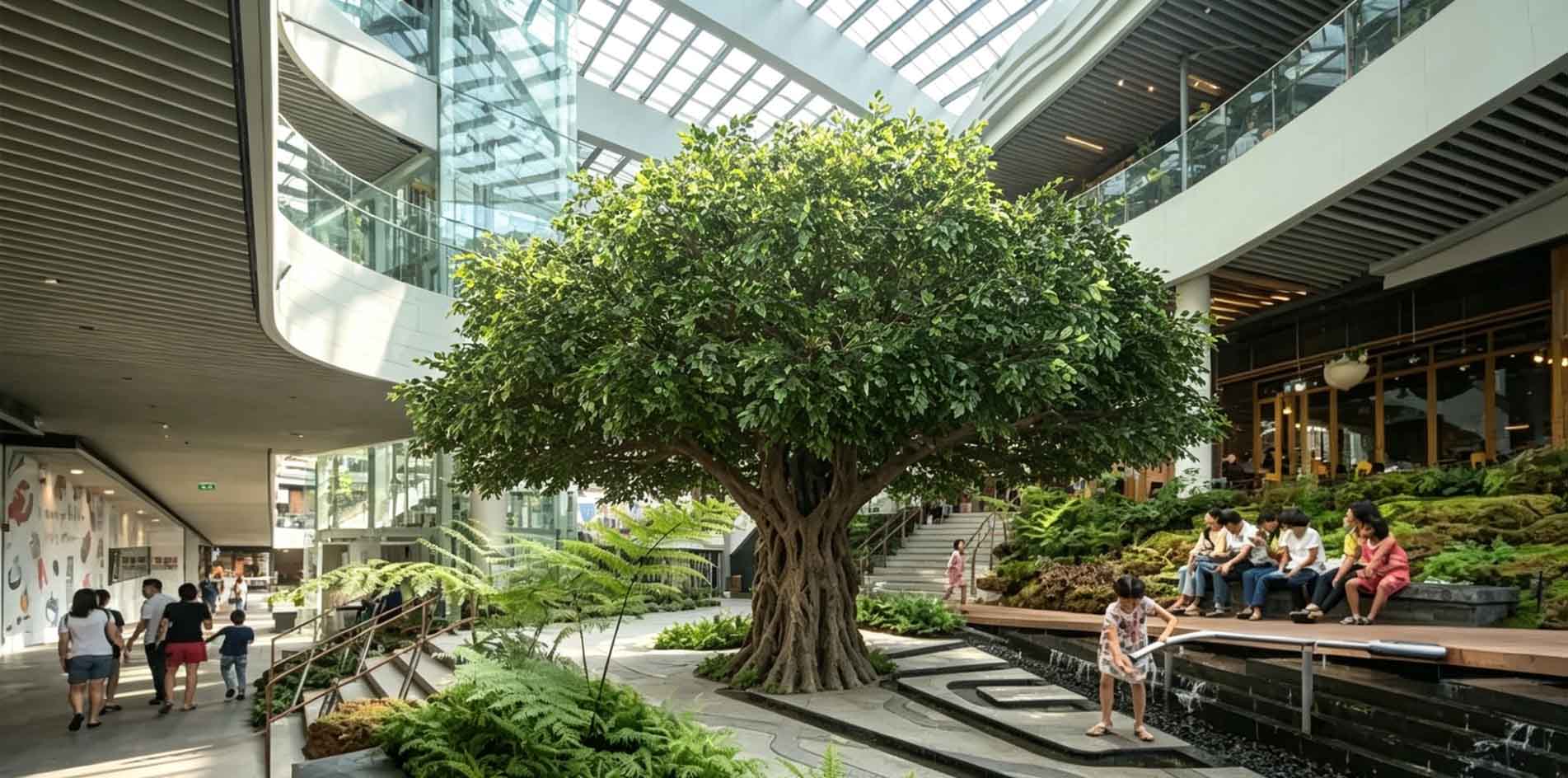
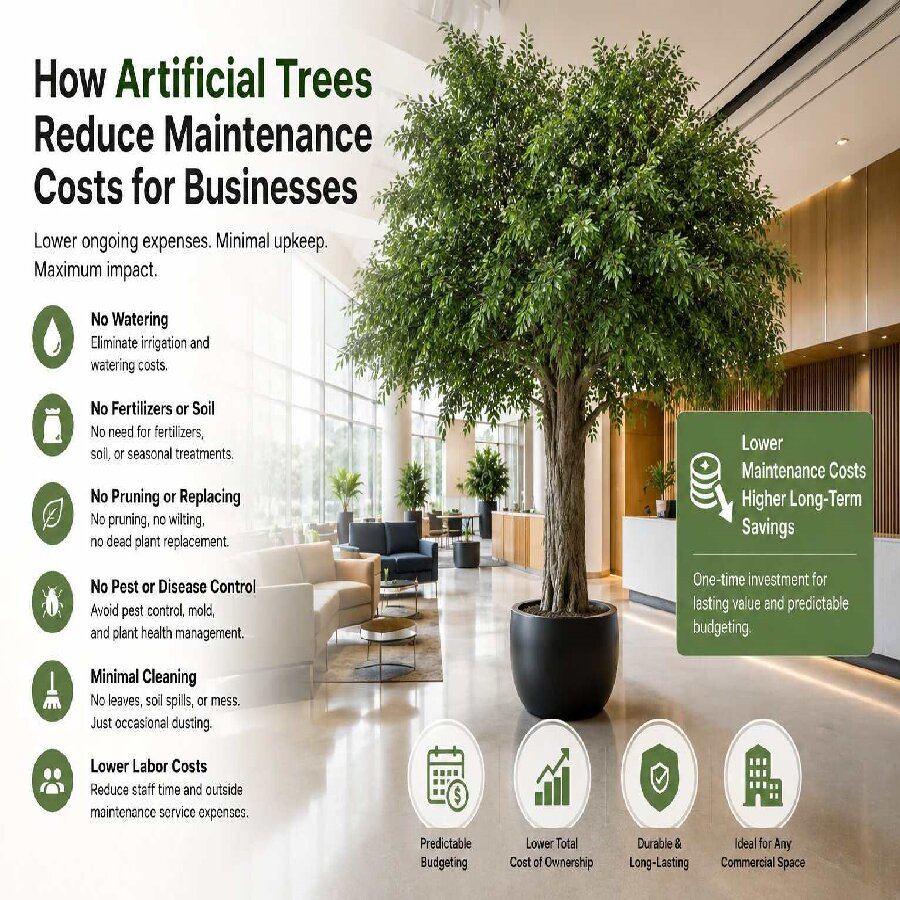
    In today's competitive business environment, every operational expense matters. From office buildings and hotels to retail stores and restaurants, maintaining an attractive interior often comes with ongoing costs. While live plants can enhance a space, they also require regular care, replacement, and maintenance.   This is why many businesses are turning to artificial trees for businesses as a practical and cost-effective alternative. Modern artificial trees offer the same visual impact as natural greenery while significantly reducing long-term maintenance costs.     Eliminating Routine Plant Care Costs   One of the biggest advantages of artificial trees is that they require virtually no daily maintenance.   Live plants need consistent watering, pruning, fertilizing, repotting, and health monitoring. Businesses often hire professional plant maintenance services or dedicate staff time to these tasks, creating recurring expenses throughout the year.   Low maintenance artificial trees eliminate these requirements entirely. Once installed, they maintain their appearance without the need for ongoing plant care, helping businesses save both time and money.   Reducing Labor Expenses   Labor costs can quickly add up when maintaining commercial interior landscaping.   Facility managers, cleaning staff, or external contractors may spend hours caring for live plants, especially in large commercial spaces. Commercial artificial trees require only occasional dusting or surface cleaning, dramatically reducing labor requirements.   As a result, businesses can allocate staff resources to more valuable operational activities rather than routine plant maintenance.   Lowering Water and Utility Costs   Water conservation has become increasingly important for businesses seeking to reduce operating expenses and support sustainability goals.   Unlike live plants, artificial trees require no irrigation systems, watering schedules, or moisture monitoring. Businesses can eliminate water consumption associated with indoor landscaping while avoiding the maintenance costs of irrigation equipment.   For large facilities such as hotels, shopping centers, and office complexes, these savings can be substantial over time.   Avoiding Plant Replacement Expenses   Natural plants are vulnerable to environmental conditions, pests, diseases, and human error. Poor lighting, inconsistent watering, or changing temperatures can cause plants to deteriorate or die, leading to frequent replacement costs.   High-quality commercial-grade artificial trees maintain their appearance year after year. Designed for long-term use, they provide businesses with a predictable investment and significantly reduce replacement expenses.   Eliminating Pest and Soil Management   Live plants can introduce unwanted challenges, including insects, mold, soil spills, and plant diseases.   Managing these issues often requires additional treatments, cleaning efforts, and maintenance procedures. Artificial greenery solutions eliminate these concerns because they contain no soil or organic material that attracts pests.   This makes them particularly suitable for hospitality venues, healthcare facilities, corporate offices, and retail environments where cleanliness is a priority.   Consistent Appearance All Year Round   Businesses invest in greenery because it creates a welcoming and professional atmosphere. However, live plants can lose leaves, change appearance seasonally, or suffer from neglect.   Indoor artificial trees maintain a lush, vibrant appearance regardless of weather conditions, indoor lighting, or seasonal changes. This consistency helps businesses preserve their brand image without incurring ongoing maintenance costs.   Ideal for Difficult Locations   Many commercial spaces feature high ceilings, elevated display areas, or locations with limited natural light.   Maintaining live plants in these environments can be challenging and expensive. Additional lighting systems, specialized equipment, and regular access for maintenance may be required.   Artificial trees for hotels, shopping malls, airports, conference centers, and office buildings provide a practical solution because they thrive in any location without sunlight, watering, or special care.   Improving Budget Predictability   One of the less obvious benefits of artificial trees for businesses is financial predictability.   With live plants, businesses often face unexpected expenses related to replacements, pest treatments, irrigation repairs, or emergency maintenance. Commercial artificial trees convert these variable costs into a single upfront investment with minimal ongoing expenses.   This allows facility managers and business owners to plan budgets more accurately while reducing operational uncertainty.   Long-Term Value for Commercial Spaces   Although artificial trees may require a higher initial investment than live plants, their long lifespan and low maintenance requirements often result in a lower artificial trees maintenance cost over time.   For businesses that prioritize professional aesthetics, operational efficiency, and cost control, artificial greenery solutions provide an attractive long-term investment.   Artificial trees help businesses reduce maintenance costs by eliminating watering, pruning, fertilizing, pest control, and frequent plant replacement. They also lower labor expenses, reduce water consumption, and provide a consistently attractive appearance throughout the year.   Whether used as artificial plants for offices, artificial plants for commercial spaces, or large-scale decorative features in hospitality venues, commercial artificial trees offer a smart investment that combines visual appeal with long-term financial savings.   As more businesses seek efficient and sustainable interior design solutions, artificial trees for businesses continue to become a preferred choice for modern commercial environments.

leave a message

leave a message
If you are interested in our products and want to know more details,please leave a message here,we will reply you as soon as we can.

Home

Products

WhatsApp

contact