Artificial Plants vs. Real Plants: Which Is Better for Your Space?
Sep 02, 2026
When choosing greenery for a home, office, hotel, restaurant, or retail space, one question often comes up: Should you choose artificial plants or real plants? The answer depends on your lighting conditions, maintenance resources, budget, and the atmosphere you want to create.
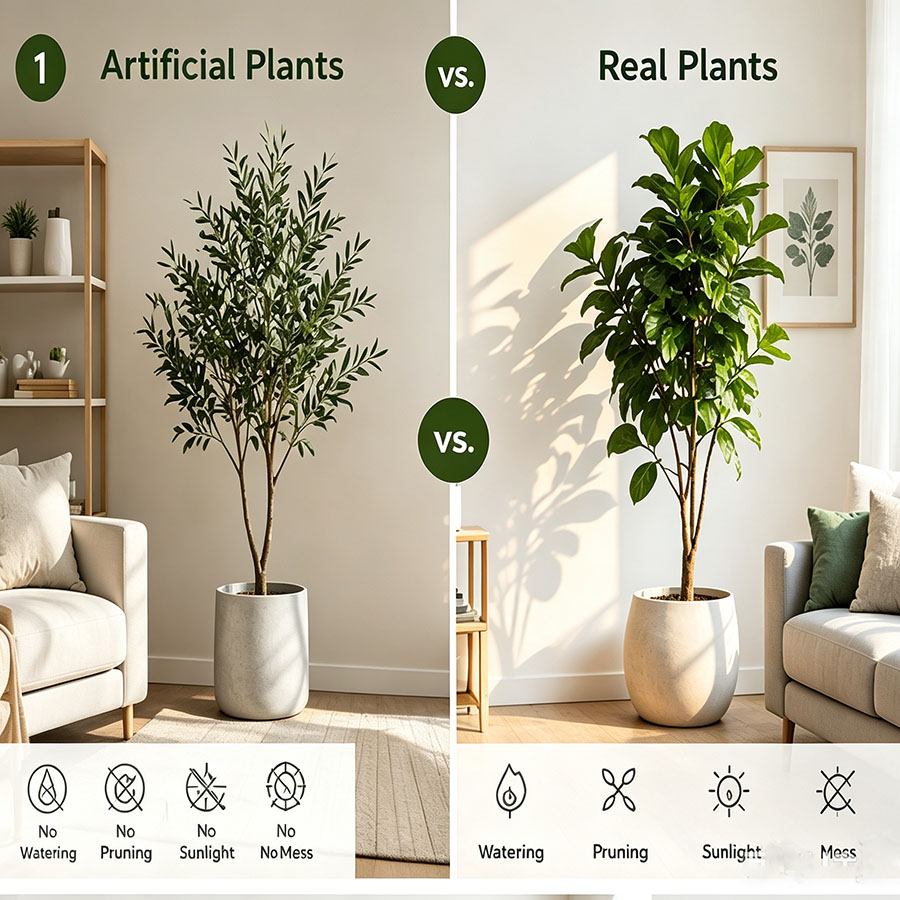
For spaces with limited natural light, busy schedules, or frequent use—especially commercial environments—artificial plants can be a practical and cost-effective choice. For people who enjoy gardening and want the natural feeling of living greenery, real plants remain an attractive option. While artificial plants require an initial investment, their low maintenance requirements can make them more economical over the long term.
Real Plants: Natural Beauty Comes with Maintenance
Real plants bring something unique to an interior. Their changing leaves, natural textures, and living growth can create a refreshing atmosphere and a stronger connection with nature.
However, real plants also come with several challenges. They need suitable light, regular watering, pruning, fertilizing, and sometimes pest control. Poor lighting or inconsistent care can result in yellow leaves, fallen leaves, pests, or even plant death.
For commercial spaces such as hotels, restaurants, offices, and shopping areas, these maintenance requirements can become a significant part of ongoing operating costs.
Artificial Plants: Beauty Without the Daily Maintenance
Artificial plants offer a different approach. Modern artificial greenery can recreate the shapes, colors, and textures of many popular plant varieties while eliminating the need for watering, fertilizing, or sunlight.
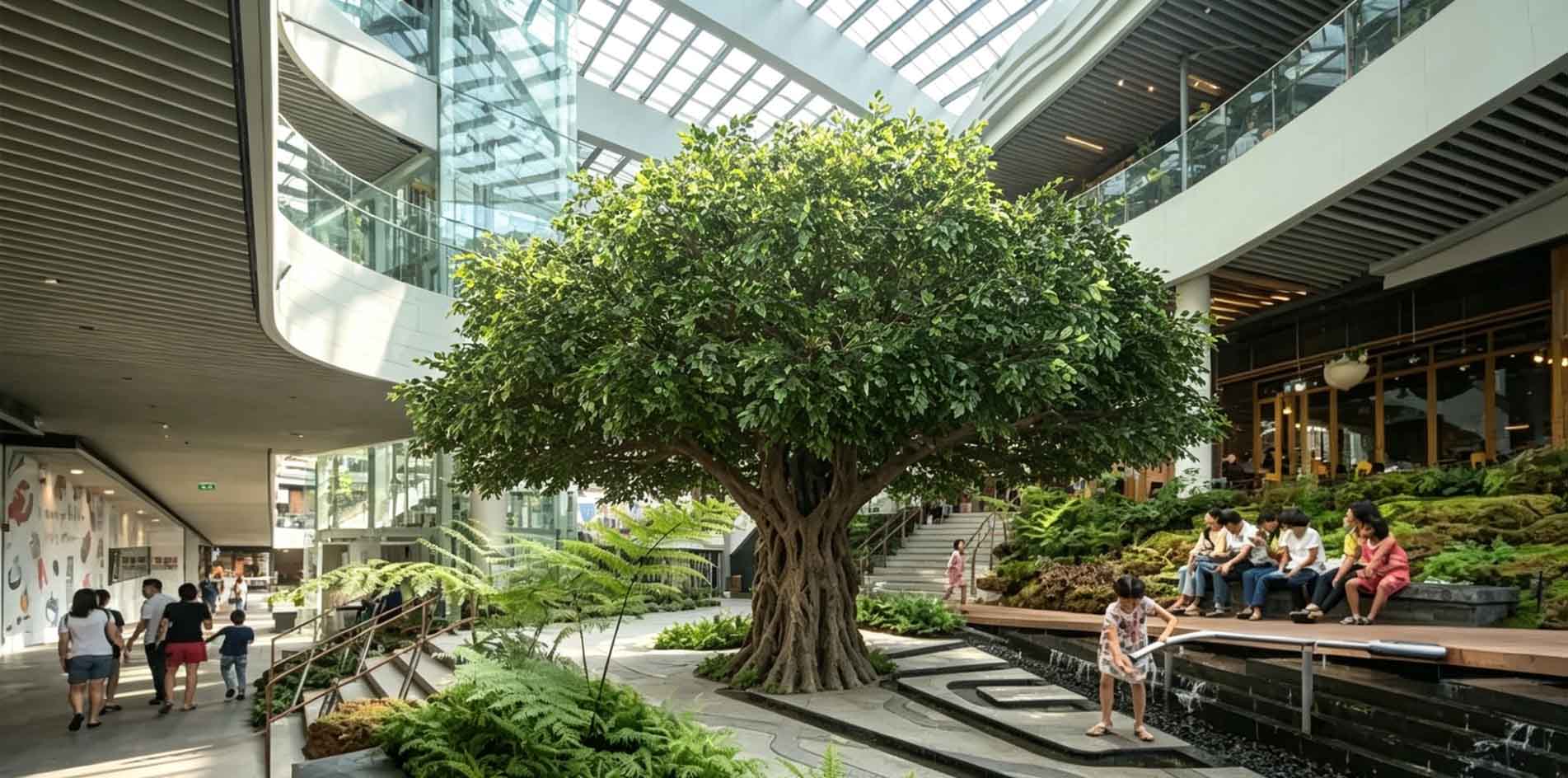
This makes them especially suitable for low-light interiors, high-traffic commercial spaces, and areas that are difficult to maintain regularly. They can also be used in locations where real plants may struggle to survive, such as windowless offices, corridors, bathrooms, reception areas, and indoor shopping spaces.
Another advantage is consistency. Artificial plants maintain their appearance throughout the year without seasonal changes, fallen leaves, or unexpected growth.
What Are the Downsides?
Artificial plants do not provide the biological benefits of living plants. They do not grow, photosynthesize, or contribute to the same natural biophilic experience as real greenery. Their quality can also vary, so choosing products with realistic leaves, natural colors, and detailed textures is important.
Real plants, meanwhile, require more attention but offer genuine biological and sensory benefits. For those who enjoy caring for plants, the maintenance itself can also be part of the experience.
Artificial Plants vs. Real Plants: Quick Comparison
Feature
Artificial Plants
Real Plants
Initial Cost
Moderate one-time investment
Varies by plant type
Ongoing Maintenance
Very low
Regular watering, pruning and fertilizing
Lifespan
Several years with proper care
Depends on species and growing conditions
Lighting Requirements
No natural light required
Suitable light is essential
Watering
Not required
Required regularly
Pest Risk
No biological pests
Possible insects and plant diseases
Fallen Leaves
None
Possible
Appearance
Consistent year-round
Changes naturally with seasons
Commercial Use
Highly suitable
Requires regular maintenance
Best For
Busy users and commercial spaces
Plant lovers and naturally lit spaces
So, Which One Should You Choose?
There is no universal winner. Choose artificial plants when you need long-term visual consistency, minimal maintenance, and flexibility in lighting conditions. They are particularly practical for commercial environments and busy households.
Choose real plants if you have suitable natural light, enjoy plant care, and value the living, changing character of greenery.
The smartest approach is also to combine both. Real plants can provide natural vitality in key areas, while artificial plants can fill darker corners and high-maintenance locations. By considering the entire life cycle—not just the purchase price—you can find the solution that offers the best balance between beauty, maintenance, and long-term cost.