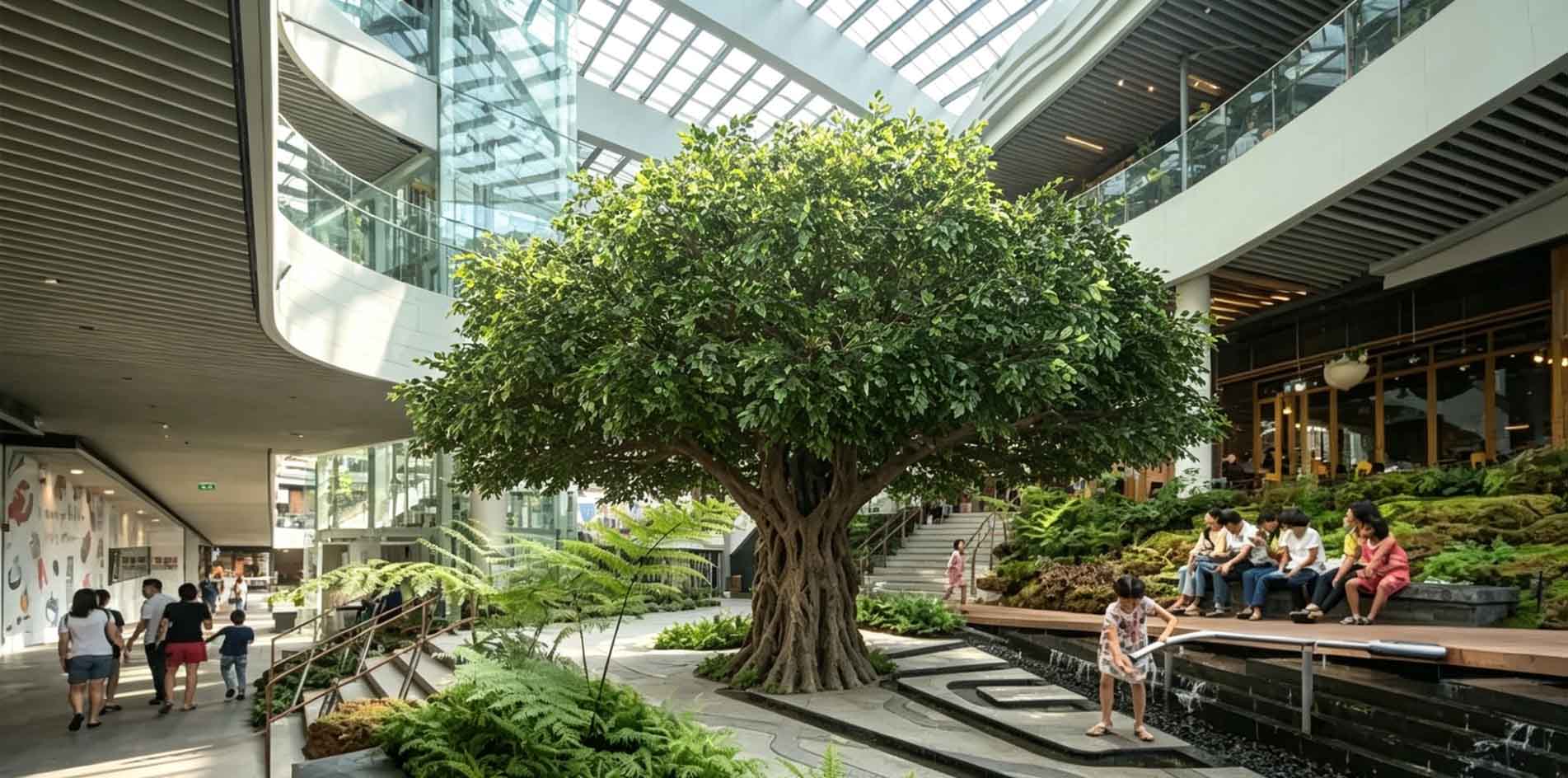
Artificial plants have come a long way from the shiny plastic leaves and overly bright colors of the past. Today, high-quality artificial plants can closely reproduce the texture, color variation, structure, and natural imperfections of real plants.
However, not every artificial plant looks realistic. Two products may look similar in online photos but feel completely different when placed in a real interior. The key is knowing what to look for before making a purchase. From leaf materials and branch structures to UV protection and size selection, several details can determine .
1. Start With the Material: The Leaf Is Where Realism Begins
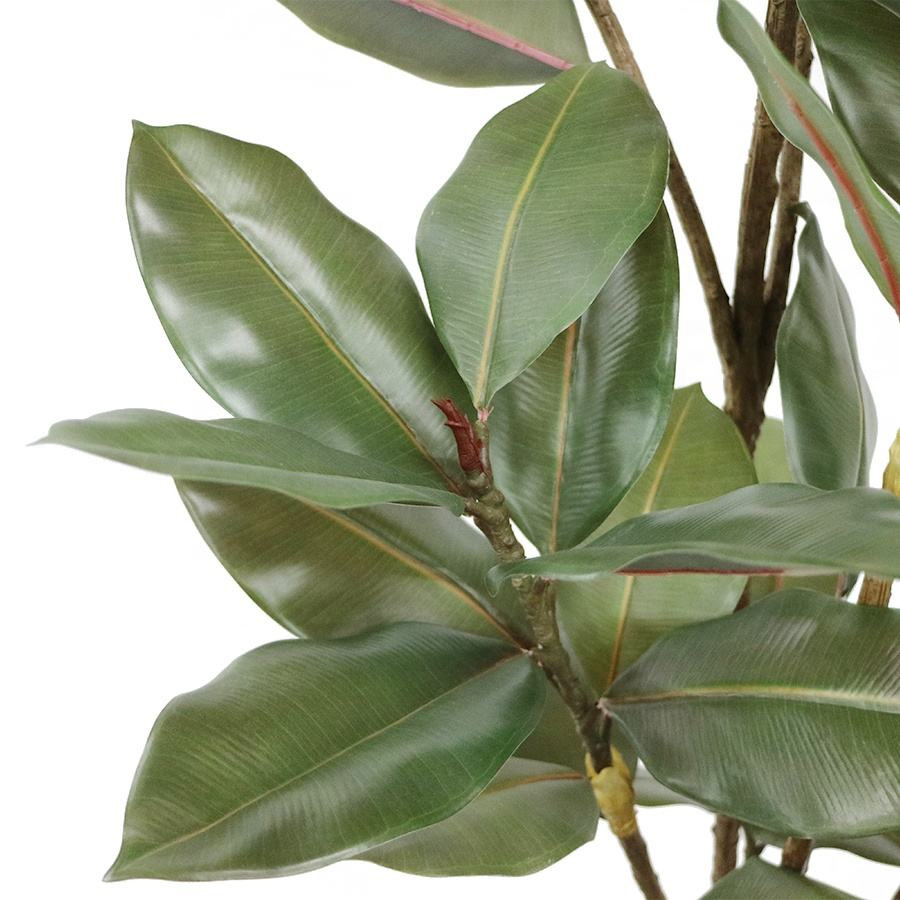
The first thing to examine is the material of the leaves. Low-cost artificial plants often use ordinary plastic with a smooth, rigid surface. This can make the leaves look too shiny, flat, or uniform.
Higher-quality materials can create a much more natural appearance. PE leaves can offer good flexibility and durability, while silk or premium fabric leaves can provide a softer visual effect. Silicone leaves are particularly useful when a realistic texture and detailed surface are important.
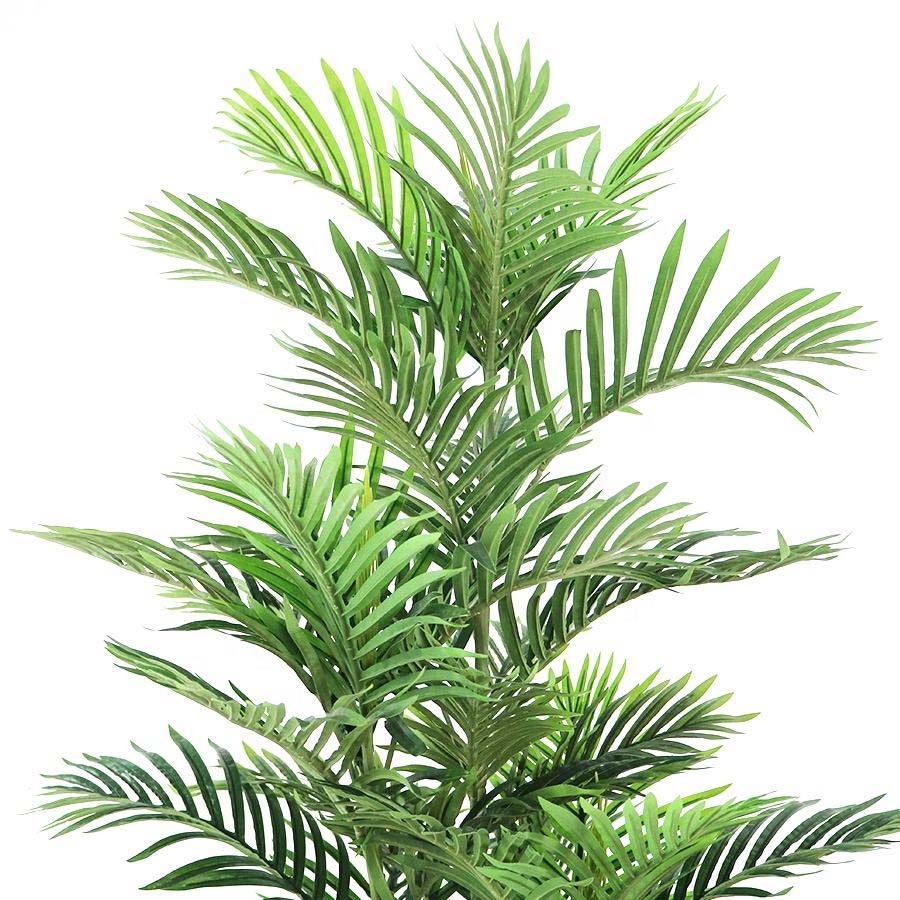
Color also matters. Real leaves rarely have exactly the same shade from one leaf to another. Slight variations in green tones, veins, edges, and surface texture can make an artificial plant look much more natural.
2. Look at the Branch Structure, Not Just the Leaves
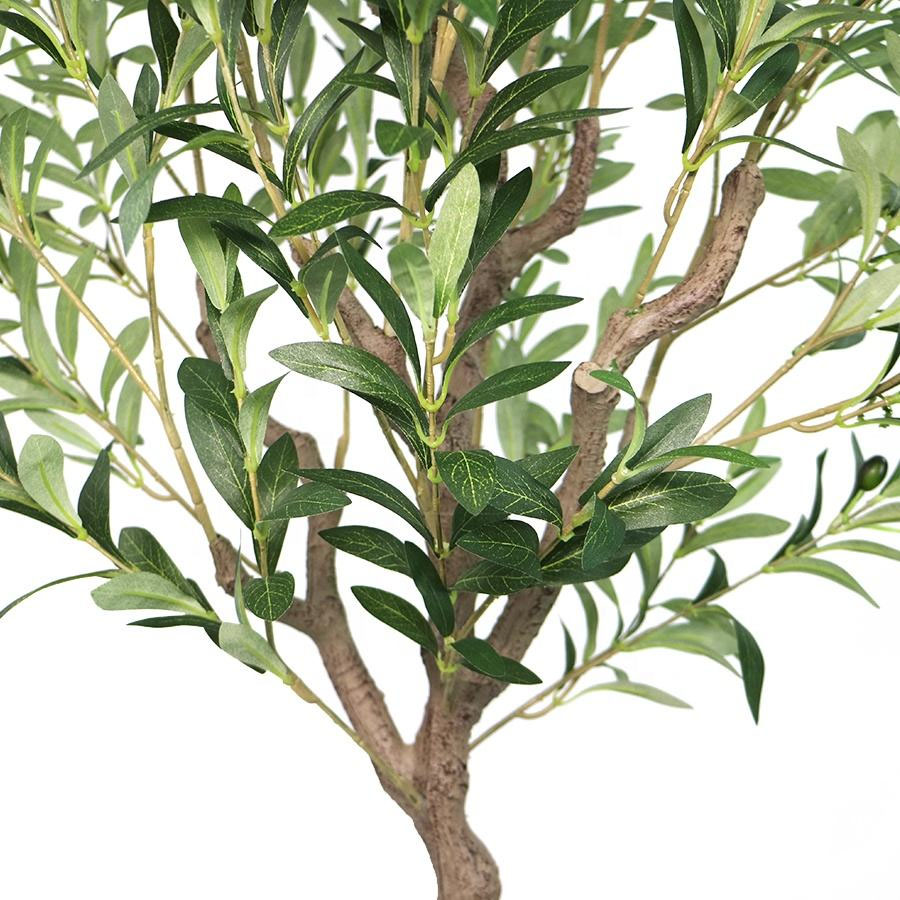
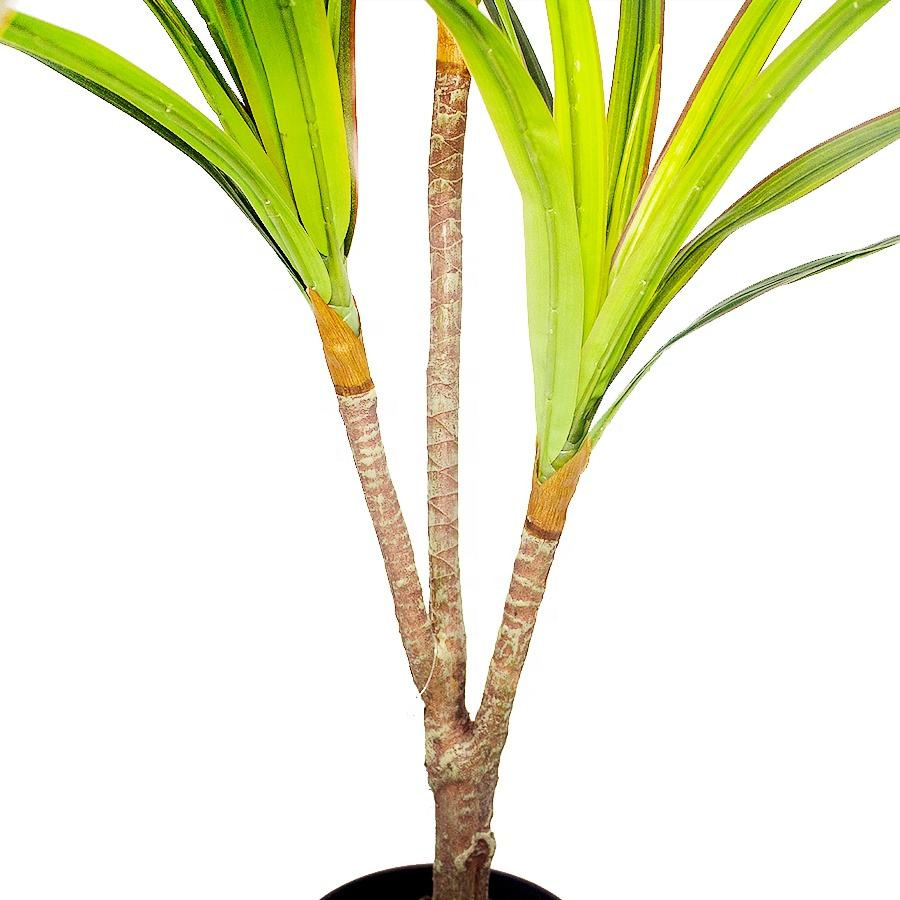
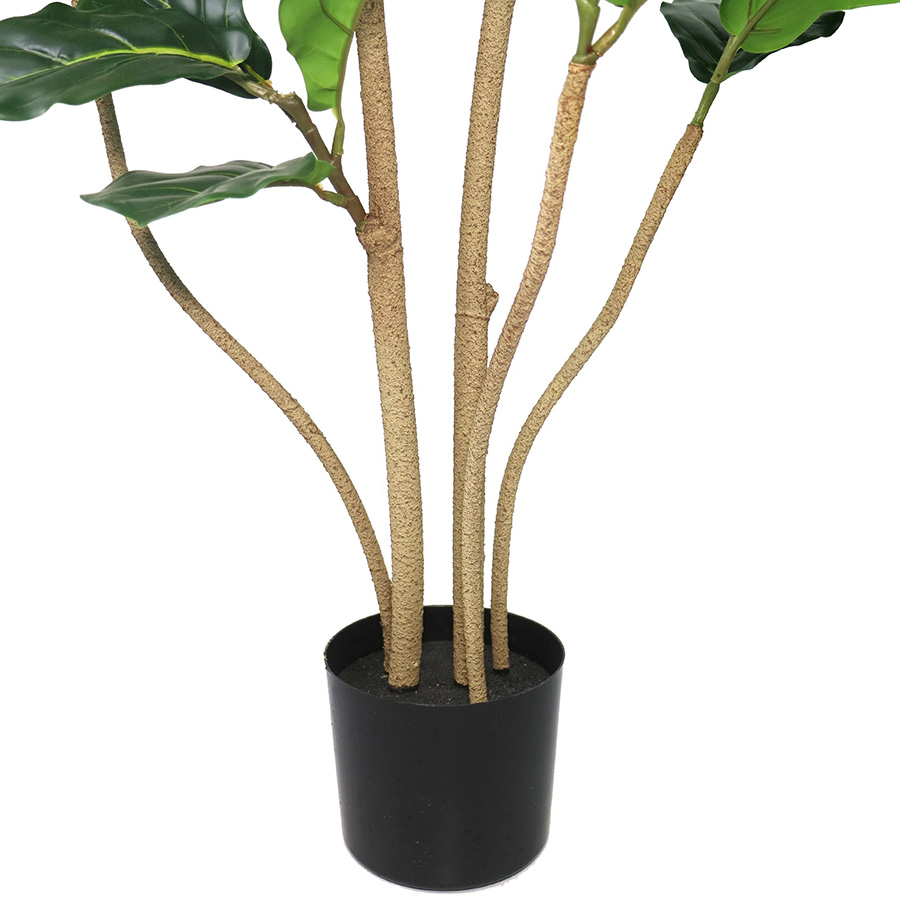
A realistic leaf cannot fully compensate for an unnatural branch structure. If all branches point in the same direction or appear perfectly symmetrical, the plant may look artificial even when the leaves are well made.
A good artificial plant should have a convincing internal framework. Flexible branches allow users to adjust the shape after unpacking, while a stronger supporting structure helps taller plants maintain their overall form.
For larger artificial trees, the trunk and branch connections deserve special attention. A well-designed structure creates natural spacing between branches and gives the plant a fuller, more three-dimensional appearance.
3. Material Comparison: Which Artificial Plant Material Looks Best?
Different materials create different visual effects. There is no single material that is perfect for every application, so the best choice depends on where the plant will be used, how realistic it needs to look, and your budget.
| Material |
Realism |
Suitable Scenes |
Expected Durability |
| PE |
★★★★☆ |
Homes, offices, hotels, retail spaces |
Good |
| Silk / Premium Fabric |
★★★★☆ |
Interiors, events, decorative displays |
Medium–Good |
| Silicone |
★★★★★ |
Premium interiors, showrooms, high-end decoration |
Good |
| UV-Resistant Coating |
★★★★☆ |
Outdoor areas, balconies, entrances |
High |
| Ordinary Plastic |
★★★☆☆ |
Budget decoration, temporary displays |
Medium |
The table is only a general guide because the final appearance depends on the manufacturing process as well as the material itself. A carefully manufactured PE plant can look more convincing than a poorly made product using a more expensive material.
4. Indoor or Outdoor? Check UV Protection Carefully
One of the most common mistakes is using an indoor artificial plant outdoors.
Sunlight, temperature changes, humidity, and weather exposure can gradually affect artificial leaves. Without proper UV protection, colors may fade and materials may become less attractive over time.
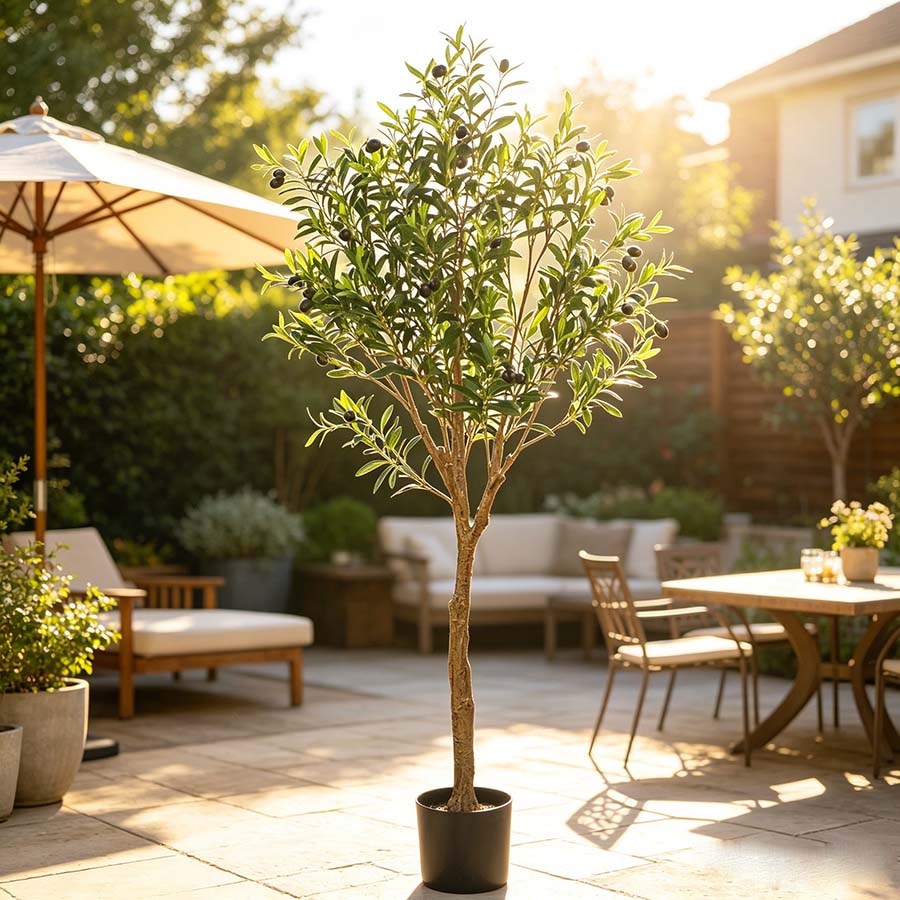
If the plant will be placed on a balcony, patio, entrance, garden area, or other exposed location, look specifically for UV-resistant materials or UV-protective coatings.
For indoor applications, UV resistance is usually less important, allowing you to focus more on leaf texture, color, branch structure, and overall appearance.
5. Choose the Right Size for Your Space
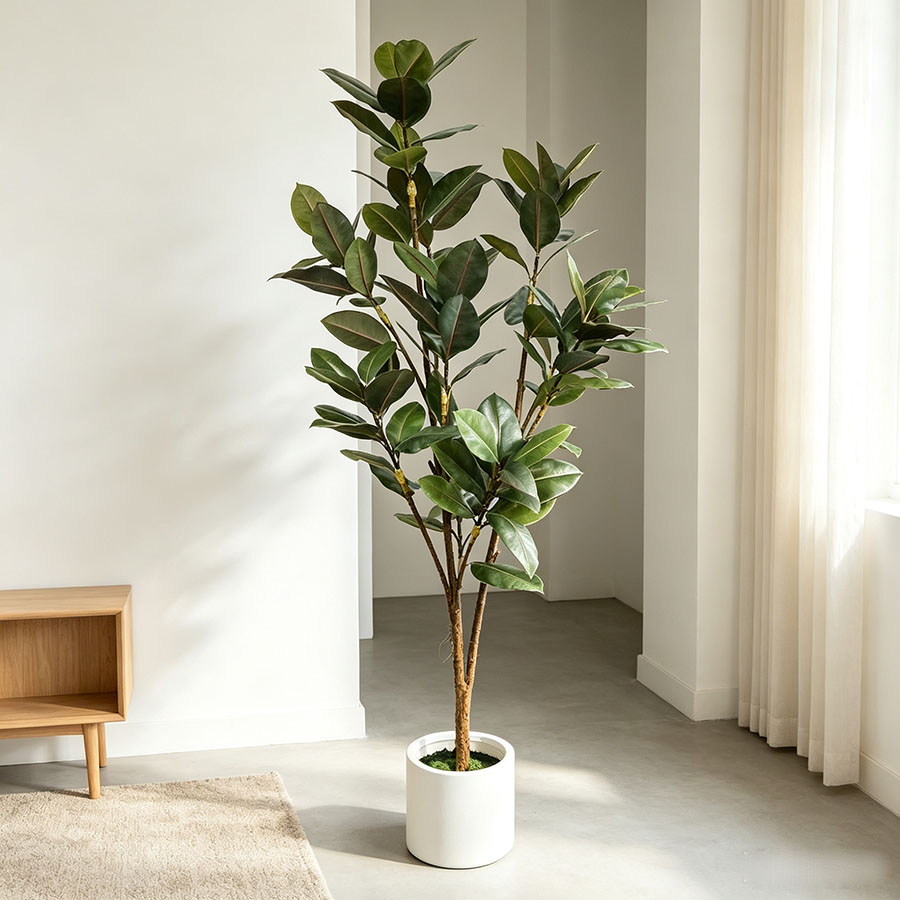
Even a beautifully made artificial plant can look cheap if the size does not match the space.
A small plant may disappear in a large living room, hotel lobby, or commercial area, while an oversized tree can make a small room feel crowded.
Before purchasing, consider the height of the ceiling, the available floor area, furniture proportions, and the visual purpose of the plant.
For example:
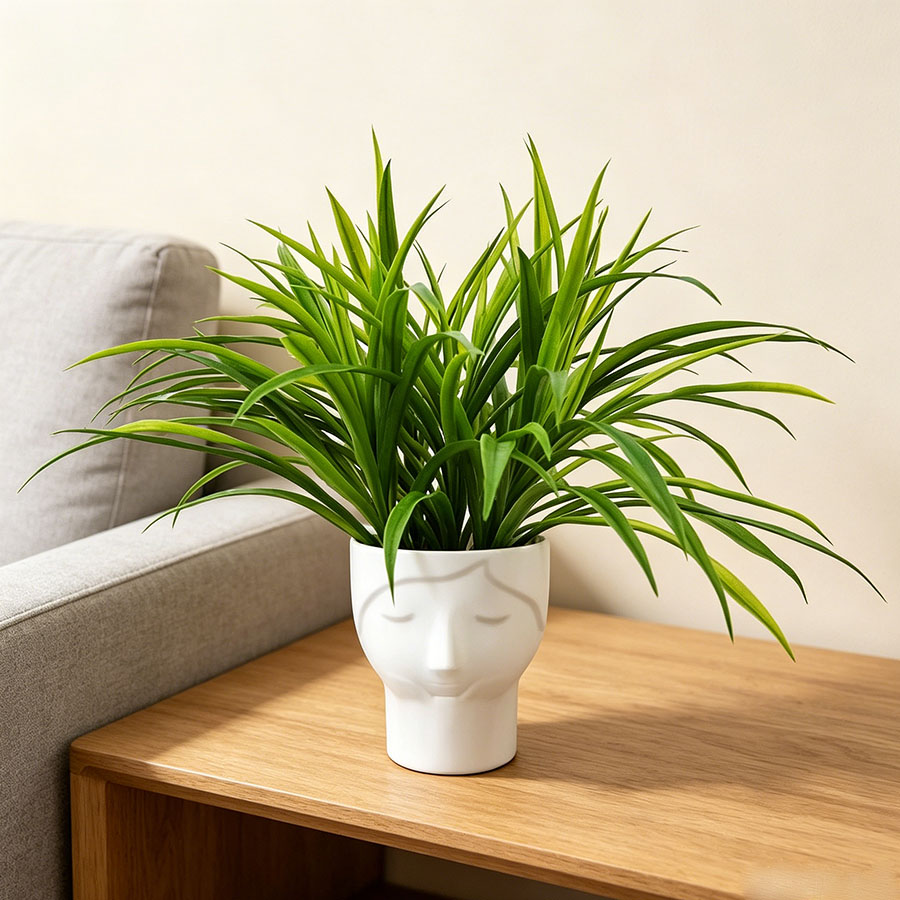
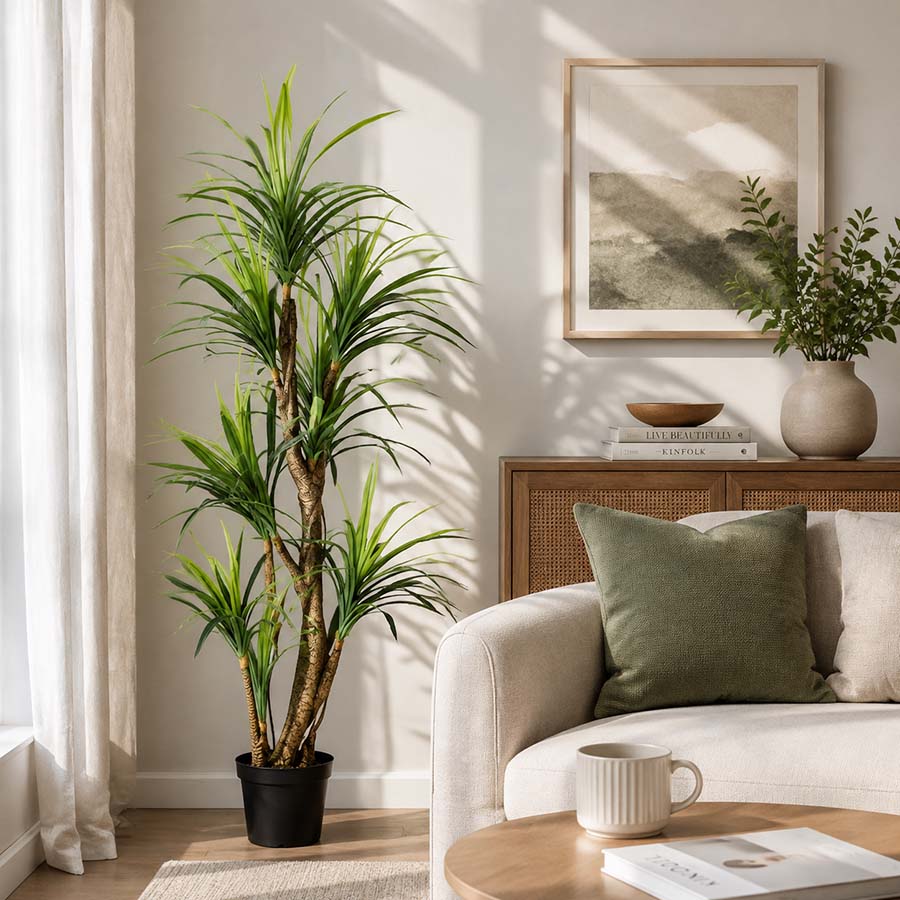
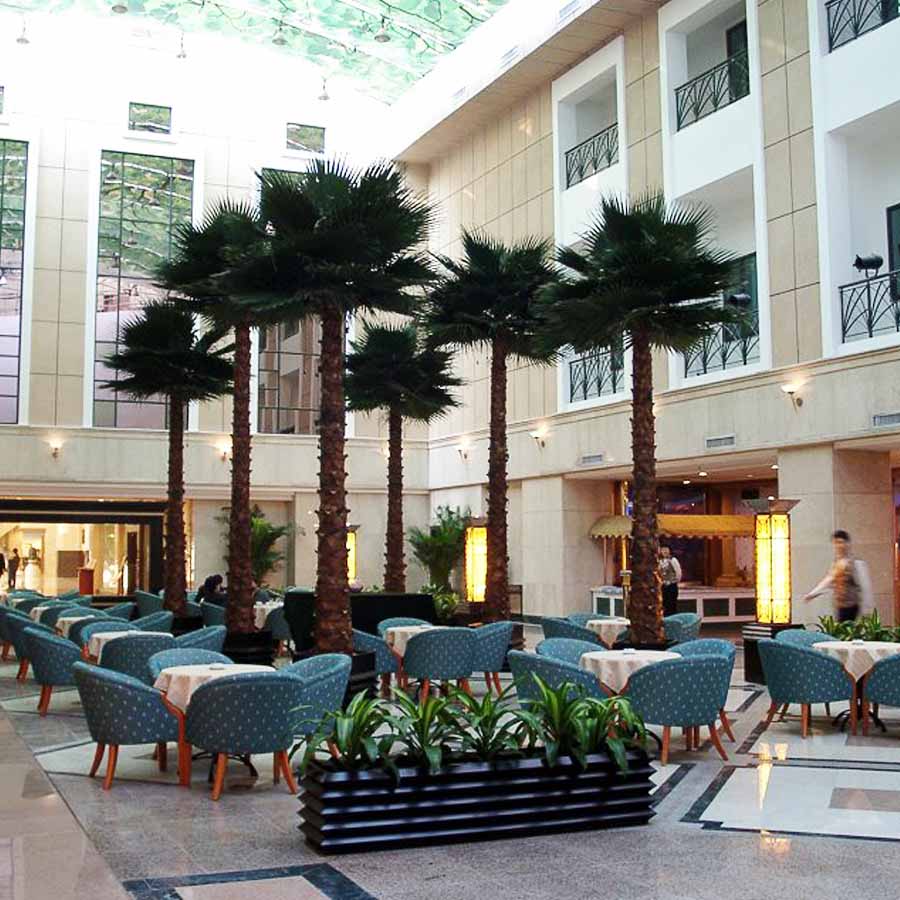
- Small plants: Great for desks, shelves, countertops, and bedside tables.
- Medium plants: Suitable for living rooms, offices, reception areas, and corners.
- Tall trees: Ideal for hotel lobbies, commercial spaces, large living rooms, and entrance areas.
6. Don't Ignore Odor and Environmental Testing
Appearance is important, but it should not be the only consideration.
When buying artificial plants for homes, hotels, offices, or commercial projects, it is worth paying attention to the materials used and whether the supplier can provide relevant testing or compliance documentation.
A strong chemical odor immediately after opening the package may indicate that the materials or printing processes need closer attention. Reliable suppliers should be able to provide information about material specifications and applicable safety or environmental standards when required.
7. A Quick Checklist Before Buying
Before placing an order, ask yourself these questions:
① Does the leaf material look natural?
Check the surface texture, flexibility, color variation, and visible leaf veins.
② Does the branch structure look realistic?
Look for natural spacing, irregular angles, and a stable internal framework.
③ Is it designed for indoor or outdoor use?
Outdoor products should have suitable UV-resistant treatment.
④ Is the size right for the space?
Compare the plant height and width with the room, furniture, and available area.
⑤ Can the supplier provide material information?
For commercial projects, ask about material specifications and relevant testing documents when necessary.
⑥ Does the price make sense for the quality?
Extremely low prices can sometimes mean compromises in materials, construction, or finishing.
Conclusion
Choosing a high-quality artificial plant is not simply about finding the most expensive option. The real difference is often hidden in the details: the feel of the leaves, the variation in color, the strength of the branch structure, the quality of the finishing process, and whether the product is designed for the environment where it will be used.
For a better buying decision, prioritize material and craftsmanship, check the supporting structure, distinguish indoor from outdoor products, and choose the size according to your space. Most importantly, don't judge an artificial plant by price alone. A well-designed and well-made product can create a natural, sophisticated look without the maintenance required by real plants.