Commercial Space Artificial Plants
Sep 17, 2026
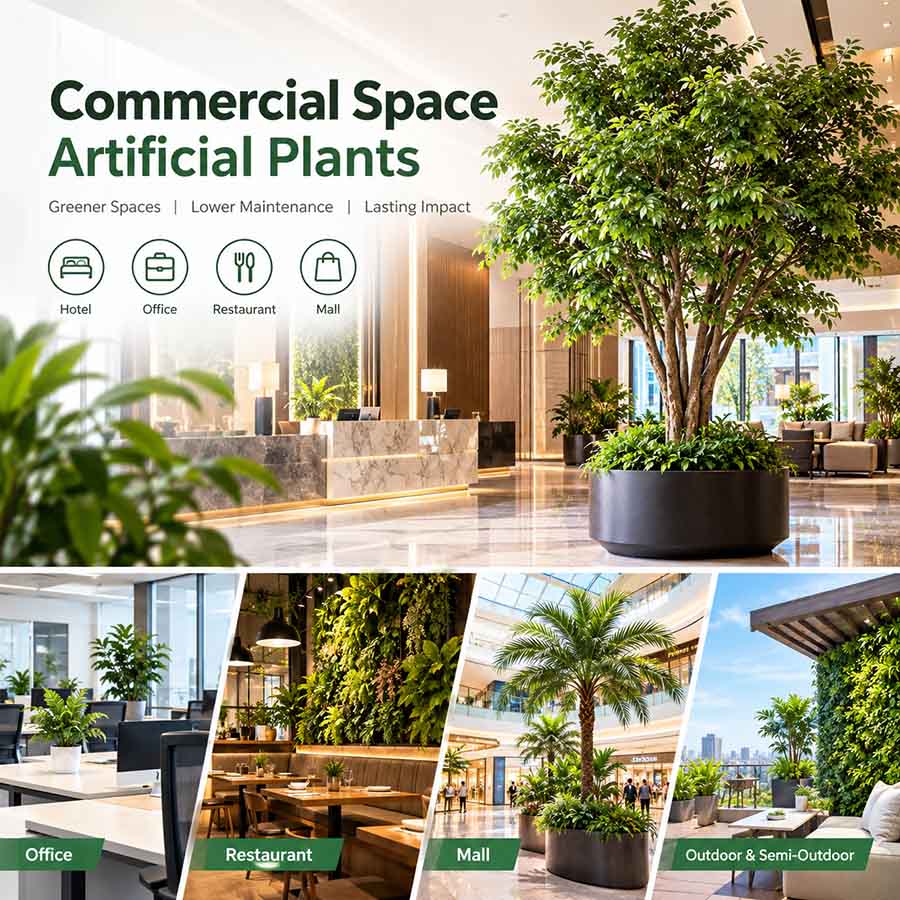
Commercial spaces are becoming increasingly focused on creating comfortable, memorable, and visually appealing environments. Artificial plants offer a practical way to introduce greenery into hotels, offices, restaurants, shopping malls, and other high-traffic spaces without the daily maintenance required by living plants.
For commercial projects, however, choosing artificial plants is not simply about appearance. Product materials, dust resistance, UV protection, fire-safety requirements, installation methods, and expected service life should all be considered before making a selection.
1. Why Artificial Plants Work Well in Commercial Spaces
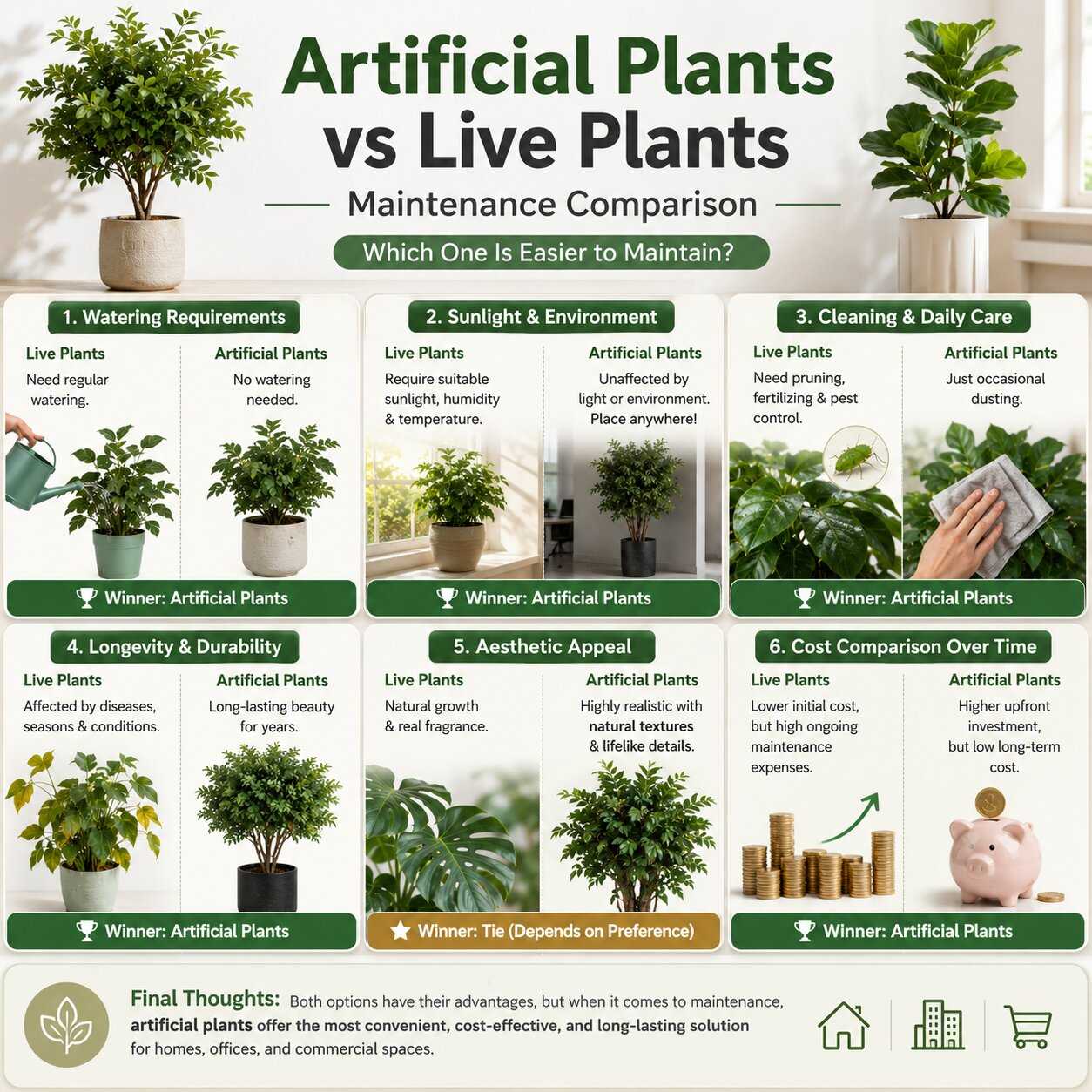
Commercial environments often face challenges that are difficult for living plants to handle. Limited natural light, high foot traffic, irregular maintenance, indoor air conditioning, dust, and changing temperatures can all affect the appearance and health of real plants.
Commercial-grade artificial plants can provide a consistent decorative effect while reducing watering, pruning, fertilizing, pest control, and plant replacement requirements.
For large-scale projects, this can also make ongoing maintenance more predictable. Instead of managing regular plant-care schedules, staff can generally focus on routine dust removal and periodic inspections.
However, product selection should always be based on the actual environment. Indoor areas, restaurants, semi-outdoor spaces, and outdoor installations have different material and performance requirements.
2. Hotel Lobbies: Create a Strong Visual Focal Point
Hotel lobbies are often the first area guests see, so large artificial trees can be used to create an impressive visual centerpiece.
Tall artificial trees, large potted plants, and grouped greenery can help fill empty vertical space around reception desks, lounge areas, entrances, and waiting zones. Trees with realistic trunks and layered foliage can create a more natural visual effect for upscale interior designs.
Key Considerations
· Choose large trees according to ceiling height and available floor space.
· Use stable and sufficiently weighted planters for tall installations.
· Consider realistic trunks and varied foliage for a more natural appearance.
· Coordinate the planter style with the hotel's overall interior design.
· Leave sufficient clearance around entrances, walkways, and emergency exits.
For hotel projects, the goal is usually not simply to “add greenery,” but to create a recognizable decorative feature that works with the architecture.
3. Offices: Flexible Greenery for Workspaces
Offices generally benefit from smaller and more flexible artificial plants. Artificial potted plants can be placed on desks, reception counters, shelves, meeting-room cabinets, and lounge areas.
Large artificial plants can also be used to soften open-plan workspaces or create visual separation between different functional areas.
One major advantage is that artificial plants do not depend on natural light. This makes them suitable for interior zones away from windows, where many living plants may struggle to maintain their appearance.
Recommended Applications
Desk & Countertop: Small potted plants add greenery without taking up much working space.
Reception Areas: Medium-sized plants can make entrances feel more welcoming.
Meeting Rooms: Compact greenery can soften the appearance of furniture and hard architectural surfaces.
Open Offices: Larger plants can help visually divide work zones without constructing permanent walls.
For offices, lightweight products that are easy to relocate can be particularly useful when layouts change frequently.
4. Restaurants: Pay Attention to Oil and Dust
Restaurants have special requirements because food preparation, cooking, grease, moisture, and frequent cleaning can affect decorative materials.
Artificial plants used near dining areas should be easy to clean and should not have excessively delicate structures that are difficult to maintain.
Plants placed near kitchens or cooking areas require even more careful consideration. In these locations, decorative greenery should be positioned away from direct heat, open flames, grease-producing equipment, and other potential hazards.
Practical Tips
· Select materials and finishes that are easy to clean.
· Avoid placing artificial foliage directly above cooking equipment.
· Consider dust-resistant and surface-treated foliage where appropriate.
· Use removable or accessible arrangements in areas requiring frequent cleaning.
· Keep decorative plants away from emergency equipment and evacuation routes.
· Confirm applicable fire-safety requirements before installation.
The objective is to balance decorative impact with hygiene, maintenance, and safety requirements.
5. Shopping Malls: Large-Scale Landscaping and Themed Displays
Shopping malls often have large open spaces that require greenery with sufficient visual scale.
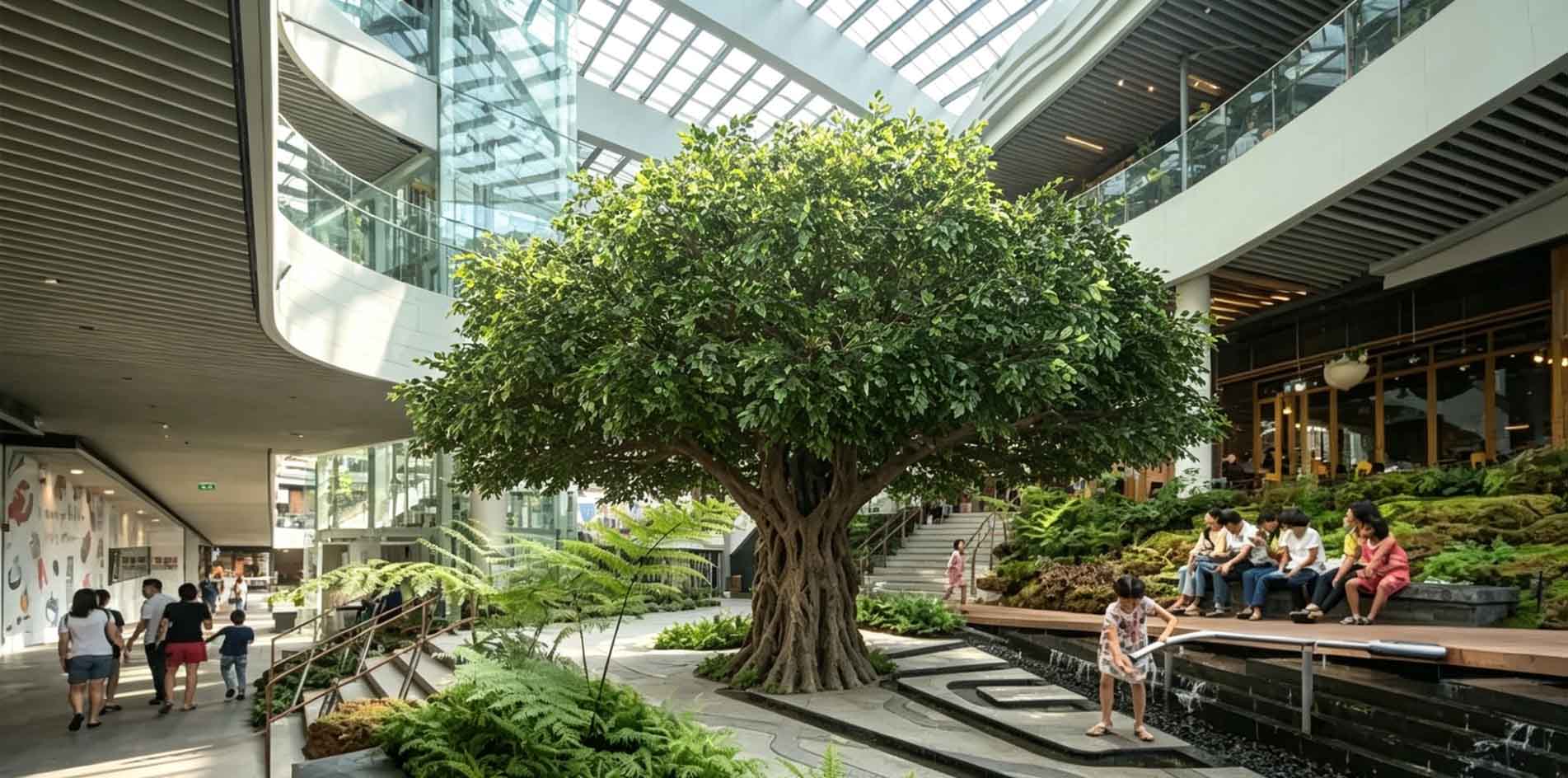
Artificial trees, green walls, hanging greenery, and themed plant arrangements can be combined to create distinctive decorative zones around atriums, entrances, corridors, restaurants, and promotional areas.
Because shopping malls experience heavy daily foot traffic, durability and installation stability are particularly important.
Installation Considerations
Large artificial trees should have a secure base, especially when installed in public areas. Planters and internal structures should be selected according to the height, weight, location, and surrounding traffic conditions.
For green walls or large-scale installations, the supporting structure should be properly designed and securely fixed rather than relying only on the decorative foliage itself.
6. Semi-Outdoor and Outdoor Spaces: UV Protection Matters
Artificial plants used near windows, entrances, terraces, balconies, covered outdoor areas, or fully outdoor environments may be exposed to sunlight and changing weather conditions.
Standard indoor artificial plants may not be suitable for these applications.
For outdoor or semi-outdoor projects, UV-resistant materials and treatments can help reduce color fading and material degradation caused by prolonged sunlight exposure.
Before Choosing Outdoor Artificial Plants, Check:
· UV-resistant material or coating
· Weather exposure
· Installation stability
· Expected service life
· Cleaning and maintenance requirements
A product designed for indoor use should not automatically be treated as an outdoor product. Always confirm the manufacturer's intended application and performance specifications.
7. Fire Safety and Commercial Compliance
Fire safety is one of the most important considerations for commercial artificial plant projects.
Different countries, regions, buildings, and project types may have different fire-safety requirements. Some commercial projects may require documentation or testing related to flame resistance, smoke characteristics, or other building-safety standards.
For hotels, shopping malls, restaurants, offices, and other public buildings, buyers should confirm the applicable local requirements before placing a large project order.
It is also important to consider installation location. Artificial plants should not obstruct emergency exits, fire extinguishers, fire doors, evacuation routes, electrical equipment, or other safety facilities.
Important: Fire-safety requirements vary by project and jurisdiction. Product specifications should be checked against the requirements applicable to the specific installation rather than assuming that one standard applies everywhere.
8. Commercial Artificial Plant Comparison
Commercial Scenario
Recommended Products
Key Requirements
Typical Service-Life Consideration
Hotel Lobby
Large Artificial Trees, Large Potted Plants
Realistic appearance, stable base, fire-safety considerations
Long-term indoor use when properly maintained
Office
Small/Medium Potted Plants, Artificial Trees
Low maintenance, lightweight, easy relocation
Long-term indoor use
Restaurant
Potted Plants, Flower Branches, Greenery
Easy cleaning, grease/dust considerations, safe placement
Depends on cleaning frequency and environment
Shopping Mall
Large Trees, Green Walls, Hanging Greenery
Structural stability, durability, fire-safety considerations
Long-term commercial use with routine maintenance
Reception Area
Medium Potted Plants, Decorative Trees
Professional appearance, compact footprint
Long-term indoor use
Meeting Room
Small Potted Plants, Greenery
Compact size, clean appearance
Long-term indoor use
Semi-Outdoor Area
UV-Resistant Trees and Plants
UV protection, moisture, temperature changes
Depends strongly on exposure conditions
Outdoor Area
Outdoor-Grade Artificial Plants
UV/weather resistance, anchoring, durability
Varies according to climate and exposure
Service life is affected by material quality, sunlight exposure, temperature, humidity, cleaning frequency, installation conditions, and product specifications. Project-specific testing or manufacturer data should be used for precise service-life expectations.
9. How to Plan an Artificial Plant Project
Before purchasing artificial plants for a commercial project, it is useful to evaluate the project in five steps:
Step 1: Identify the Environment
Determine whether the installation is indoor, semi-outdoor, or outdoor.
Step 2: Measure the Space
Check ceiling height, floor area, walking paths, furniture positions, and available installation space.
Step 3: Select the Right Product Grade
Choose products according to appearance, durability, UV requirements, cleaning conditions, and project specifications.
Step 4: Confirm Safety Requirements
Check applicable fire-safety, building, and installation requirements before production or installation.
Step 5: Plan Installation and Maintenance
Consider planter stability, anchoring, cleaning access, replacement requirements, and future layout changes.
This approach helps prevent a common problem in commercial landscaping: choosing a visually attractive product that does not match the actual environment.
Conclusion
Artificial plants can provide a practical and visually consistent greenery solution for commercial spaces. Hotels can use large artificial trees to create dramatic focal points, offices can use compact potted plants to bring greenery into work areas, restaurants can select easy-to-clean products, and shopping malls can combine large trees and green walls for large-scale decorative effects.
For commercial projects, appearance is only one part of the decision. Material quality, environmental suitability, UV protection, cleaning requirements, fire-safety considerations, structural stability, and installation methods should all be evaluated together.
With the right product specification and professional installation, artificial plants can become a long-term decorative element that supports the visual identity of commercial spaces while reducing routine plant-care requirements.