other

Commercial Artificial Plants

  • Commercial Space Artificial Plants
    Sep 17, 2026
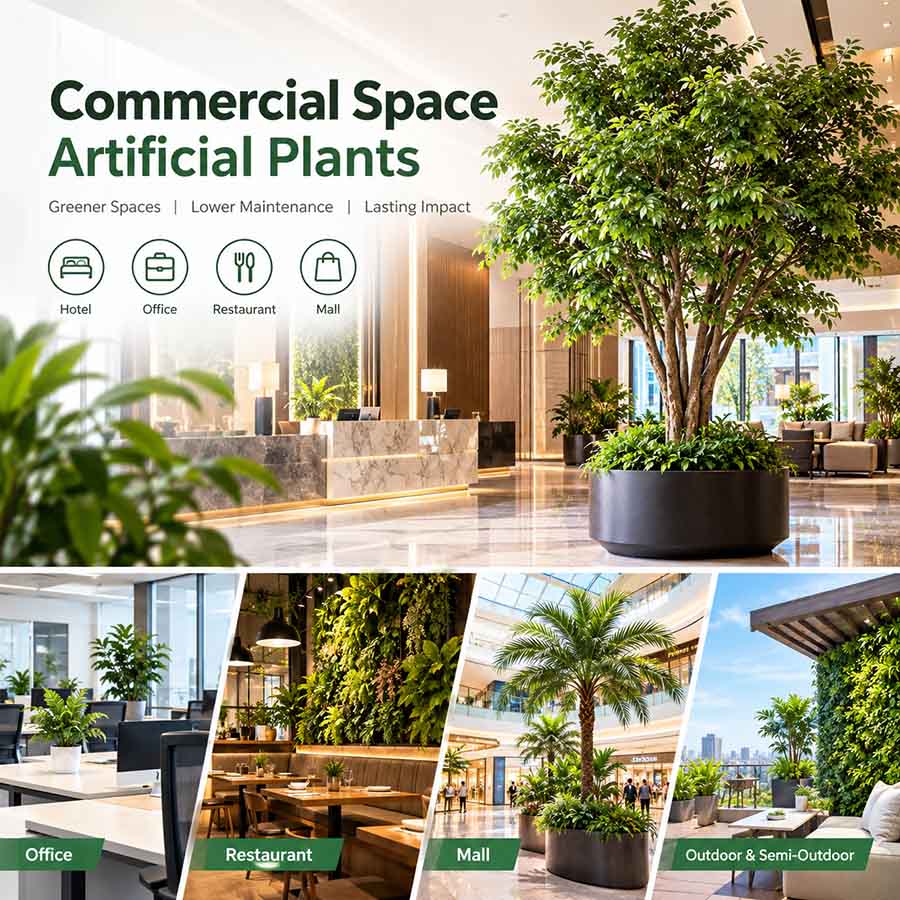
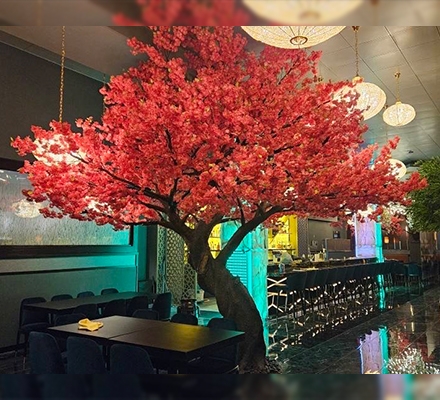
    Commercial spaces are becoming increasingly focused on creating comfortable, memorable, and visually appealing environments. Artificial plants offer a practical way to introduce greenery into hotels, offices, restaurants, shopping malls, and other high-traffic spaces without the daily maintenance required by living plants. For commercial projects, however, choosing artificial plants is not simply about appearance. Product materials, dust resistance, UV protection, fire-safety requirements, installation methods, and expected service life should all be considered before making a selection.     1. Why Artificial Plants Work Well in Commercial Spaces Commercial environments often face challenges that are difficult for living plants to handle. Limited natural light, high foot traffic, irregular maintenance, indoor air conditioning, dust, and changing temperatures can all affect the appearance and health of real plants. Commercial-grade artificial plants can provide a consistent decorative effect while reducing watering, pruning, fertilizing, pest control, and plant replacement requirements. For large-scale projects, this can also make ongoing maintenance more predictable. Instead of managing regular plant-care schedules, staff can generally focus on routine dust removal and periodic inspections. However, product selection should always be based on the actual environment. Indoor areas, restaurants, semi-outdoor spaces, and outdoor installations have different material and performance requirements.     2. Hotel Lobbies: Create a Strong Visual Focal Point Hotel lobbies are often the first area guests see, so large artificial trees can be used to create an impressive visual centerpiece. Tall artificial trees, large potted plants, and grouped greenery can help fill empty vertical space around reception desks, lounge areas, entrances, and waiting zones. Trees with realistic trunks and layered foliage can create a more natural visual effect for upscale interior designs. Key Considerations · Choose large trees according to ceiling height and available floor space. · Use stable and sufficiently weighted planters for tall installations. · Consider realistic trunks and varied foliage for a more natural appearance. · Coordinate the planter style with the hotel's overall interior design. · Leave sufficient clearance around entrances, walkways, and emergency exits. For hotel projects, the goal is usually not simply to “add greenery,” but to create a recognizable decorative feature that works with the architecture.                             3. Offices: Flexible Greenery for Workspaces Offices generally benefit from smaller and more flexible artificial plants. Artificial potted plants can be placed on desks, reception counters, shelves, meeting-room cabinets, and lounge areas. Large artificial plants can also be used to soften open-plan workspaces or create visual separation between different functional areas. One major advantage is that artificial plants do not depend on natural light. This makes them suitable for interior zones away from windows, where many living plants may struggle to maintain their appearance. Recommended Applications Desk & Countertop: Small potted plants add greenery without taking up much working space. Reception Areas: Medium-sized plants can make entrances feel more welcoming. Meeting Rooms: Compact greenery can soften the appearance of furniture and hard architectural surfaces. Open Offices: Larger plants can help visually divide work zones without constructing permanent walls. For offices, lightweight products that are easy to relocate can be particularly useful when layouts change frequently.                     4. Restaurants: Pay Attention to Oil and Dust Restaurants have special requirements because food preparation, cooking, grease, moisture, and frequent cleaning can affect decorative materials. Artificial plants used near dining areas should be easy to clean and should not have excessively delicate structures that are difficult to maintain. Plants placed near kitchens or cooking areas require even more careful consideration. In these locations, decorative greenery should be positioned away from direct heat, open flames, grease-producing equipment, and other potential hazards. Practical Tips · Select materials and finishes that are easy to clean. · Avoid placing artificial foliage directly above cooking equipment. · Consider dust-resistant and surface-treated foliage where appropriate. · Use removable or accessible arrangements in areas requiring frequent cleaning. · Keep decorative plants away from emergency equipment and evacuation routes. · Confirm applicable fire-safety requirements before installation. The objective is to balance decorative impact with hygiene, maintenance, and safety requirements.                         5. Shopping Malls: Large-Scale Landscaping and Themed Displays Shopping malls often have large open spaces that require greenery with sufficient visual scale. Artificial trees, green walls, hanging greenery, and themed plant arrangements can be combined to create distinctive decorative zones around atriums, entrances, corridors, restaurants, and promotional areas. Because shopping malls experience heavy daily foot traffic, durability and installation stability are particularly important. Installation Considerations Large artificial trees should have a secure base, especially when installed in public areas. Planters and internal structures should be selected according to the height, weight, location, and surrounding traffic conditions. For green walls or large-scale installations, the supporting structure should be properly designed and securely fixed rather than relying only on the decorative foliage itself.                         6. Semi-Outdoor and Outdoor Spaces: UV Protection Matters Artificial plants used near windows, entrances, terraces, balconies, covered outdoor areas, or fully outdoor environments may be exposed to sunlight and changing weather conditions. Standard indoor artificial plants may not be suitable for these applications. For outdoor or semi-outdoor projects, UV-resistant materials and treatments can help reduce color fading and material degradation caused by prolonged sunlight exposure. Before Choosing Outdoor Artificial Plants, Check: · UV-resistant material or coating · Weather exposure · Installation stability · Expected service life · Cleaning and maintenance requirements A product designed for indoor use should not automatically be treated as an outdoor product. Always confirm the manufacturer's intended application and performance specifications.               7. Fire Safety and Commercial Compliance Fire safety is one of the most important considerations for commercial artificial plant projects. Different countries, regions, buildings, and project types may have different fire-safety requirements. Some commercial projects may require documentation or testing related to flame resistance, smoke characteristics, or other building-safety standards. For hotels, shopping malls, restaurants, offices, and other public buildings, buyers should confirm the applicable local requirements before placing a large project order. It is also important to consider installation location. Artificial plants should not obstruct emergency exits, fire extinguishers, fire doors, evacuation routes, electrical equipment, or other safety facilities. Important: Fire-safety requirements vary by project and jurisdiction. Product specifications should be checked against the requirements applicable to the specific installation rather than assuming that one standard applies everywhere.          8. Commercial Artificial Plant Comparison Commercial Scenario Recommended Products Key Requirements Typical Service-Life Consideration Hotel Lobby Large Artificial Trees, Large Potted Plants Realistic appearance, stable base, fire-safety considerations Long-term indoor use when properly maintained Office Small/Medium Potted Plants, Artificial Trees Low maintenance, lightweight, easy relocation Long-term indoor use Restaurant Potted Plants, Flower Branches, Greenery Easy cleaning, grease/dust considerations, safe placement Depends on cleaning frequency and environment Shopping Mall Large Trees, Green Walls, Hanging Greenery Structural stability, durability, fire-safety considerations Long-term commercial use with routine maintenance Reception Area Medium Potted Plants, Decorative Trees Professional appearance, compact footprint Long-term indoor use Meeting Room Small Potted Plants, Greenery Compact size, clean appearance Long-term indoor use Semi-Outdoor Area UV-Resistant Trees and Plants UV protection, moisture, temperature changes Depends strongly on exposure conditions Outdoor Area Outdoor-Grade Artificial Plants UV/weather resistance, anchoring, durability Varies according to climate and exposure Service life is affected by material quality, sunlight exposure, temperature, humidity, cleaning frequency, installation conditions, and product specifications. Project-specific testing or manufacturer data should be used for precise service-life expectations.     9. How to Plan an Artificial Plant Project Before purchasing artificial plants for a commercial project, it is useful to evaluate the project in five steps: Step 1: Identify the Environment Determine whether the installation is indoor, semi-outdoor, or outdoor. Step 2: Measure the Space Check ceiling height, floor area, walking paths, furniture positions, and available installation space. Step 3: Select the Right Product Grade Choose products according to appearance, durability, UV requirements, cleaning conditions, and project specifications. Step 4: Confirm Safety Requirements Check applicable fire-safety, building, and installation requirements before production or installation. Step 5: Plan Installation and Maintenance Consider planter stability, anchoring, cleaning access, replacement requirements, and future layout changes. This approach helps prevent a common problem in commercial landscaping: choosing a visually attractive product that does not match the actual environment.     Conclusion Artificial plants can provide a practical and visually consistent greenery solution for commercial spaces. Hotels can use large artificial trees to create dramatic focal points, offices can use compact potted plants to bring greenery into work areas, restaurants can select easy-to-clean products, and shopping malls can combine large trees and green walls for large-scale decorative effects. For commercial projects, appearance is only one part of the decision. Material quality, environmental suitability, UV protection, cleaning requirements, fire-safety considerations, structural stability, and installation methods should all be evaluated together. With the right product specification and professional installation, artificial plants can become a long-term decorative element that supports the visual identity of commercial spaces while reducing routine plant-care requirements.
  • Korean Interior Design Guide: Elevating Spaces With Artificial Greenery
    Jun 09, 2026
    If you’ve spent any time scrolling through Instagram or aesthetic vlogs on YouTube lately, you’ve likely encountered the mesmerizing world of modern Korean interior design. Characterized by its calm, bright, and deeply intentional spaces, this design movement—often referred to as K-style or Korean Cafe Aesthetic—has taken the global interior design world by storm.   At the heart of the Korean interior philosophy is a connection to nature. However, because urban apartments in cities like Seoul often feature limited space and unpredictable sunlight, incorporating high-quality artificial greenery has become the secret weapon for design lovers worldwide.   Here is your ultimate guide to mastering the Korean aesthetic and elevating your home using premium faux plants.                         The Core of Korean Interior Design: A Quick Primer   Before adding greenery, it’s essential to understand the canvas you are working with. Korean interior design relies heavily on:   A Neutral Palette: Warm whites, soft beiges, creams, and light wood tones.   Low-Profile Furniture: Keeping furniture close to the ground to maximize the feeling of high ceilings and open space.   Soft, Diffused Lighting: Relying on sheer curtains, pleated lampshades, and warm-toned bulbs.   Because the backdrop is so minimalist, artificial potted plants act as the ultimate visual accent, bringing life, texture, and organic contrast to an otherwise muted space.   1. The Power of the "Single Statement Stem"   Unlike Western design, which often favors massive, overflowing indoor jungles, Korean design embraces the concept of Yeobaek-ui mi (여백의 미)—the beauty of empty space.   How to apply it: Instead of a dense bush, choose a single, highly realistic faux branch with delicate leaves. Opting for a real-touch faux plant texture ensures that even a single stem looks incredibly convincing up close.   The Styling: Place one or two long stems into a clear glass vase or an asymmetrical ceramic pitcher. Set it on a low coffee table or a wooden sideboard. This minimalist fake tree concept creates an airy look that screams high-end Seoul cafe.   2. Corner Framing with Slender Faux Trees   Korean apartments prioritize flow and light. To keep a room feeling breezy, corners are rarely cluttered with heavy furniture. Instead, they are framed with slim, architectural artificial plants for living room decor to bridge the gap between structure and nature.   The Best Choices: A 170cm artificial dracaena tree or a 4ft realistic faux banana leaf plant with pot works flawlessly here. Their vertical growth patterns draw the eye upward, making it the ultimate small apartment corner fake tropical tree solution that adds dramatic height without taking up precious floor space.   The K-Style Twist: Avoid heavy, dark plastic pots. Instead, dress your faux tree base in a modern nordic style artificial traveler palm setup by placing it inside a woven seagrass basket, a cream-colored ceramic planter, or a textured terracotta pot.   3. The Mini "Desk Oasis" (Deskterior)   In South Korea, Deskterior (Desk + Interior) is a massive trend. Since many people spend long hours studying or working from home, transforming a desk into a stylish, stress-reducing oasis is a top priority.   How to apply it: Place a small, premium faux potted fern, a realistic faux string-of-pearls succulent, or a mini artificial monstera right next to your monitor or laptop setup.   Why Faux? Desks are often tucked away from windows where real plants would wither from lack of light. Incorporating a no maintenance indoor fake tree for office spaces or small desks gives you that instant dopamine hit of nature without messing up your electronics with stray dirt or water drops.   4. Floating Shelf Accents & Draping Vines   Korean design excels at utilizing vertical wall space with light wood floating shelves. These shelves are curated like mini-art galleries, usually holding a mix of scented candles, art books, and greenery.   How to apply it: Use a faux draping plant, like a trailing English Ivy or a faux Eucalyptus vine. Let the leaves casually spill over the edge of the shelf.   Design Tip: Allow the vine to drape irregularly. This asymmetry serves as a beautiful indoor faux corner plant accent that feels more organic, relaxing, and effortlessly chic.   Quick Guide: Keeping Faux Greenery "K-Style Approved"   Do This 💚 Avoid That ❌ Choose real-touch faux plants with matte finishes. Avoid shiny, cheap plastic fabrics. Stick to realistic big leaf artificial plant indoor styles with multi-tonal greens. Avoid neon or artificially bright greens. Use neutral containers (beige, wood, wicker). Avoid glossy, bright, or heavily patterned pots. Embrace negative space around your faux banana plant. Avoid overcrowding a single corner with too many plants.   The beauty of Korean interior design is that it doesn’t look like it’s trying too hard. When you know where to buy premium faux banana tree online, you can capture the tranquil, refreshing essence of nature while maintaining a clean, pet-safe environment with non toxic artificial plants safe for cats.   Are you ready to give your home a K-style makeover? Which of these tips are you going to try first—the minimalist statement stem or a stunning 4ft artificial traveler's banana tree? Let us know in the comments below!
  • Inside the Artificial Plant & Tree Industry: Key Product Categories Explained 🌿
    Jun 03, 2026
    The global Artificial Plant Industry has grown rapidly in recent years, driven by demand for Artificial Plants, Artificial Trees, and Artificial Greenery across commercial, hospitality, and residential design projects. Today, designers and buyers increasingly prefer Artificial Indoor Plants and Faux Plants as a cost-effective and maintenance-free solution for modern spaces.   Tropical & Statement Trees 🌴   Tropical designs remain a leading trend in Commercial Artificial Trees and large-scale interior landscaping.   Artificial Palm Tree 🌴 is widely used as Artificial Plants for Hotels and resorts, creating a luxury tropical atmosphere. Artificial Banana Tree 🌴 is popular for bold interior styling in Large Artificial Trees for Lobby projects. Artificial Traveller Plant 🌴 and Artificial Bird of Paradise Plant 🌴 are often selected for high-end Commercial Interior Plants applications. Artificial Palm Tree  Artificial Banana Tree   Artificial Traveller Plant     Desert & Succulent Series 🌵   These sculptural plants are widely used in modern architectural spaces and Indoor Artificial Landscaping.   Artificial Agave Plant 🌵 and Artificial Aloe Plant 🌵 are key products in minimalist Artificial Plants for Office Decoration.   These categories are often chosen for Realistic Artificial Plants for Office Decoration due to their clean structure and modern aesthetic. Artificial Agave Plant   Artificial Aloe Plant     Bamboo & Asian-Inspired Plants 🎍   Artificial Bamboo Plant 🎍 is one of the most popular Maintenance-Free Greenery solutions for spas, restaurants, and Zen-style interiors. Artificial Bamboo Plant        Flowering & Decorative Plants 🌸   Artificial Flowering Plants 🌸 are widely used in hospitality design to add seasonal color and visual interest in Artificial Plants for Shopping Malls and retail spaces. Artificial Bougainvillea Tree Artificial Orchid Tree artificial cherry tree   Evergreen & Structural Trees 🌳   These are core categories in Artificial Trees for Interior Design Projects and large commercial installations.   Artificial Ficus Tree 🌳 is one of the most widely used Commercial Artificial Trees in offices and hotels. Artificial Olive Tree 🌳 is highly popular in luxury Artificial Mediterranean Tree styling and upscale interior design. Artificial Cypress Tree 🌳 and Artificial Pine Tree 🌳 are commonly used in both indoor and outdoor Artificial Greenery projects. artificial ficus tree artificial olive tree   artificial Cypress tree     Foliage & Texture Plants 🍃   These plants are essential in layered interior compositions for Artificial Plants for Hotels and commercial spaces. Artificial Fern Plants 🍃 are widely used for background greenery in Commercial Interior Plants layouts. Artificial Monstera Plant 🍃 is one of the most recognizable Artificial Indoor Plants in modern interior design. Artificial Dracaena Plant 🍃 is commonly used in office environments as part of Artificial Plants for Office Decoration. Artificial Calathea Plant 🍃 adds decorative texture to premium interiors. Artificial Pothos Plant 🍃 is often used in hanging arrangements for flexible interior styling. Artificial Fern Plants   Artificial Monstera Plant   Artificial Dracaena Plant    Artificial Calathea Plant    Artificial Pothos Plant        Exotic & Specialty Plants 🌿   Artificial Cycas Plant 🌿 is widely used in luxury landscaping and Commercial Artificial Trees projects. Artificial ZZ Plant (Zamiifolia) 🌿 is highly popular for low-light environments and Realistic Artificial Indoor Plants applications. Artificial Cycas Plant    Artificial ZZ Plant (Zamiifolia)      Fruits & Natural Accent Plants 🍎   Artificial Fruit Trees 🍎 are commonly used in retail displays, themed environments, and Wholesale Artificial Plants supply projects. artificial orange tree artificial lemon tree   artificial mango tree   Industry Overview 🌍   The Artificial Plant Manufacturer and Artificial Tree Supplier market continues to expand globally, with increasing demand for Wholesale Artificial Plants, Artificial Plants Exporter, and Bulk Artificial Plants solutions.   Today’s buyers are not only looking for decoration, but also for Artificial Plants for Hotels, Commercial Artificial Greenery Solutions, and scalable Artificial Plants for Shopping Malls and office developments. These products play a key role in modern Commercial Landscaping Plants Supplier projects and interior architecture.   The artificial plant sector is highly diverse, covering everything from Artificial Palm Tree 🌴 and Artificial Ficus Tree 🌳 to Artificial Monstera Plant 🍃 and Artificial Olive Tree 🌳. Understanding these categories helps buyers select the right Artificial Indoor Plants, optimize sourcing from an Artificial Plant Manufacturer, and build effective design solutions for Commercial Interior Plants and hospitality environments.   As global demand continues to grow, Artificial Trees for Interior Design Projects 🌿 and Maintenance-Free Greenery 🌿 will remain essential in shaping modern commercial and residential spaces worldwide.
  • Why Hotels Are Increasingly Using Artificial Plants in Interior Design
    May 29, 2026
    In modern hospitality design, visual atmosphere has become just as important as service quality and room comfort. Greenery is no longer just decoration—it plays a key role in shaping guest emotion, brand identity, and overall spatial experience.   However, in recent years, more and more hotels have been shifting from real plants to high-quality artificial plants. This is not simply a cost-cutting decision, but a long-term operational and design strategy driven by efficiency, consistency, and flexibility.     1. Cost Comparison: Real Plants vs Artificial Plants   One of the most important factors influencing hotel decisions is long-term cost efficiency.   Below is a typical industry-based comparison for commercial indoor landscaping (hotel lobby / public area scale):   Cost Factor Natural Plants Artificial Plants Initial Purchase Cost Low–Medium Medium–High Monthly Maintenance $50–$500 per area (gardening, watering, fertilizing) $0–$20 (basic cleaning) Replacement Cycle 3–12 months (depending on conditions) 3–8 years Pest Control Cost Required regularly None Water Consumption Continuous None   👉 In most hotel environments, artificial plants become more cost-effective after approximately 12–24 months of operation, especially in large-scale installations.   2. Maintenance Workload Comparison   Hotels operate 24/7, and reducing maintenance workload is a major operational goal.     Maintenance Task Natural Plants Artificial Plants Watering 2–5 times per week Not required Pruning Monthly Not required Fertilization 1–2 times per month Not required Pest control Regular treatment Not required Staff labor hours (monthly estimate per lobby area) 10–25 hours 1–3 hours   👉 Artificial plants can reduce maintenance labor by up to 80–90%, freeing staff for guest service instead of plant care.   3. Environmental Suitability in Hotel Spaces   Hotels contain many areas where natural plants struggle to survive:     Hotel Area Type Natural Plants Performance Artificial Plants Suitability Sunlit lobby Good Excellent Indoor corridors Poor Excellent Windowless bathrooms Not viable Excellent Underground restaurants Poor Excellent Conference halls Moderate Excellent   👉 Artificial plants allow hotels to design greenery in 100% of interior spaces, regardless of lighting or humidity conditions.   4. Lifespan and Durability   Durability is a key advantage in commercial environments with high guest traffic.     Factor Natural Plants High-Quality Artificial Plants Average lifespan 3–12 months (indoor commercial use) 3–5+ years Damage resistance Low High Appearance stability Declines over time Consistent Climate sensitivity High None   👉 In hospitality environments, artificial plants offer 5–10x longer usable lifespan compared to natural indoor plants.   5. Guest Experience and Visual Consistency   Hotels rely heavily on visual branding consistency across marketing platforms such as booking websites and social media.     Experience Factor Natural Plants Artificial Plants Visual consistency Variable Stable year-round Photo appearance Seasonal changes Always optimal Branding control Limited Fully controllable Design predictability Low High   👉 This is especially important for hotels that depend on platforms like Booking.com, Airbnb, and Instagram marketing.   6. Hygiene and Safety Considerations   Modern hospitality standards prioritize cleanliness and guest health.     Hygiene Factor Natural Plants Artificial Plants Soil presence Yes No Mold risk Moderate None Insect attraction Possible None Allergy risk Possible (pollen) Minimal   👉 Artificial plants provide a more controlled and hygienic indoor environment, especially in high-end hotels and healthcare-related hospitality spaces.   7. Why This Trend Is Growing in Hotels Globally   Based on hospitality design reports and procurement trends, hotels are increasingly adopting artificial greenery due to:   Rising labor costs in facility maintenance Expansion of multi-property hotel chains requiring standardization Demand for Instagram-friendly interiors Increased focus on hygiene and guest safety Advancements in realistic artificial plant manufacturing   Modern artificial plants now use:   UV-resistant materials Natural color gradient painting techniques Real-touch leaf technology Reinforced internal structures for large trees   These improvements make them visually indistinguishable from real plants in most indoor environments.   The shift toward artificial plants in hotel interior design is not simply a cost-cutting decision—it is a comprehensive strategy combining aesthetics, operational efficiency, and long-term stability.   From luxury hotels to business chains, artificial greenery offers a scalable and reliable solution that supports modern hospitality demands.   As design expectations continue to rise, artificial plants are becoming an essential element in creating consistent, beautiful, and maintenance-free hotel environments.  
  • Why Artificial Plants Are Perfect for Lazy & Busy People
    May 19, 2026
    Let’s be honest — not everyone has the time, energy, or patience to take care of real plants.   You buy a beautiful plant with good intentions, water it for a week, forget about it for a few days, and suddenly the leaves start turning yellow. Sound familiar? For busy professionals, frequent travelers, parents, or people who simply don’t have a “green thumb,” keeping real plants alive can feel like a full-time job.     That’s why artificial plants have become one of the fastest-growing trends in modern interior design. They give you the fresh, calming look of greenery without the stress of maintenance. Whether it’s a cozy apartment, office space, café, hotel lobby, or modern living room, faux plants make decorating easier, cleaner, and more practical.   Zero Maintenance, Maximum Beauty   The biggest reason people love artificial indoor plants is simple: they require almost no effort.   No watering.No sunlight.No pruning.No dead leaves all over the floor.   Unlike real plants, artificial greenery always looks fresh and vibrant every day of the year. Even if your schedule is packed or you travel often, your space can still feel warm, natural, and inviting. For people with busy lifestyles, this convenience is a game changer.   Perfect for Low-Light Homes & Offices   Not every room gets enough natural sunlight for real plants to survive. Apartments, offices, bathrooms, hallways, and commercial interiors often struggle to support live greenery.   That’s where realistic artificial plants become the perfect solution.   You can place them anywhere without worrying about lighting conditions, temperature, or humidity. A large artificial olive tree in a dark corner or a faux monstera plant beside your desk can instantly brighten the space without any special care.   Always Green, All Year Round   Real plants change with the seasons. Leaves fall, colors fade, and some plants become unhealthy during winter or dry weather.   Artificial plants stay consistently beautiful all year long.   Modern high-quality faux plants are designed with highly realistic textures, natural color variations, and detailed trunks that closely imitate real greenery. Many premium artificial trees look so realistic that guests often can’t tell the difference at first glance.   For homeowners and designers who want a polished interior all year round, artificial greenery offers reliable visual appeal.   Ideal for Busy Professionals & Frequent Travelers   If you spend long hours at work or travel frequently, plant care can quickly become inconvenient.   Real plants need regular attention, and leaving them unattended for even a short time can damage their health. Artificial plants completely eliminate that problem.   Whether you’re away for business trips, vacations, or simply managing a hectic schedule, your plants will always look perfect when you come home.   This is one reason why artificial plants for home décor have become increasingly popular among modern urban lifestyles.   A Cleaner & Allergy-Friendly Choice   For some people, real plants can trigger pollen allergies, attract insects, or create unwanted moisture indoors.   Artificial plants provide the relaxing visual effect of greenery without soil, bugs, or pollen. They’re also easier to clean and maintain, making them a practical choice for homes with pets, children, or allergy-sensitive family members.   Artificial Plants Fit Every Interior Style   One of the best things about faux greenery is its versatility.   Artificial plants work beautifully with almost every interior style, including:   Modern minimalist Scandinavian interiors Japandi design Luxury commercial spaces Tropical-inspired décor Contemporary apartments   From small tabletop plants to large artificial landscape trees, they help soften interiors and create a more welcoming atmosphere.   A Smart Long-Term Décor Investment   High-quality artificial plants are designed to last for years.   Unlike real plants that may need replacing, premium faux greenery maintains its shape, color, and fullness over time. Many modern artificial trees are also made with durable, UV-resistant, and fade-resistant materials, making them suitable for both indoor and outdoor decoration.   For homeowners and businesses, this makes artificial plants a cost-effective long-term investment with lasting visual impact.   Artificial plants are no longer just an alternative for people who can’t keep real plants alive. Today, they’ve become a stylish, practical, and modern décor solution for busy lifestyles.   If you want the beauty of greenery without the maintenance, artificial plants offer the perfect balance of convenience, realism, and timeless style.   From cozy homes to commercial interiors, faux greenery makes it easy to create beautiful spaces — no watering required.

leave a message

leave a message
If you are interested in our products and want to know more details,please leave a message here,we will reply you as soon as we can.

Home

Products

WhatsApp

contact