Layered Styling with Artificial Flowers and Greenery
Aug 27, 2026
Artificial flowers and greenery can do much more than simply add a touch of color to a room. When different types of artificial plants are combined thoughtfully, they can create visual depth, balance, and a more natural decorative atmosphere.
From delicate flower stems and compact potted plants to tall artificial trees, each type has its own role. By combining different heights, shapes, colors, and textures, you can easily transform an ordinary space into a more attractive and layered interior.
1. Start with Different Heights
One of the easiest ways to create a layered look is to combine plants with different heights.
Tall artificial trees can serve as the visual foundation of a space, while medium-sized potted plants can fill the middle area. Artificial flower branches can then be placed on tables, shelves, or cabinets to add smaller decorative details.
This combination creates a natural transition from high to low, preventing the space from looking flat or overly crowded.
Recommended combination:
Tall layer: Artificial trees
Middle layer: Potted artificial plants
Low layer: Artificial flower branches and small arrangements
2. Create a Natural Color Balance
Color is another important element when styling artificial plants. Instead of choosing too many strong colors, try using green as the main tone and adding flowers as accents.
For example, green artificial trees and leafy potted plants can create a calm background, while white, pink, yellow, or purple flowers can introduce soft pops of color.
A simple color combination often looks more elegant than using too many contrasting shades.
A simple rule to follow:
Greenery provides the base, while flowers add personality.
This approach works especially well in living rooms, hotels, restaurants, offices, and retail spaces where decoration needs to look attractive without becoming overwhelming.
3. Combine Different Textures
Height and color are not the only factors that create visual interest. Different leaf and flower textures can also make an arrangement feel more natural.
Large artificial tree leaves can provide a bold and structured appearance. Smaller potted plants can add delicate foliage, while artificial flower branches bring soft petals and elegant shapes.
Mixing these textures helps avoid a repetitive look and makes the overall arrangement feel richer.
4. Use Artificial Trees as a Visual Anchor
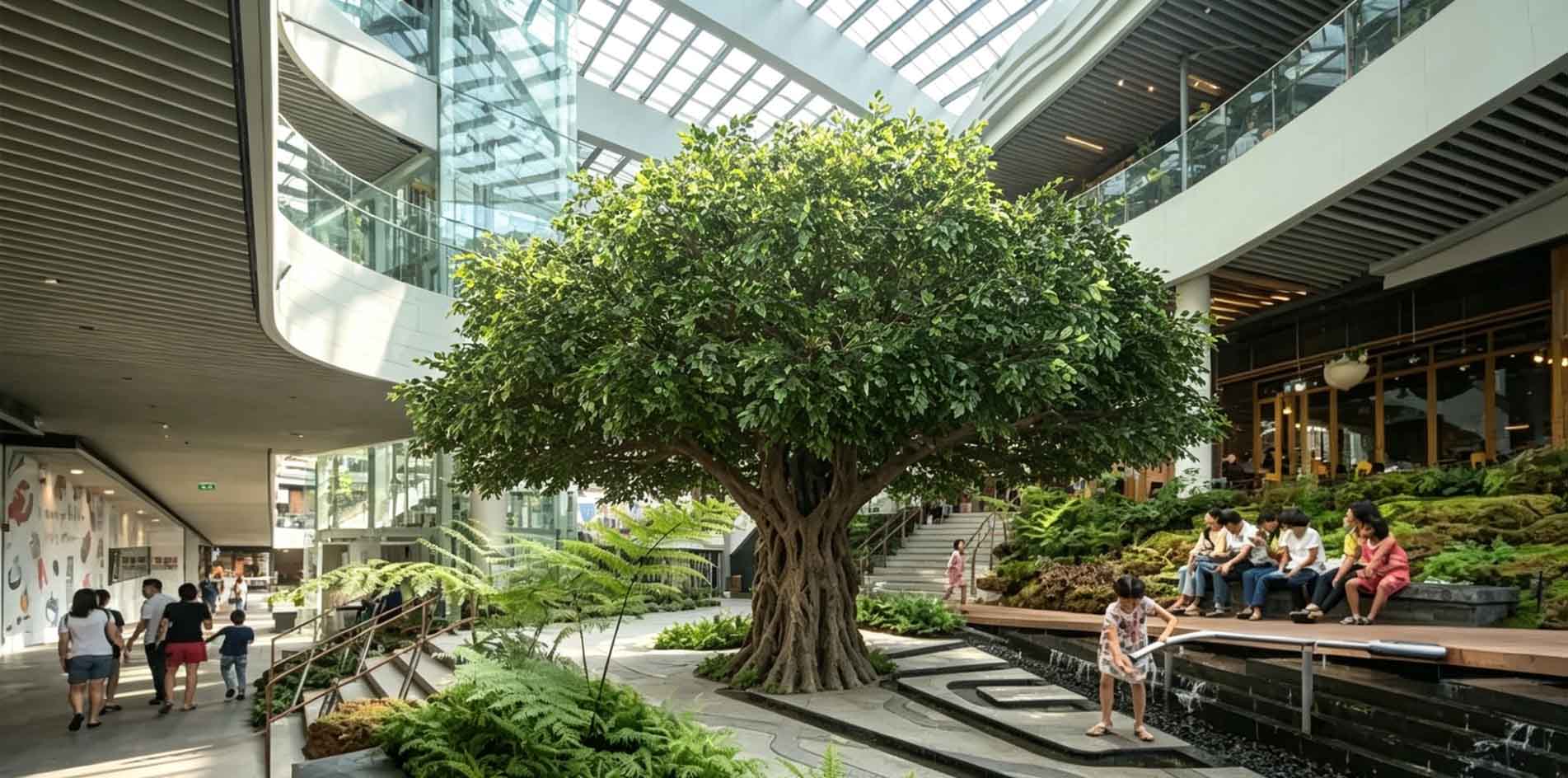
Artificial trees are ideal for larger spaces because of their height and strong visual presence.
Place a tall artificial tree in an empty corner, beside a sofa, near an entrance, or next to a reception desk. It can fill vertical space while creating a natural focal point.
Once the tree is positioned, smaller potted plants or flower arrangements can be added around it. This creates a layered composition instead of leaving the tree isolated.
Styling idea:
Artificial Tree → Medium Potted Plant → Flower Branch
The gradual change in height creates a simple but effective visual rhythm.
5. Add Flower Branches for a Touch of Color
Artificial flower branches are excellent for adding seasonal color without changing the entire decoration.
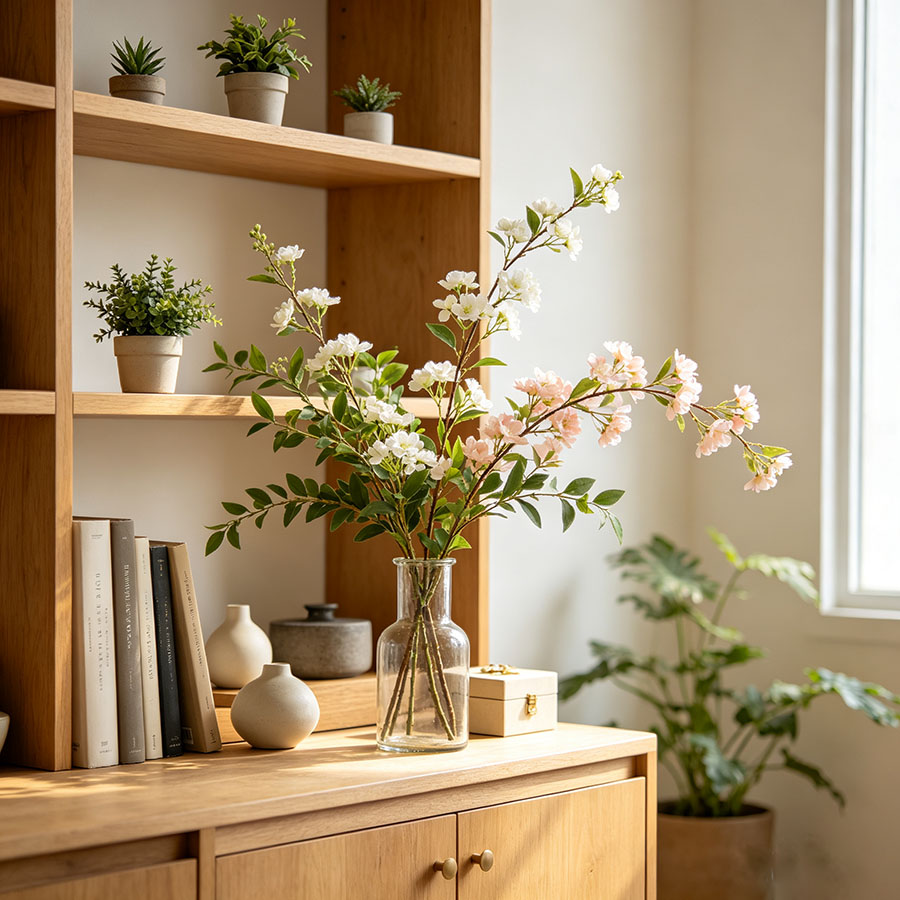
A few flower stems placed in a vase can instantly brighten a coffee table, dining table, countertop, bookshelf, or reception area. They can also be changed according to different seasons or interior color schemes.
For a modern interior, neutral flowers such as white or cream can create a clean appearance. For a warmer atmosphere, pink, orange, yellow, or red flowers can introduce more energy and personality.
6. Create Layers on Shelves and Cabinets
Shelves are perfect for small-scale artificial plant combinations.
Instead of placing every item at the same height, try arranging products at different levels. A small potted plant can be placed on one shelf, while a flower branch extends naturally from a vase on another.
You can also combine books, decorative objects, and greenery to create a more complete display.
The key is to leave enough empty space so that each element remains visually clear.
7. Match Plants to the Size of the Space
The best combination depends on the size of the room.
In a large living room or commercial space, a tall artificial tree can provide the necessary scale. Medium-sized potted plants can then be used to connect the tree with furniture and other decorations.
For smaller spaces, oversized trees may feel too heavy. Instead, choose compact potted plants and shorter flower branches to create a lighter arrangement.
Large space: Tree + Potted Plant + Flower Arrangement
Medium space: Potted Plant + Flower Branch
Small space: Small Potted Plant + Flower Stem
8. Create a Balanced Focal Point
Layered decoration does not mean adding as many plants as possible. A successful arrangement should have one or two clear focal points.
For example, a tall artificial tree can become the main visual focus, while colorful flower branches provide supporting details.
If every plant has a strong shape or bright color, the space may appear visually busy. Keeping some areas simple allows the main decorative elements to stand out.
9. Choose Combinations for Different Spaces
Different spaces can benefit from different plant combinations.
Living Room
Use a tall artificial tree in the corner, a medium potted plant near furniture, and a flower arrangement on the coffee or side table.
Office
Choose clean, structured greenery for desks, reception areas, and meeting rooms. A few flower branches can add warmth without making the space feel too casual.
Hotel and Restaurant
Combine large artificial trees with medium greenery and seasonal flower arrangements to create a welcoming atmosphere for guests.
Retail Store
Use artificial plants to guide attention toward entrances, display areas, or featured products. Different heights can also help create more dynamic visual merchandising.
10. Keep the Overall Style Consistent
Although mixing different artificial plants can create depth, the overall style should still feel connected.
Consider matching the colors of the flowers with the surrounding furniture and décor. You can also coordinate pots, vases, and containers with the interior design.
For example, minimalist spaces may work well with simple greenery and neutral-colored flowers, while more decorative interiors can accommodate richer colors and fuller arrangements.
The goal is not simply to add more plants, but to create a composition where every element has a purpose.
Final Thoughts
Artificial flowers and greenery offer a flexible way to add beauty, color, and visual depth to almost any interior. By combining artificial trees, potted plants, and flower branches at different heights, you can create a layered appearance that feels natural and well balanced.
The most effective styling usually starts with greenery as the foundation, followed by medium-sized plants for structure and flower branches for color and detail. With the right combination, even a simple corner, tabletop, shelf, or entrance can become an eye-catching decorative feature.
Think in layers, balance the colors, mix the textures, and let every artificial plant play its own role.